
Welcome to The Athletic’s 2026 World Cup tactical group guides, walking you through the key battles on the pitch, the players to look out for, and the fun facts to impress your friends.
In this article, we will break down Group D, containing the United States, Turkey, Australia and Paraguay. Based on FIFA’s rankings, it is the most evenly matched group at this summer’s tournament, with 24 places separating the top side (U.S., No 16) and bottom side (Paraguay, No 40).
All eyes will be on Mauricio Pochettino and the USMNT, but their opponents are in good shape. Both Turkey and Paraguay have lost only once across their last 10 competitive games, and Australia looked dominant at times in qualifying.
So, will Pochettino’s brave new style pay off against tough opposition? Could Turkey’s attacking rotations create danger? Can Australia still cause chaos from crosses, and might Paraguay be the group’s dark horse?
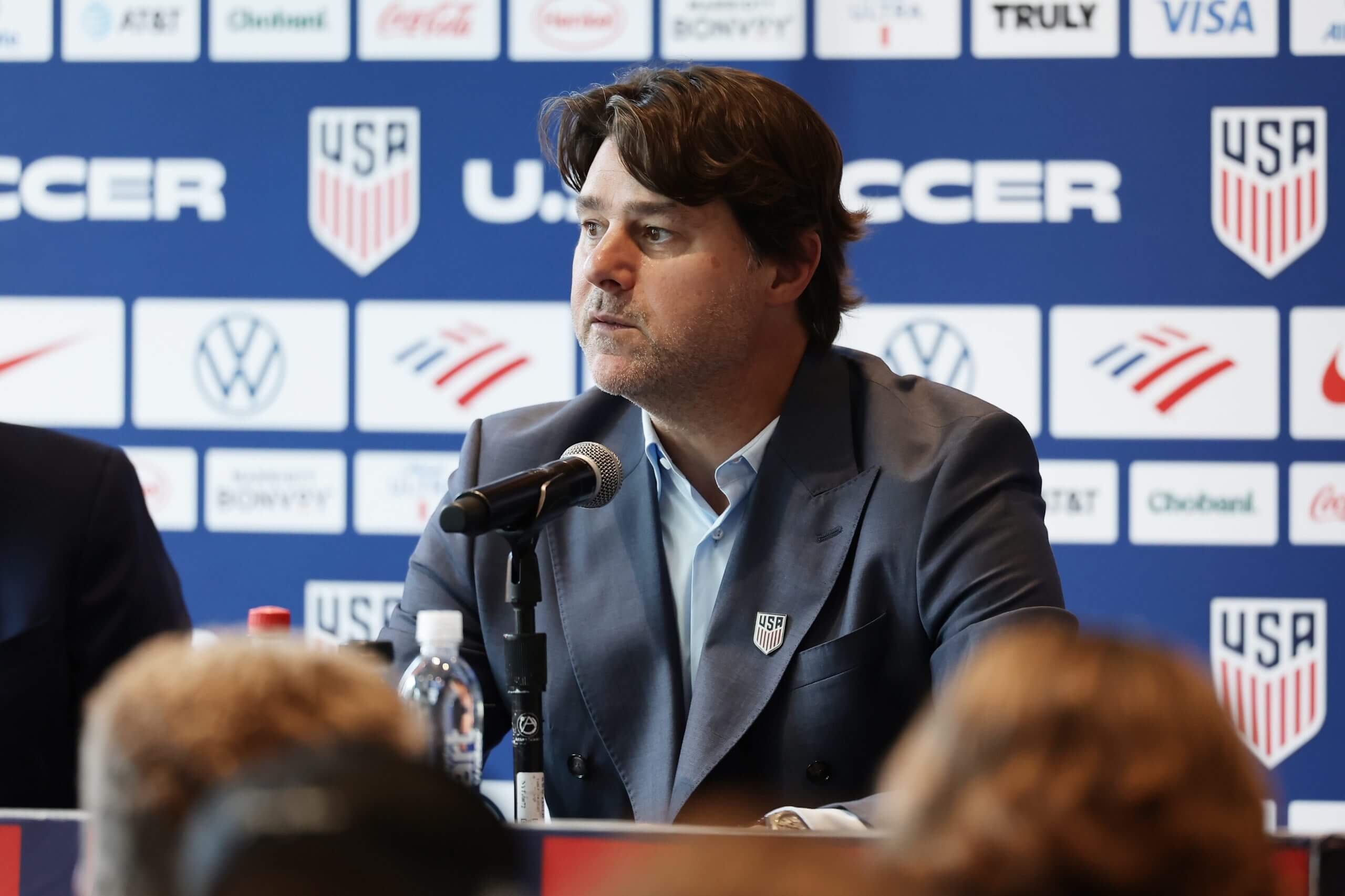
Pochettino was hired to deliver a strong World Cup for the USMNT – will he succeed? (Adam Hunger/Getty Images)
The games
Matchday one
- Friday, June 12: United States vs Paraguay (9pm ET, 6pm PT, 2am BST+1) — SoFi Stadium, Inglewood
- Saturday, June 13: Australia vs Turkey (12am ET, 9pm PT, 5am BST+1) — BC Place, Vancouver
Matchday two
- Friday, June 19: United States vs Australia (3pm ET, 12pm PT, 8pm BST) — Lumen Field, Seattle
- Friday, June 19: Turkey vs Paraguay (11pm ET, 8pm PT, 4am BST+1) — Levi’s Stadium, Santa Clara
Matchday three
- Thursday, June 25: Turkey vs United States (10pm ET, 7pm PT, 3am BST+1) — SoFi Stadium, Inglewood
- Thursday, June 25: Paraguay vs Australia (10pm ET, 7pm PT, 3am BST+1) – Levi’s Stadium, Santa Clara
Key tactical approaches
Almost 650 days have passed since Pochettino was announced as the new USMNT head coach, and a lot has changed.
The Argentinian inherited a squad reeling from their early Copa America exit in the summer of 2024, and although there have been major bumps in the road — not least heavy defeats to Switzerland and Belgium in recent international friendlies — his distinctive tactical ideas are beginning to shine through.
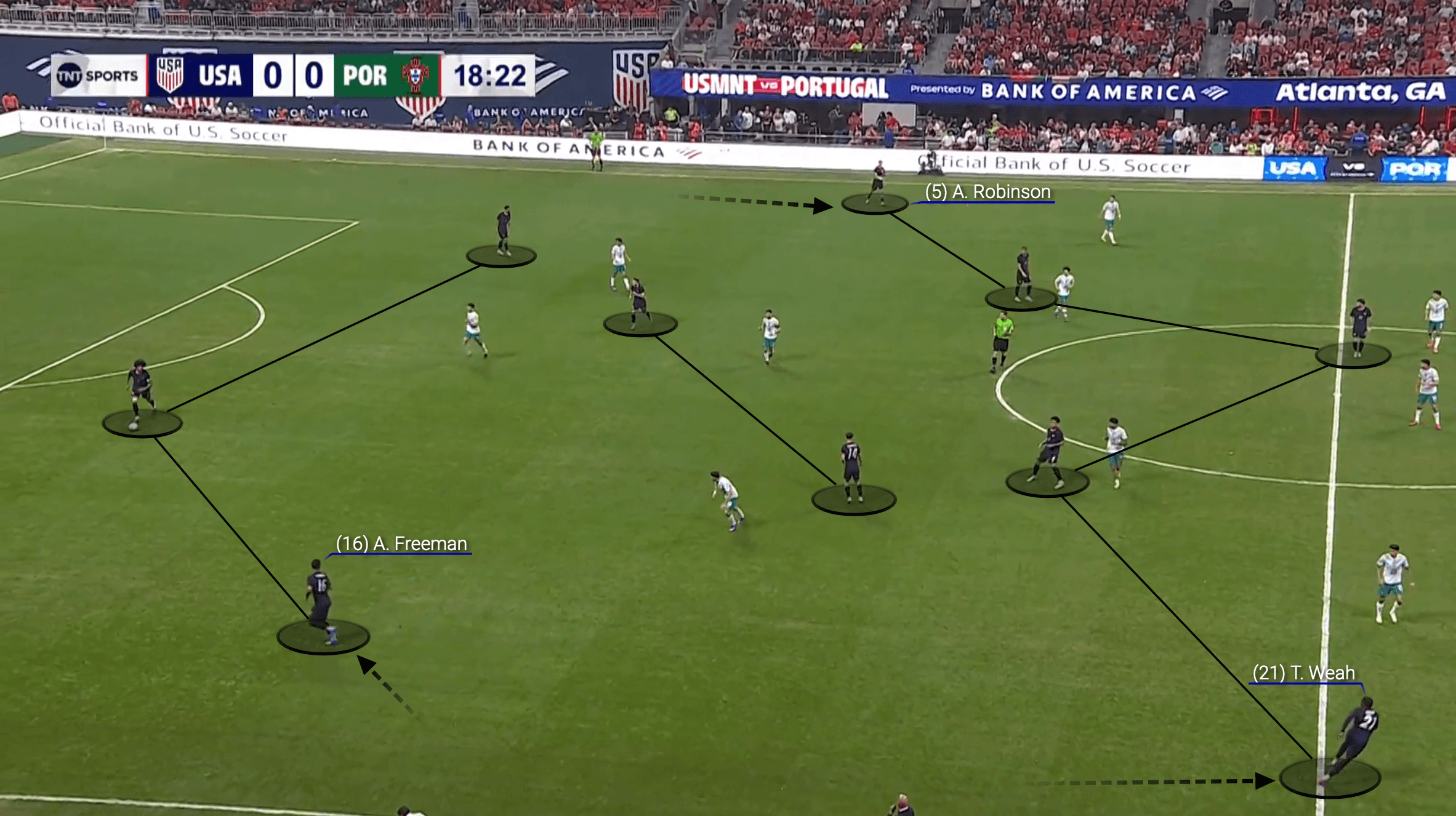
Much like his teams at Tottenham Hotspur, Chelsea and Paris Saint-Germain, Pochettino encourages sharp, brave passing out from the back. He has cycled through different systems across his 26 games in charge, mainly switching between a 4-2-3-1 and a 3-4-2-1, but the build-up shape remains consistent.
Ahead of three central defenders and a staggered midfield duo, wing-backs push high while attacking players drift into pockets of space and rotate positions to receive the more direct ball.
In the example below against Portugal, Alexander Freeman tucks inside to form the three-man base, while Tim Weah makes a threatening run in behind should Chris Richards choose to go long. Usually, it will be Tyler Adams as the deepest midfielder, while Weston McKennie roams up ahead, but the U.S. have options to rotate across midfield.
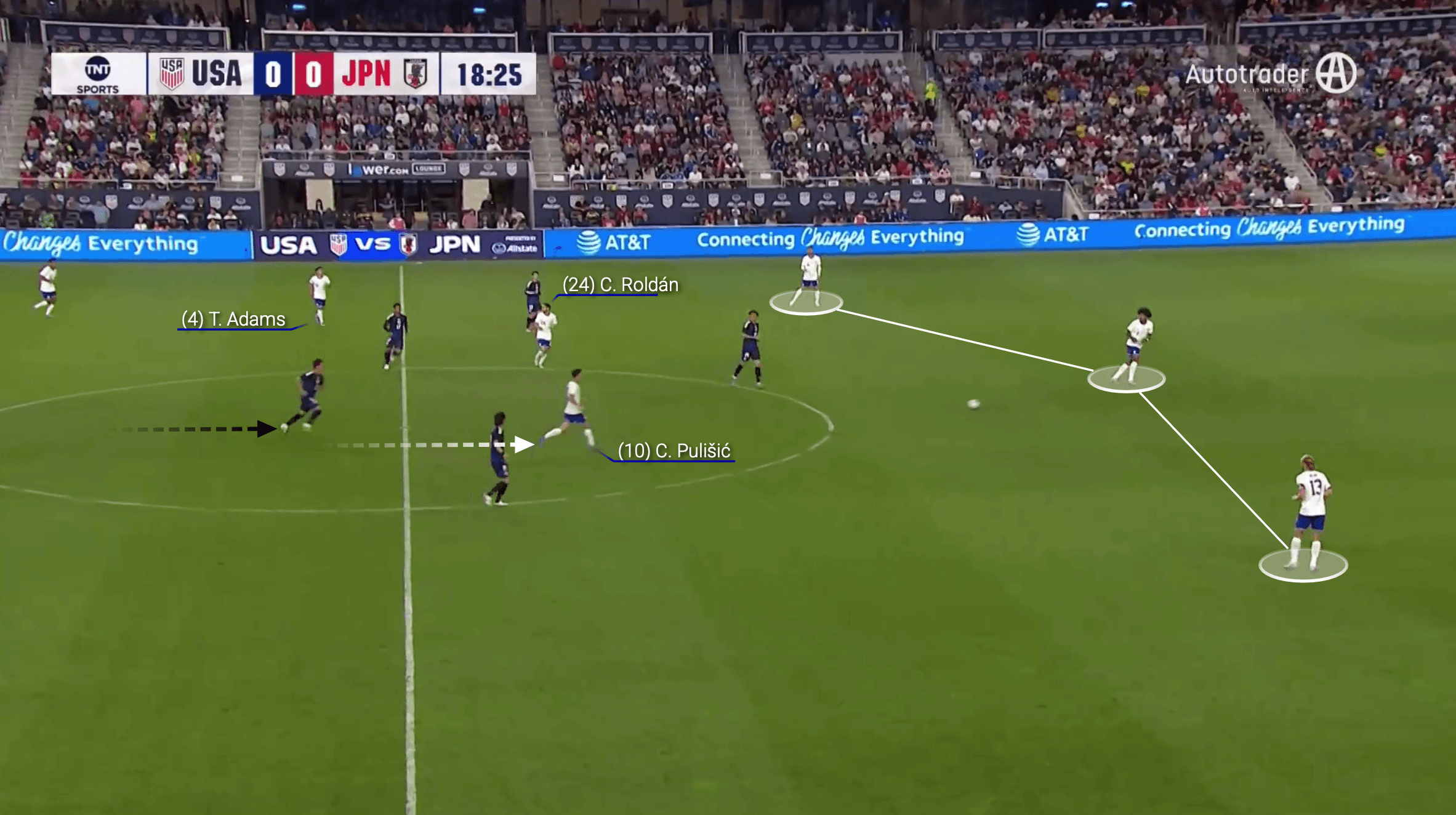
The team’s most technically gifted players are given freedom to drop deep to help with the build-up. Christian Pulisic pulls opposition players out of their structure, before trying to initiate quick passing sequences to play into the space.
In a 2-0 win against Japan in September, note how Pulisic shows for the ball while Adams is positioned higher up the pitch.
Later in that same sequence, as the ball makes its way out wide, Pulisic is on hand to help his team-mates under pressure.
Having enticed multiple opposition players out of shape, the U.S. show courage and composure to play through the press at high tempo, while positional fluidity helps them to find an escape. Full-back Max Arfsten drifts into the space that Pulisic has just vacated, while Tim Ream cuts inside and finds him with a direct pass, providing the platform for a quick attack.
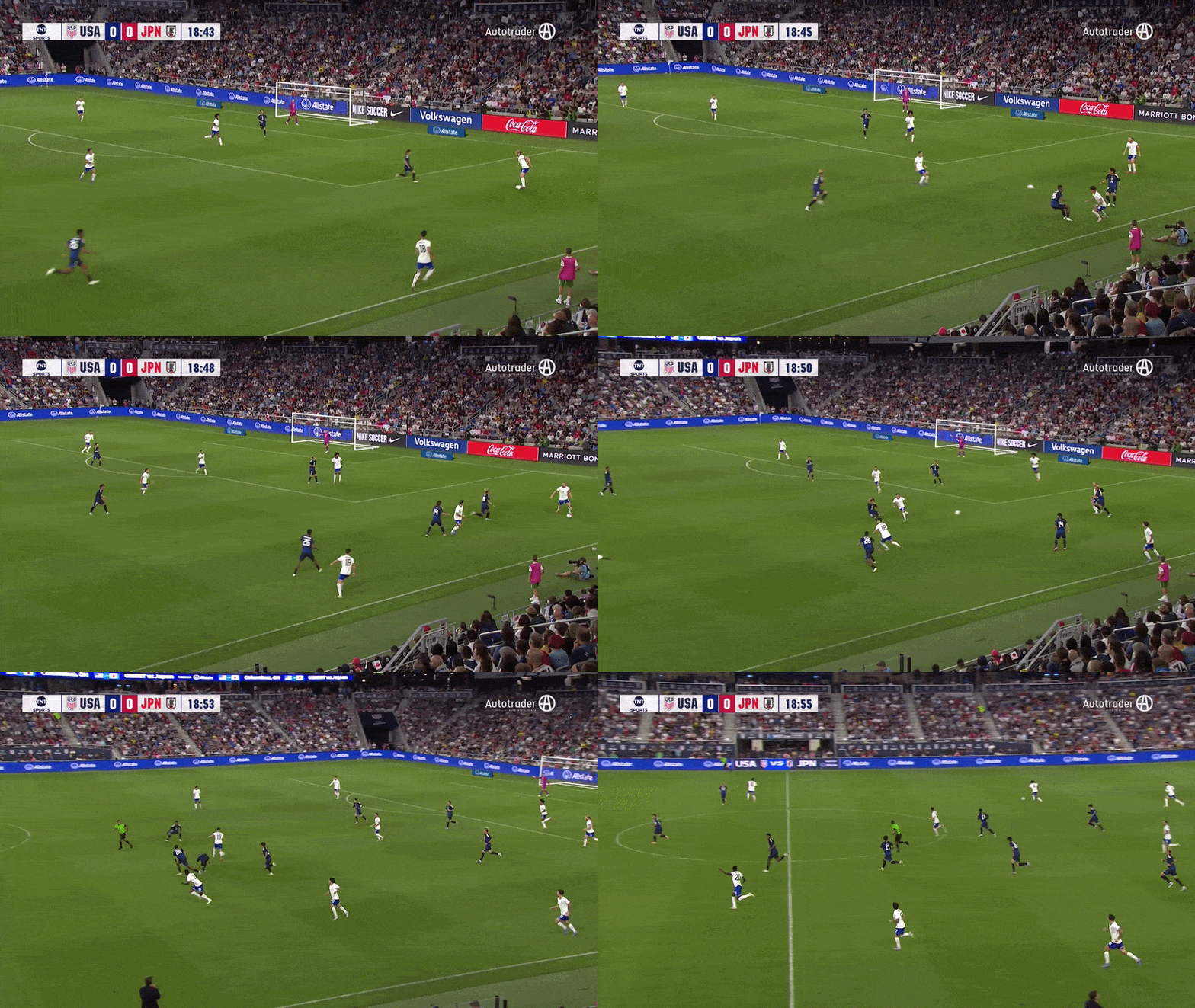
Such an approach is prone to mistakes and cheap giveaways if passes are poorly executed and movements are mistimed. But on the ball, this is a proactive U.S. team, who can hit hard with their firepower up front if their press-baiting build-up pays off.
Though they are the lowest-ranked team in Group D, Paraguay will present a stern test for Pochettino’s pass-and-move approach in the first game.
Conceding just 10 goals across 18 games in South American qualifying, head coach Gustavo Alfaro has tasted defeat just once across his 12 competitive games in charge, beating Brazil, Uruguay and defending champions Argentina along the way. Such form hinges on a stubborn, defence-first style, bringing intensity and physicality to their 4-4-2 midblock, from which they attack quickly to maximise the moments in which they do have the ball.
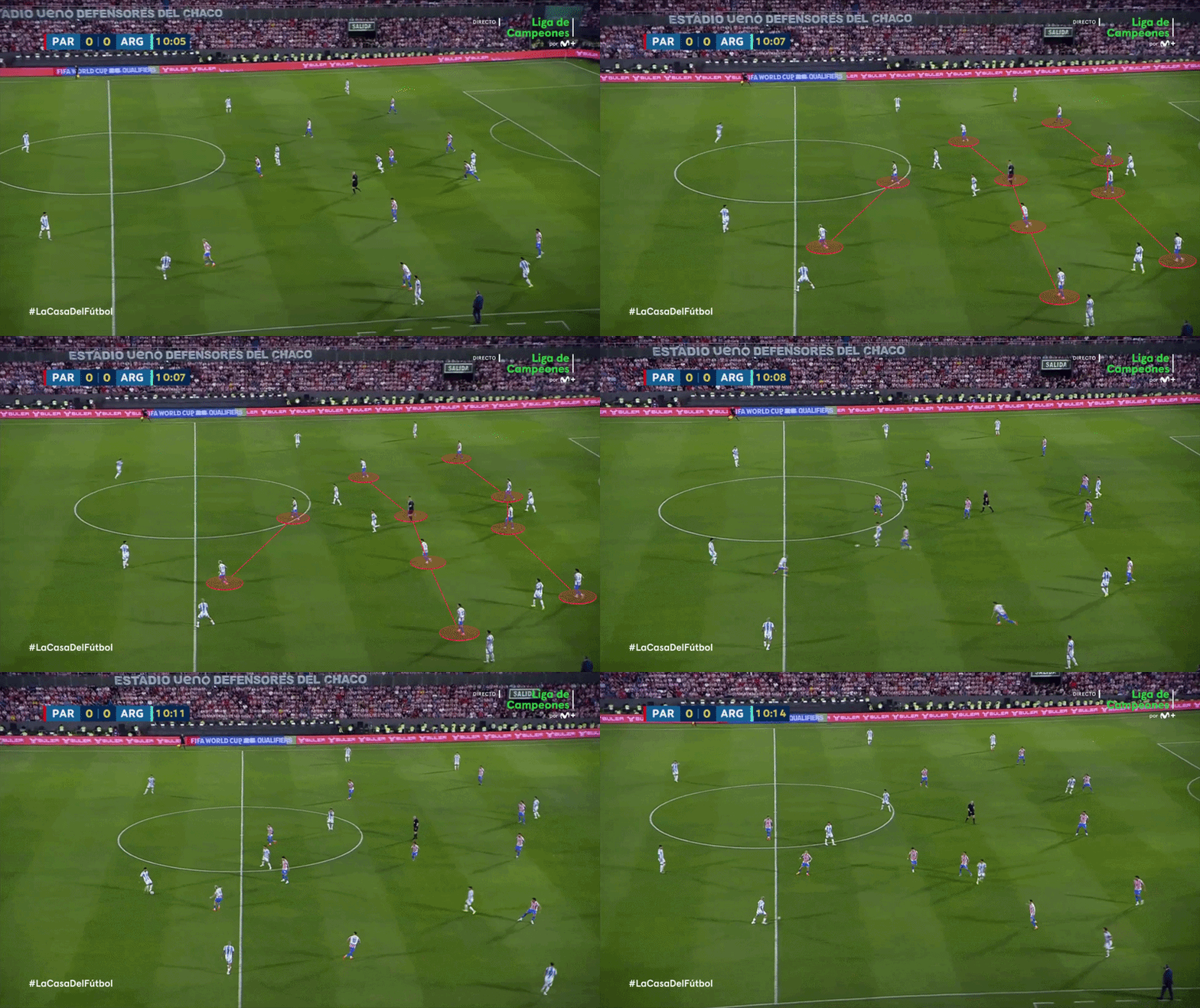
From their 2-1 win against Argentina, for example, in which they controlled just 23 per cent possession, the team showed great concentration to shuffle from side-to-side without the ball, blocking passes to Lionel Messi and Enzo Fernandez in midfield.
If the opposition do find a way through, Paraguay snap into gear. They are aggressive to press the ball once it crosses the halfway line, ensuring opposition receivers have nowhere to turn, and are twice forced to pass back into defence.
Such defensive commitment is backed up by the statistics — no team made more tackles in CONMEBOL qualifying, while they also ranked second for ball recoveries in the attacking third, showing that they can be ambitious and hunt the ball up the pitch as well as soak up pressure closer to their own goal.
When they do win back possession, Paraguay tend to attack quickly. As we can see from the visualisation below, they were the most direct team in South America, making few passes and moving the ball rapidly up the pitch to hit the spaces on the counter.
As one fan from The Athletic’s Language of Soccer series put it, Paraguay are “centro, cabeza y gol” — cross, header and goal.
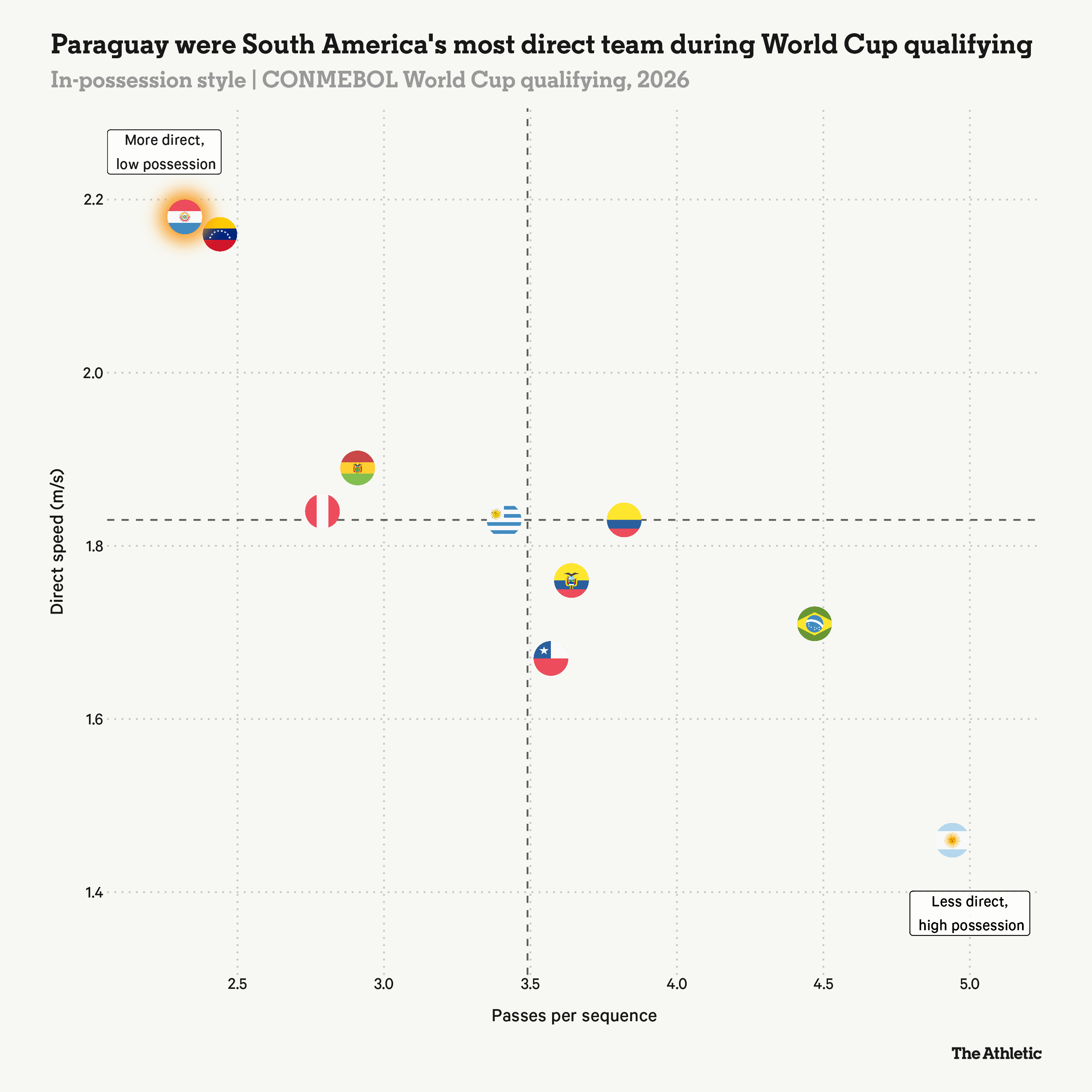
It may seem an uncomplicated approach, but the longer Paraguay can frustrate their possession-dominant opponents, the more their confidence grows to strike the other way.
By contrast, Turkey are likely to take the game to Pochettino’s side. They will lean on an exciting cast of high-quality creative players.
Their approach is similar to the U.S. — full-backs will push on as three centre-backs look to build up from deep with a single defensive midfielder (usually Ismail Yuksek) offering himself for the short pass up ahead. Around him, Turkey’s best ball progressors, Arda Guler and Hakan Calhanoglu, will frequently drop deep to pull the opposition out of shape and look for incisive passes up the pitch.
In the 1-0 win against Kosovo, for example, Guler has drifted into a wide-left position to pick up the ball, dragging an opposition winger up the pitch. Meanwhile, left-back Ferdi Kadioglu wanders inside, taking a marker away from the flanks and freeing up more space for dangerous winger Kenan Yildiz to receive the ball.
Immediately, he skips past his full-back and drives towards the box, allowing his team-mates to move forward in support and ultimately leading to a chance for Calhanoglu after a half-cleared cross.
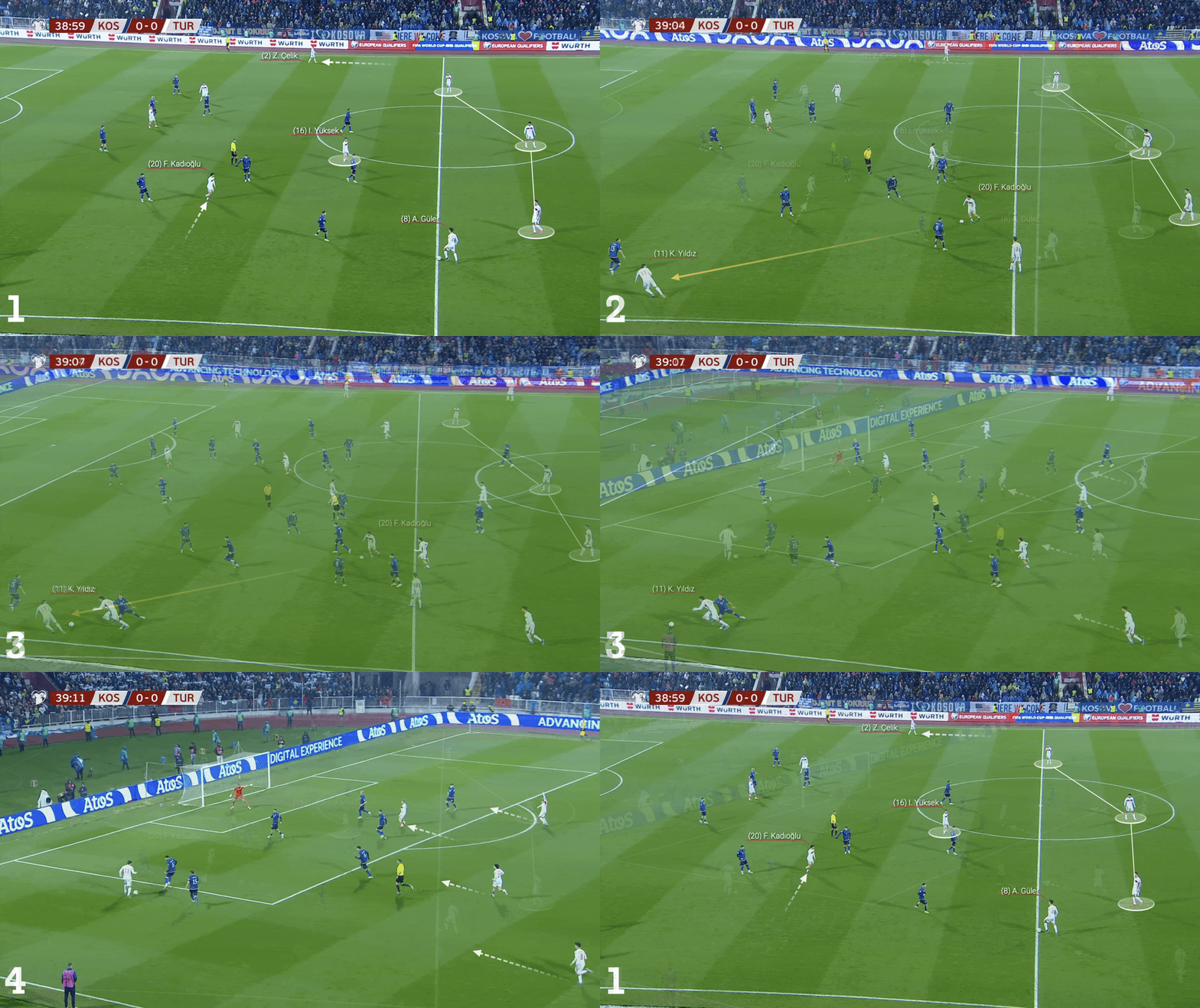
Much of Turkey’s attacking approach play centres on isolating Yildiz on the wing, a slippery winger who relishes the opportunity to run at his man. No player in the Italian top-flight attempted more take-ons than the 21-year-old last season, indicative of his positive nature and desire to make an impact in the final third.
Here against Romania, we see another variation on their three-man build-up shape — Yuksek is in front of the defence to help with short passes, wing-backs are high and wide, but now Calhanoglu has dropped into the back-line, pushing the right centre-back on.
The midfielder spears an accurate long ball to Yildiz, setting him away into the box. The passage shows the benefit of dropping a talented distributor into deeper positions to orchestrate attacks with pinpoint passing.
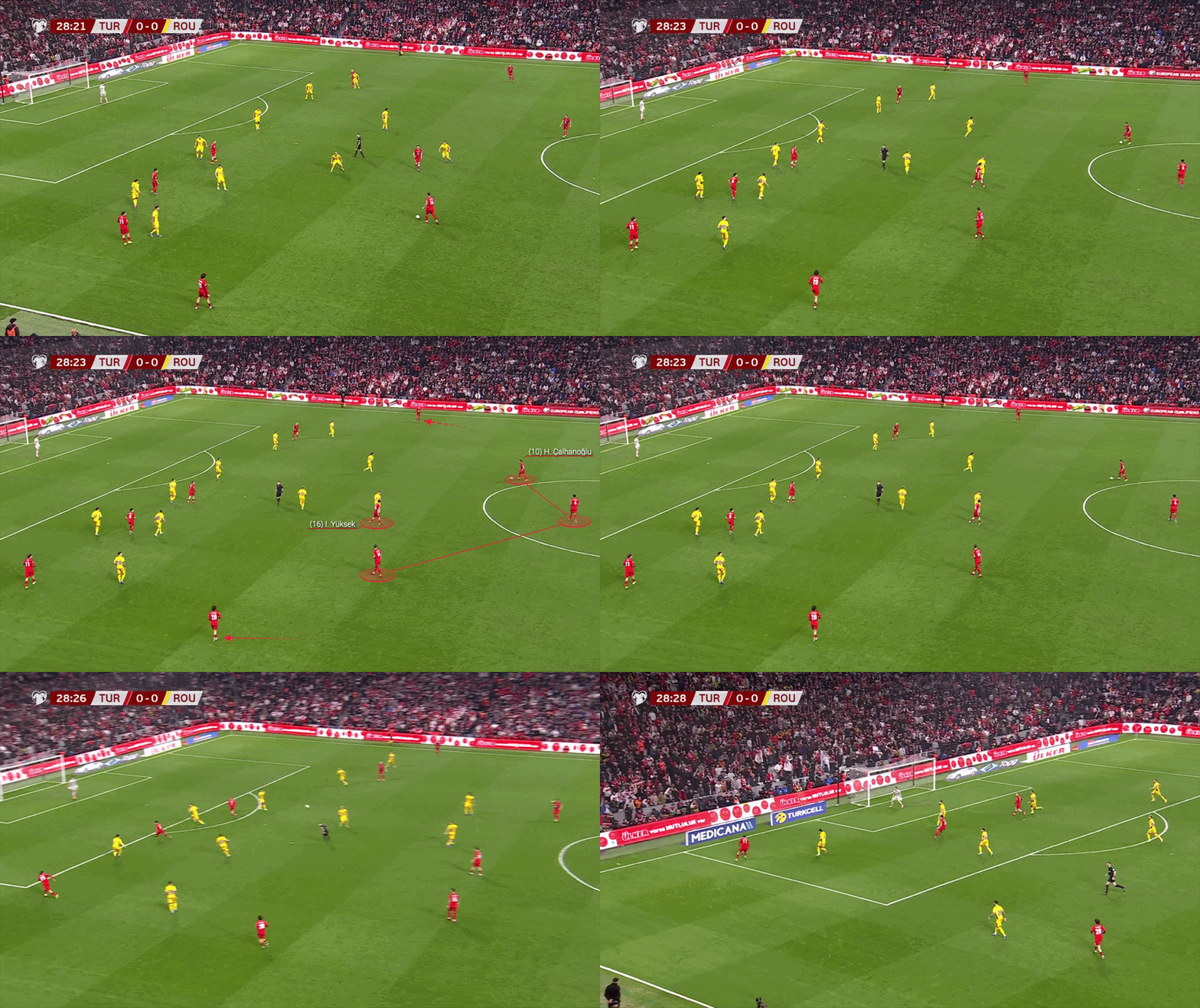
One thing Turkey lack is a true No 9, following the retirement of Burak Yilmaz in 2022. Instead, tricky wingers Yildiz and Kerem Akturkoglu will take it in turns to occupy the opposition centre-backs, while midfielders Calhanoglu and Orkun Kokcu will look to time late runs into the box to get on the end of crosses and cutbacks.
It has been 24 years since they last appeared at a World Cup, but only two since they nearly upset the Netherlands in a tense European Championship quarter-final. Under Vincenzo Montella, they are a dangerous side whose fluidity in attack can inflict damage.
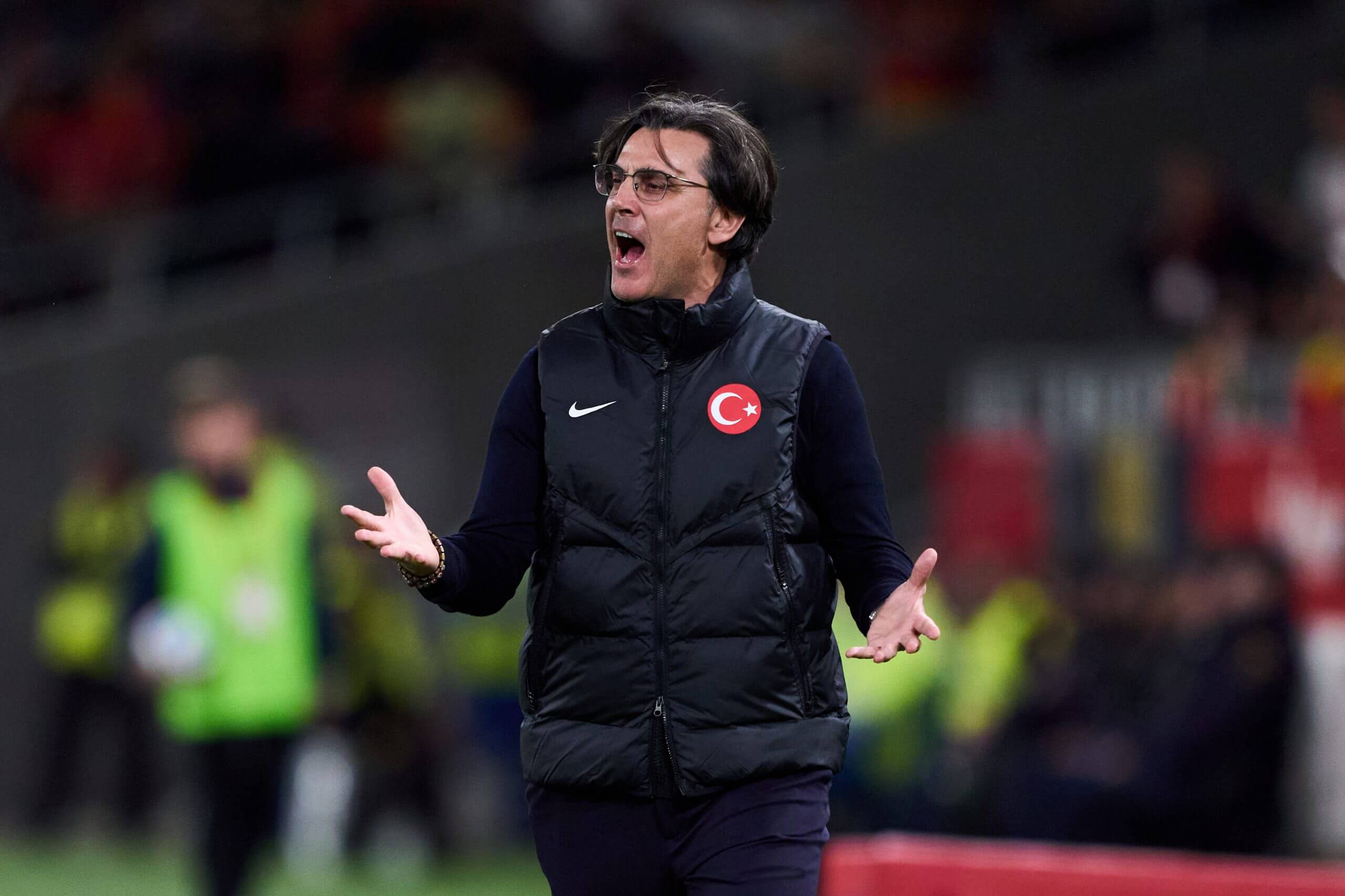
Vincenzo Montella is the man leading Turkey at their first World Cup since 2002 (Juan Manuel Serrano Arce/Getty Images)
Last but not least, Australia are another side — like Paraguay — who will be comfortable without the ball.
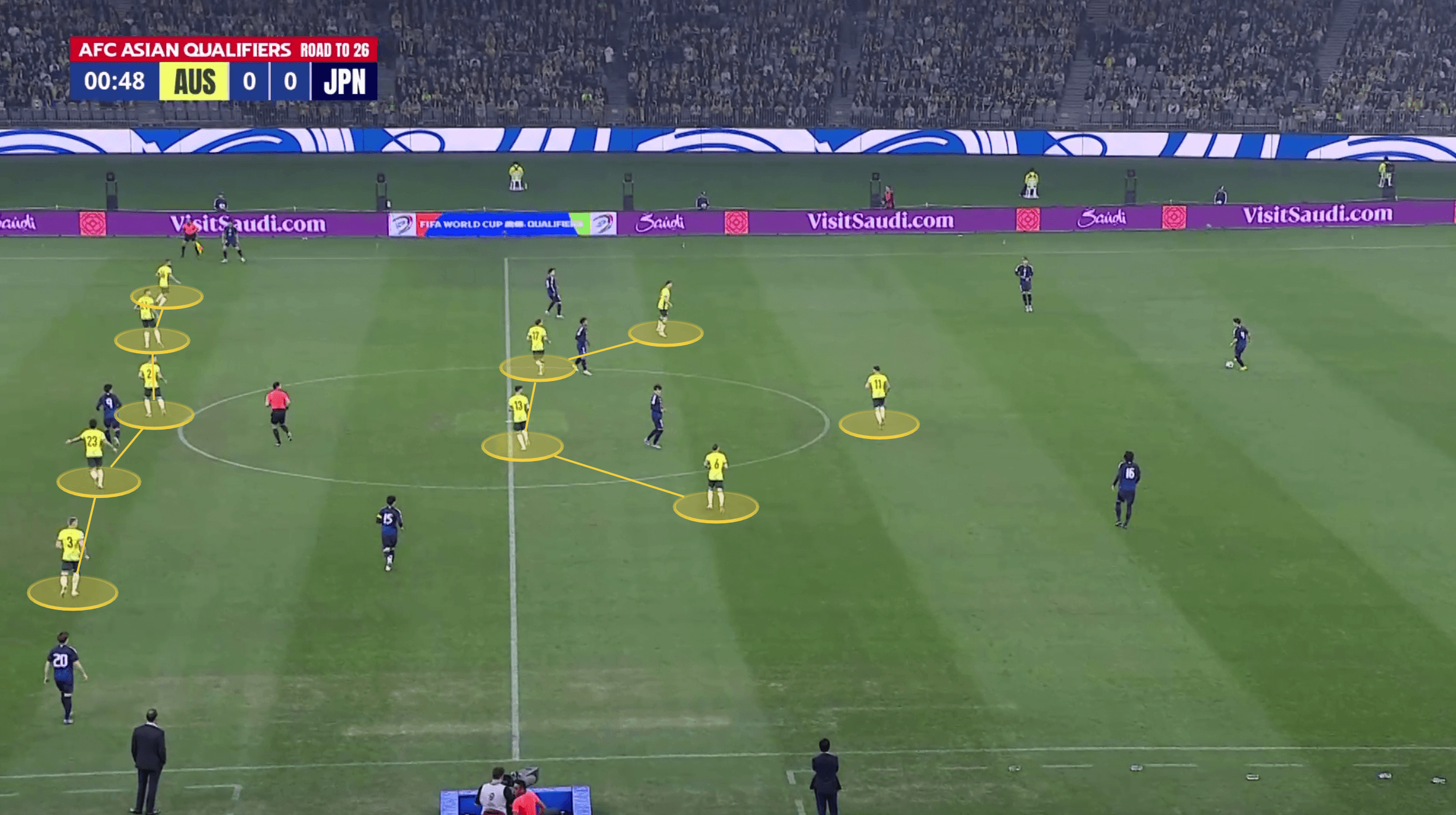
Following a dominant opening to Asian qualifying — in which they crashed home 22 goals without reply in six games against Lebanon, Palestine and Bangladesh — they reverted to a more secure 5-4-1 formation that helped them grind out impressive wins against Japan and Saudi Arabia, with around 30 per cent possession.
Early on against Japan, for example, we see them quickly settle into their defensive structure that aims to block progression through the centre, practically encircling the opposition midfield. A five-man defensive line-up means they have coverage on the flanks, where the ball-side midfielder will also shuffle across to help with underlapping runs or double up on tricky wingers.
Though Australia are happy to hold their shape for long spells, this is not solely a passive setup. Wing-backs will jump forward and attackers will put pressure on the ball to hassle and harry the opposition up the pitch after a backwards or sideways pass.
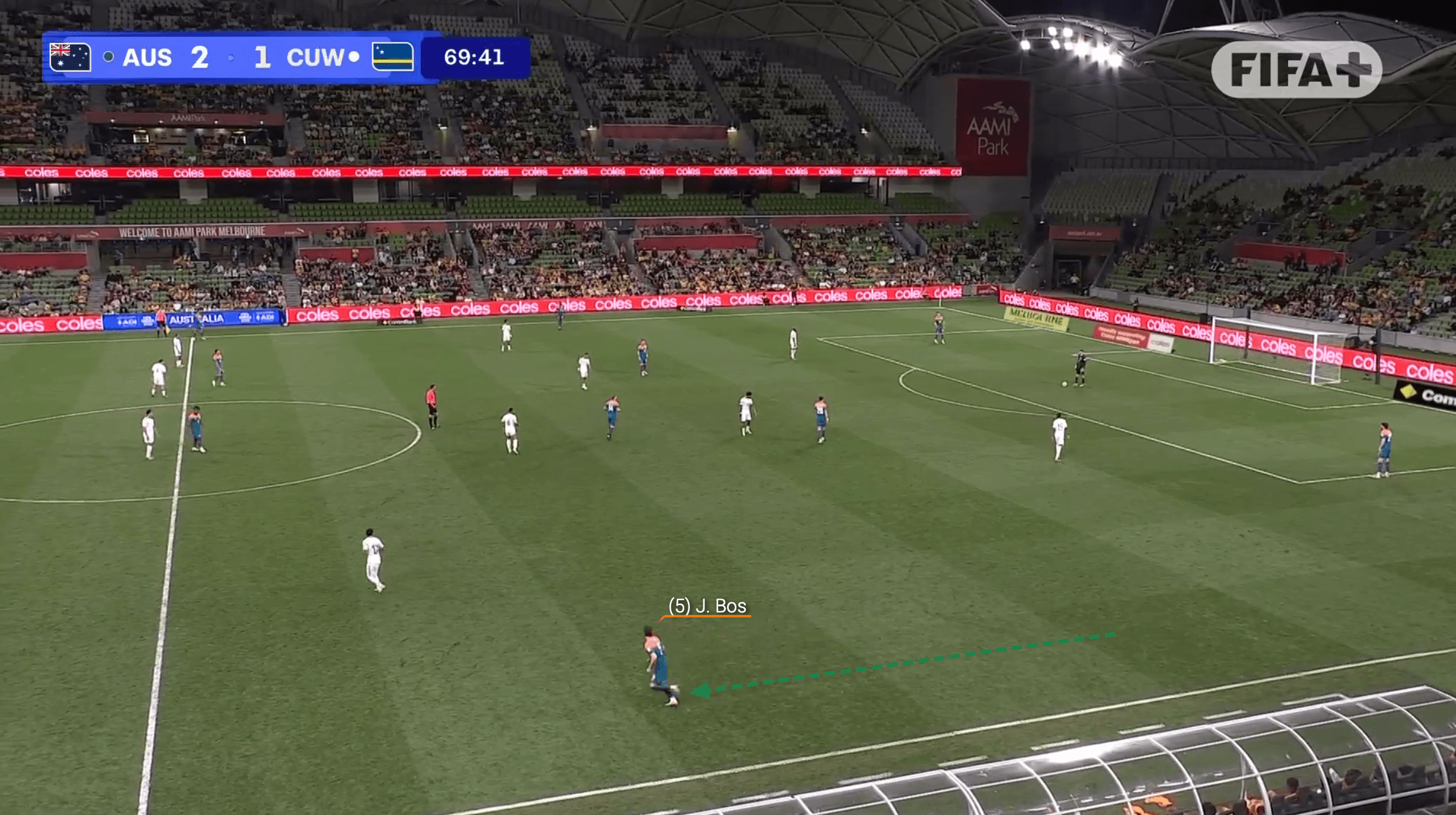
Australia’s shape also allows them to transition into attack quickly, particularly through their wing-backs, whose energy and dynamism can quickly transform the 5-4-1 into a 3-4-3.
Jordan Bos serves as a key outlet on the left, with eight assists across all competitions for Dutch runners-up Feyenoord last season. His desire to get forward allows for quick link-up with attacking midfielders, particularly dangerous when the speedy Nestory Irankunda drifts over to his side.
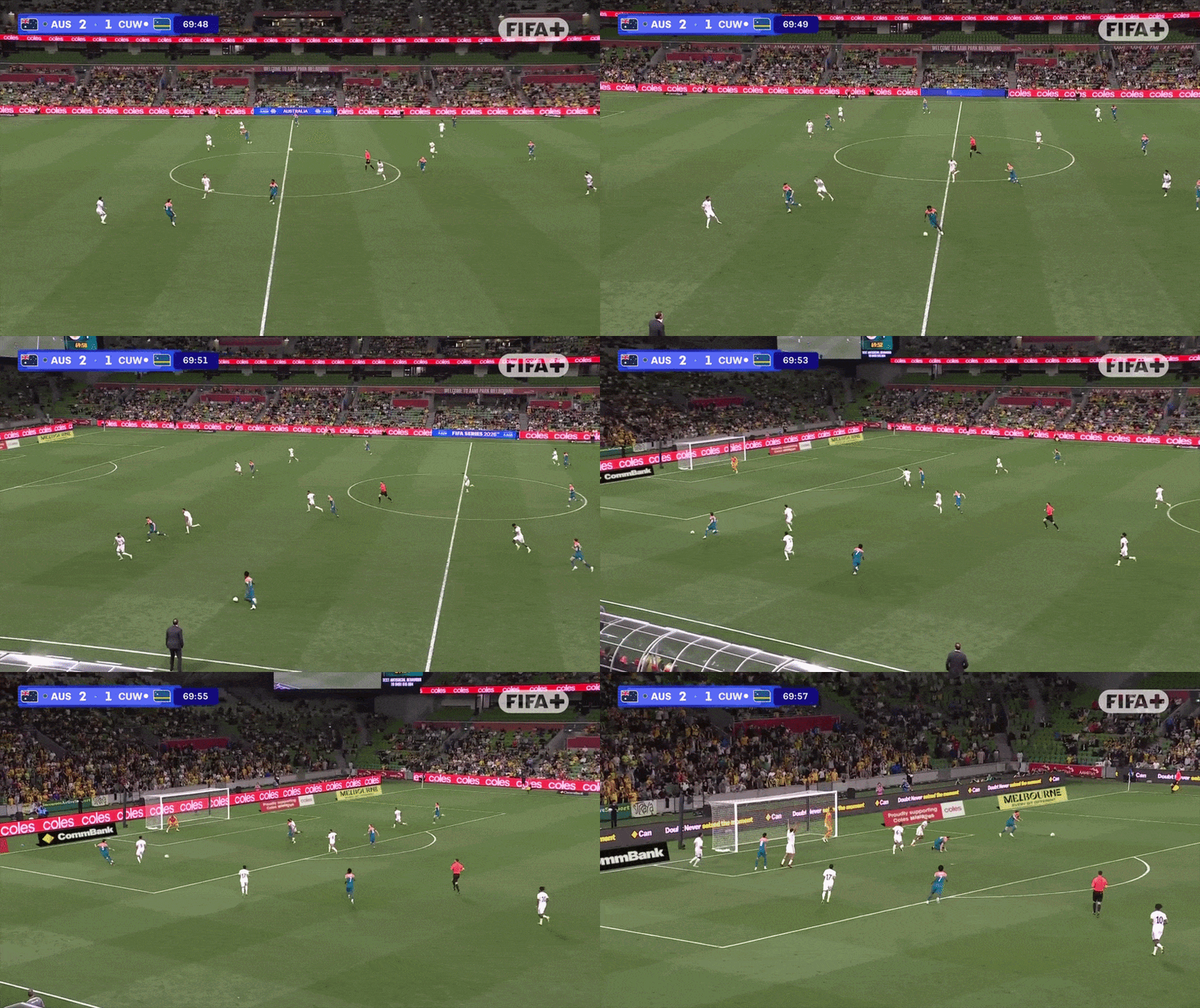
Below against Curacao, for example, Bos spots the opportunity to advance down the flank from a goal kick…
… before taking down the long pass, laying off to Irankunda, and timing his run in behind to receive a smart pass from the winger. After driving towards the box, his cutback is nicked off the toes of Riley McGree, for what could have been his second assist of the game.
Australia are also dangerous from set pieces, with towering defenders Harry Souttar and Alessandro Circati likely to threaten from corners and wide free kicks. Centre-forward Mitch Duke had proven an excellent target man for long balls and crosses, but has been ruled out of the World Cup with an injury, so expect Norwich City’s exciting 22-year-old Mohamed Toure to start up front.
Like every other side in this balanced and deceptively tough group, do not write off Australia.
Standout players
Folarin Balogun has bagged 12 goals in 2026 for French side Monaco, while no player in the Dutch top flight scored at a more regular rate (1.02 per 90 minutes) than Ricardo Pepi. Despite that, Pulisic is still the main man.
It has been a tough close season for the 27-year-old playmaker, struggling to maintain the blistering form he hit in September and even slipping out of the Milan starting XI in May. Still, Pulisic is a consistent creative presence — only three Serie A players could better his rate of 2.0 chances created per 90 minutes last season — and is the most technically gifted player in Pochettino’s squad.
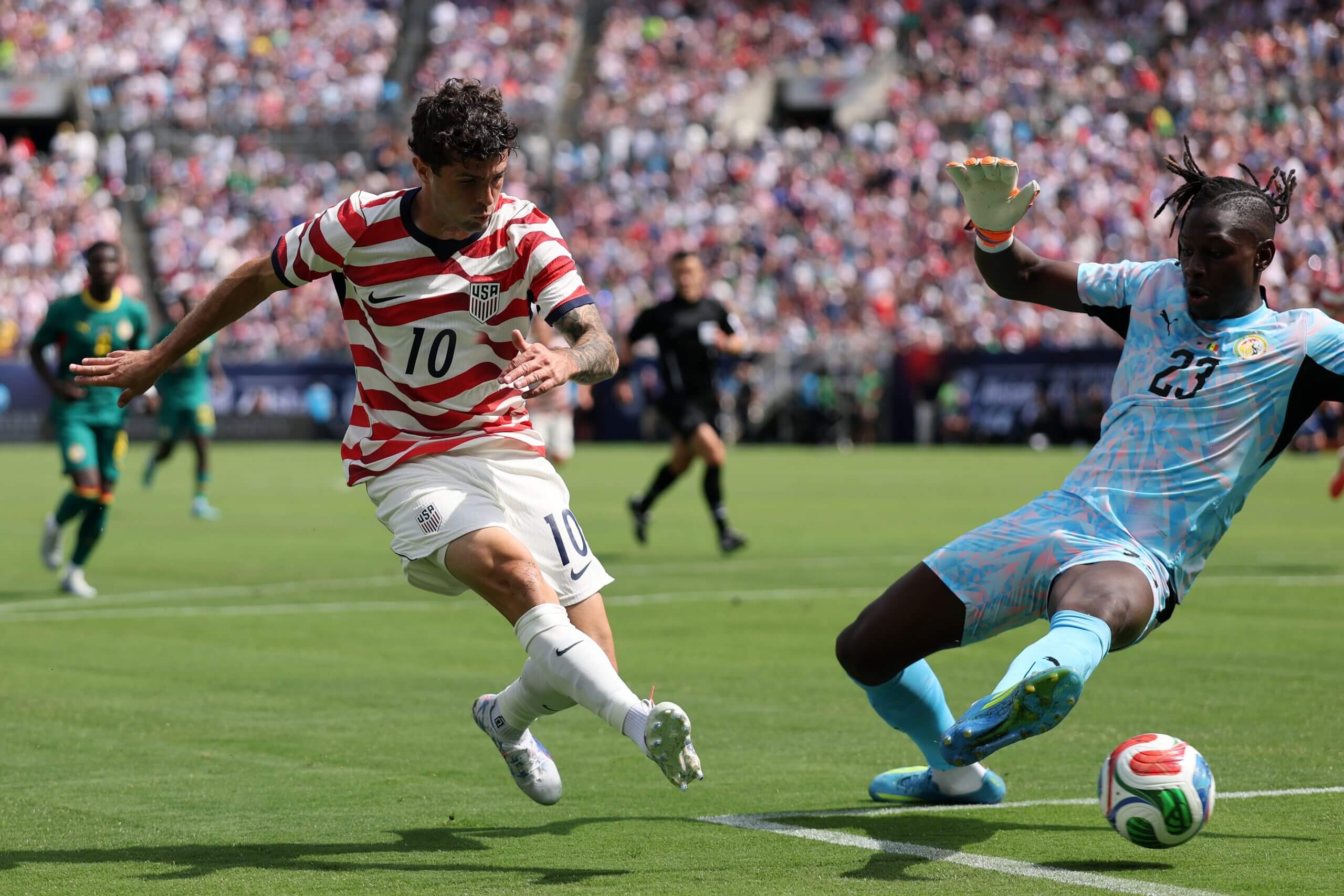
A home World Cup is a huge opportunity for Christian Pulisic to showcase his skills (Jamie Squire/Getty Images)
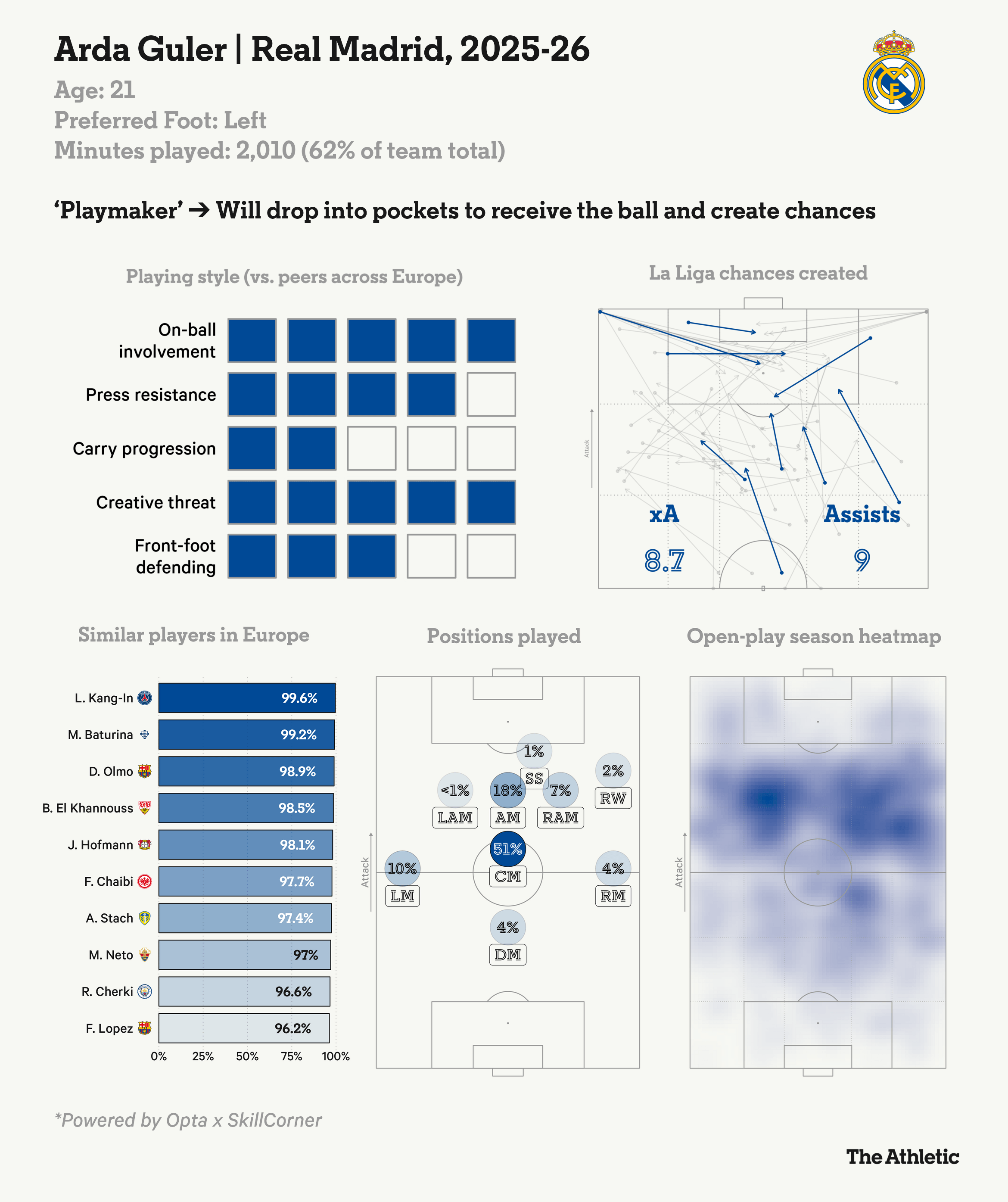
Similarly elusive and inventive in possession is Turkey’s Guler, who will direct most of his country’s possession play this summer. Looking at The Athletic’s player roles dashboard below, we can see the 21-year-old’s level of involvement for Real Madrid. He can create chances from different positions across the pitch.
For Paraguay, defenders Alderete and Gomez will likely be the busiest, but Julio Enciso is the potential match-winner at the other end. He has evolved into a line-leading centre-forward at French side Strasbourg, a role he also plays effectively for the national team with his desire to run at opponents and neat touch around the penalty area.
At the Copa America in 2024, he took 14 shots — no other Paraguayan managed more than five — while his 22 take-on attempts were almost three times that of any team-mate. Expect Enciso to shoulder similar levels of attacking responsibility this summer.
Australia will look towards Bos and Irankunda for inspiration, but Toure could make the biggest splash.
Since he joined Norwich in February, no player scored more non-penalty goals in the English Championship than his nine, crashing home two hat-tricks, including one on his first start for the club. Australia could lean into his sheer power and clinical finishing on the counter, demonstrated when he finished off a searing break for Tony Popovic’s side against New Zealand in September.
Mo Toure scores his first CommBank #Socceroos goal to lead against New Zealand 💚💛
What a finish from the 21-year-old 💥
🇳🇿 0-1 🇦🇺#ForeverGolden #NZLvAUS pic.twitter.com/NojrlFpfKs
— CommBank Socceroos (@Socceroos) September 9, 2025
Things to look out for
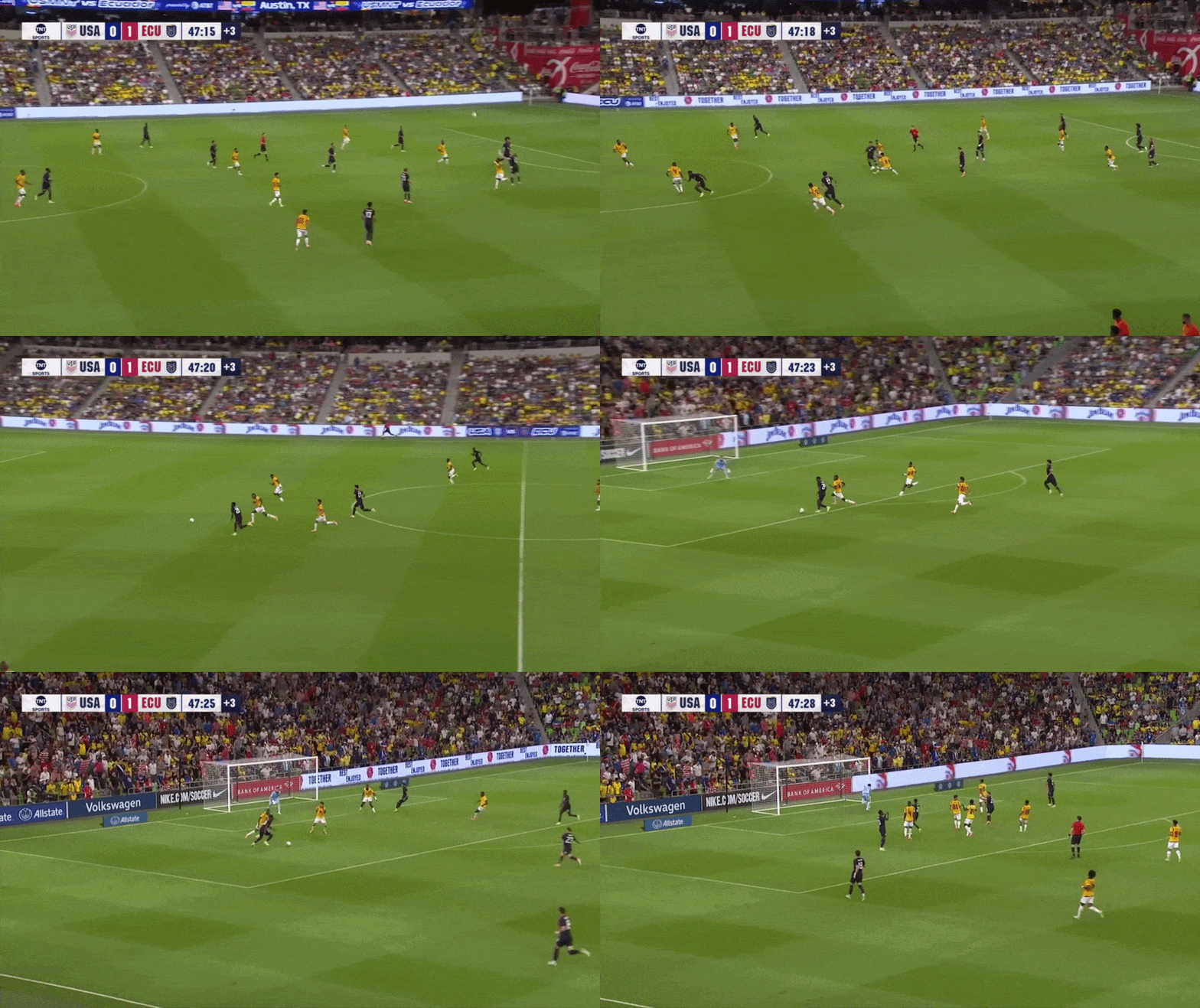
While we have highlighted Paraguay and Australia’s ability to soak up pressure and hit on the counter-attack, the U.S. can also be dangerous from fast breaks.
Pochettino’s side will look to take control of most games in this group, but they can drop into a deeper 4-4-2 and use dangerous, pacy players as outlets. Weah is a powerful runner down the right, while they are spoilt for choice up front, with Balogun, Pepi and Haji Wright all able to offer stomping runs and physicality in behind.
Below against Ecuador, for example, we can see how eager Balogun is to spring forward after Ream’s headed clearance, helping the U.S. to transform a defensive situation into a chance in two passes and fewer than ten seconds.
Such adaptability in their playstyle will be key, particularly if the U.S. are to advance to the knockouts and face the world’s strongest sides.
Speaking of exciting attacking moves, could this be the group of spectacular goals?
Each side has their shooting specialists; Paraguay’s Enciso scored the Premier League’s goal of the season in 2022-23, striking twice more from 30 yards in English football, while Diego Gomez can also hammer the ball with his right foot, neither afraid to let fly.
Calhanoglu is one of the best set-piece takers in world football — take a look at his outrageous free kick against Borussia Dortmund if you do not believe us — while Irankunda is another freakish ball striker, having already scored three miraculous goals from distance during his breakout season for Watford.
Do not be surprised if Group D offers a goal-of-the-tournament contender.