
When Kevin Keegan passed away on Monday, tributes poured in from across the football world.
In a remarkable playing career, Keegan represented Scunthorpe United, Liverpool, Hamburg, Southampton, Newcastle United, Blacktown City and England. He would go on to manage Newcastle (twice), Fulham, England and Manchester City.
And at the majority of those clubs, Keegan made a significant impact. This is part of the reason why, when he died at the age of 75, fans of so many teams spoke so fondly about him.
The Athletic asked members of our newsroom to reflect on Keegan and what he meant to fans and those who followed his clubs. James Pearce, Sebastian Stafford-Bloor, Chris Waugh, Justin Guthrie, Oliver Kay and Jack Pitt-Brooke share their thoughts below.
Liverpool
Kevin Keegan’s first meeting with legendary Liverpool manager Bill Shankly left a lasting impression.
It was May 1971 and the then-20-year-old Yorkshireman, who had caught the eye of head scout Geoff Twentyman playing in midfield for fourth-tier Scunthorpe, was waiting patiently outside Anfield to discuss his impending move.
“They were doing up the Main Stand at Anfield so they were using these temporary offices,” Keegan told me in 2009 during an interview to mark 50 years since Shankly’s appointment.
“The only place to sit was on a dustbin outside so I sat there talking to my manager at the time, Ron Ashman, while Bill was inside. After a while Bill came out, shook my hand and beckoned me over to his Capri to take me for my medical down near the docks.

“From the moment I met Bill I just gelled with him. I was from mining stock and so was he. I think he saw something in me that reminded him of himself. He wanted to help me, and he did, massively. Apart from my parents, Bill was the most important person in my life. He brought me to the club, he believed in me and he inspired me. That first meeting with him changed my life forever.”
Keegan cost Liverpool £33,000, and it proved to be one of the shrewdest pieces of business in the history of English football. He went straight into the side for the first game of the 1971-72 season against Nottingham Forest and scored the opener in a 3-1 win at Anfield.
Advertisement
Shankly’s decision to turn him into a striker was inspired as he formed a potent double act with John Toshack and earned hero status on the Kop. As well as his dazzling talent, supporters loved the tireless work rate and enthusiasm of their No 7.
“I didn’t expect to get in Liverpool’s first team so quickly,” Keegan admitted. “I was a kid who went straight from Scunthorpe in the Fourth Division to playing in front of 51,000 at Anfield against Forest. It meant I never actually played a reserve team game for the club. That was one of the things about Bill. He wasn’t scared to put someone in. If he thought you were good enough, that was it.”
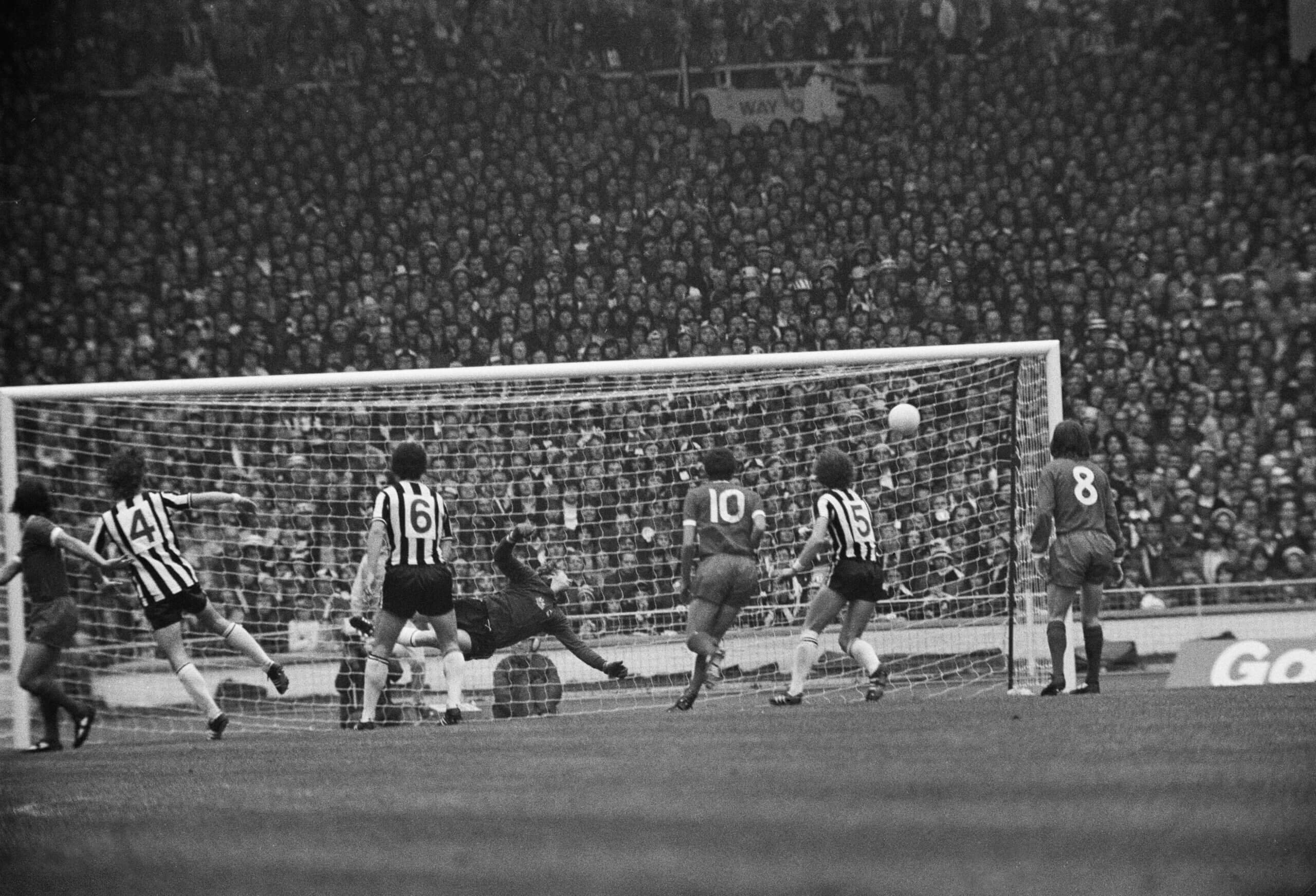
He repeated the trick a year later with another brace in the FA Cup final as Newcastle United were brushed aside 3-0 at Wembley. However, Shankly’s decision to resign in the summer of 1974 hit him hard.
“I don’t know anyone who saw it coming,” Keegan said. “I remember someone called me and said: ‘Have you heard about Shanks?’ My first thought was ‘he’s been involved in an accident’. When I was told he had resigned, I didn’t believe it. There was talk after every season about Bill threatening to quit and the board talking him out of it. But when I spoke to Bill he said: ‘No, I’m finished this time.’ It was a massive shock.”

Keegan continued to shine under Shankly’s successor, Bob Paisley, as Liverpool won the league and UEFA Cup double once again in 1975-76. He scored in both legs of the final against FC Bruges and was crowned Football Writers’ Footballer of the Year.
But midway through the following campaign he announced his intention to leave in the summer to play abroad.
Advertisement
Keegan signed off in style, winning his third league title and helping Liverpool clinch their first European Cup with a 3-1 victory over Borussia Monchengladbach in Rome. He described it as “the perfect ending” and waved goodbye, having scored 100 goals in 323 appearances for Liverpool across six seasons.
“Bill’s departure certainly played a part in my decision to leave,” he said. “No disrespect to Bob, but when Bill left, half the club went for me as well.
“Don’t get me wrong, I enjoyed playing for Bob. We had some great times and won the European Cup. But it wasn’t the same after Bill left. I just didn’t enjoy going into the club as much when he wasn’t there. Nobody could replace Bill.
“Bill took Liverpool by the scruff of the neck and put down the foundations on which the club’s been built. I played under a lot of good managers, but none were in the same county, let alone the same street, as Bill. I took a lot from what Bill taught me into my own management career. Things like if you treat people the right way and give them the chance to flourish, then you will get the best out of them. Bill was unique, and the man meant everything to me.”
The feeling was mutual with Shankly dedicating an entire chapter of his autobiography to Keegan, who he described as “the inspiration” of the second great team he built.
Sir Kenny Dalglish, who was signed from Celtic as Keegan’s replacement in 1977, led the tributes on Monday: “Kevin was one of the very best players of his generation and wore Liverpool’s famous number seven shirt with great distinction.
“His achievements on the pitch were exceptional, but he was also a wonderful person and a genuine gentleman. Football has lost one of its true greats.”
James Pearce
Hamburg
You see Kevin Keegan everywhere in Hamburg. Even now, his image is on lampposts and bus stops, in train stations and on the side of bins. He spent three years playing for Hamburg between 1977 and 1980, but that was such a profound moment in the club’s history that the stickers recognising his contribution and commemorating his time here still decorate the city.
Advertisement
Outside the Volksparkstadion, in the shadow of the stands, there’s a mural dedicated to him, too. It’s abstract and slightly out of focus, but it’s still unmistakably Keegan, with his crooked arm saluting another goal.
There were 40 in total, from 113 games across all competitions. His partnership with Horst Hrubesch, a great lighthouse of a centre-forward, took the club to their first Bundesliga title in 1979, making them German champions for the first time in 19 years. The season after, Keegan and Hamburg went all the way to the European Cup final, only to lose to Brian Clough’s Nottingham Forest.
It’s easy to look back in Hamburg; the club have not won anything in over 40 years. Naturally, local hearts yearn for the days with which Keegan is associated. Yes, that’s important context, but it’s not the extent of it.

Uwe Seeler is the club’s highest goalscorer and greatest player. Nobody will ever change that. But Keegan was one of the first world-class players to move to, rather than leave, Germany. From Liverpool, too.
The Bundesliga had only begun in 1963, marking the true beginning of professionalism. Before that, in a trend which lasts to this day, the very best players were always tempted away, to Italy or Spain, towards salaries that German football could never provide.
In refreshing contrast, Keegan’s move not only doubled the German transfer record (to £500,000), it also delivered one of the world’s very best players. Thomas Huerner, who reports for Sueddeutsche Zeitung, explains: “He was a star; for the first time, the Bundesliga had brought a player of that calibre to Germany instead of losing him to a foreign league. Naturally, he was also a symbol of the Hamburg side that was a major force at the time.”
A star is right. When Keegan won his back-to-back Ballons d’Or in 1978 and 1979, he became the first Hamburg player to win the award while still at the club. Almost half a century later, he remains the last to do so, and it’s very difficult to imagine that changing any time soon.
There are other stories, of course.

Famously, having read an interview in which Keegan professed to missing British cereal, the club’s fans organised and paid for a shipment of Shredded Wheat.
Advertisement
And then the anecdote that everybody knows: meet a German person named Kevin born in the early 1980s and the chances are that they were named Keegan. Between the football, the success and the fashionable perm, that was the kind of popularity that Machtig Maus (Mighty Mouse) had.
Today, it’s reverence rather than popularity; his is a name that echoes in Hamburg. No, Germans do not really name their sons Kevin anymore, but until the day he died nobody loved Keegan — the person or the player — any less.
On Tuesday, which was also the fourth anniversary of Uwe Seeler’s death, club CFO Eric Huwer led the players in a moment of reflection at their training camp in Austria.
Bewegender Moment des Innehaltens: Wir haben am Vormittag zu Beginn unserer Trainingseinheit gemeinsam mit unseren Fans eine Gedenkminute für unsere Vereinslegenden Kevin Keegan und Uwe Seeler abgehalten.
Keegan war am Vortag im Alter von 75 Jahren an den Folgen seiner… pic.twitter.com/FxXTMyAMA5
— Hamburger SV (@HSV) July 21, 2026
“Kevin Keegan was a champion. He was a two-time Ballon D’Or winner, a Bundesliga champion with Hamburg and a European Cup finalist,” he said, “and he has left us far too soon. Rest in peace, Mighty Mouse.”
Sebastian Stafford-Bloor
Southampton
There are under-the-radar transfers that shock the football world, and then there was the mind-boggling day in February 1980 that Kevin Keegan — England captain and reigning Ballon D’Or winner — was announced as Southampton’s newest signing in a surprise press conference.
Exciting, hard-working and down to earth, his star quality far surpassed anything seen at The Dell before — or at Southampton since.

For two glorious years sporting his trademark perm, he played some magical football to take the team to new highs of sixth place and a foray into Europe.
Advertisement
As another club great in former team-mate and close friend Mick Channon described Keegan when speaking to the Press Association, as reported by the Daily Echo, this week, “Kevin came to Southampton a Ballon d’Or winner, but you wouldn’t have known; he had time for everyone and never once acted like the star that he was.”

Keegan spearheaded a golden era at Southampton as he won the golden boot in 1982 and summed them up (and many iterations of Southampton team after it) with his trademark honesty: ”We’re a side that likes to go forward, we’re not good enough to defend and win games, so we have to attack.”
For a generation of fans, he is the best player to ever pull on the shirt. Southampton simply do not attract players like Keegan, but for a short time he was, inexplicably, theirs.
Nancy Froston
Newcastle United
The modern version of Newcastle United would not exist without Keegan. Nothing about that statement is an exaggeration.
“I want people to dream about their football club,” Keegan told The Times in 2008. “They should; we should all be dreamers at heart.”
Eminently quotable and enduringly positive, Keegan described managing Newcastle as like “riding the black-and-white tiger” — and he went about doing it in his own unique style. No single person, before or since, has ever tapped into the Newcastle fanbase and made them tick like him. Nobody has ever had them dancing to their merry tune in quite the same way.
Across three separate stints at St James’ Park, one as a player and two as a manager — all extraordinary for differing reasons — he proved himself to be the guiding star of Tyneside.

In 1982, while still an England international, Keegan shocked the footballing world by trading First Division Southampton for Newcastle, who had just finished their fourth-successive campaign in the second tier.
Advertisement
As someone who fed on emotion and belonging throughout his career, Keegan had always felt the pull of Newcastle United, the club of his father. Joe, a Geordie exiled to Yorkshire in search of work, regaled his son with stories of Jackie Milburn and the three FA Cup triumphs of the 1950s.
Keegan was desperate to awaken the sleeping Tyneside beast and get Newcastle back to the top flight and immediately announced himself to his adoring new fanbase, scoring the winning goal on his debut against Queens Park Rangers at St James’.
During his second season, the 1983-84 campaign, he formed part of a legendary frontline with Peter Beardsley and Chris Waddle, claiming a third-placed finish in the Second Division and promotion.
Across 78 league appearances, Keegan scored 48 times, but rather than stick around as a diminished forward losing their pace, he famously departed St James’ in a helicopter, while still dressed in his kit, following his testimonial against Liverpool in May 1984. A 13-year-old Alan Shearer was ballboy that day and dreamed of emulating his boyhood idol. “My Hero. My manager. My friend. Sleep easy Boss”, Shearer posted on X after Keegan’s death.
If Keegan had first captured Newcastle supporters’ imagination during his playing days, he truly transformed their psyche during his first stint as manager. Despite arriving in February 1992 with no coaching experience whatsoever, Keegan saved Newcastle from the precipice. As Sir John Hall, the former owner, regularly recounted, Newcastle was a “dead-end club going nowhere” who “faced bankruptcy” if they slid into the third tier.

Keegan not only rescued Newcastle from relegation in 1991-92; the following campaign his team romped to the second-division title and surged into the Premier League. Their swashbuckling, attacking style earned his side the moniker of “The Entertainers”.
Never short of ambition, following promotion Keegan declared that Newcastle were coming for Manchester United’s title. Third- and sixth-placed finishes followed, before the glorious but ultimately doomed 1995-96 campaign, which featured David Ginola, Philippe Albert and Les Ferdinand in their pomp. Newcastle blew a 12-point lead, and Keegan is best remembered for his “I would love it” rant live on TV, at the point the title was slipping away, yet the ridicule that followed should not diminish the magic he engendered.

The world-record acquisition of Shearer in July 1996 suggested Keegan was just getting started, but there was devastation on Tyneside when he resigned the following January following disagreements with the direction of the club.
Advertisement
His unexpected return as manager in January 2008 was heralded by supporters as “The Second Coming” (again), but it quickly turned sour. A passionate, principled man, Keegan felt he was having signings forced upon him by Mike Ashley, the unpopular owner, including players he was told to watch on YouTube. He resigned in September 2008, eventually winning a constructive-dismissal case.
There was no clearer demonstration of Keegan’s connection with supporters than when Wor Flags, the fan group, showcased his quote across the Gallowgate End in 2018. “Newcastle United is bigger than anyone,” it read. “It hurts, I know, but just keep going. He is only one man, we are a city, a whole population. Trust me.”

And trust him Newcastle fans implicitly did. Among Ashley’s many sins, none were more wicked than the alienation of club legends, particularly Keegan. He only returned to St James’ once, in disguise, as he never felt welcome again under Ashley.
Yet the wider Newcastle fanbase always welcomed him as their monarch. To supporters, Keegan was, and will always be, ‘King Kev’.
The man affectionately known as ‘The Messiah’ led this club and its people from mediocrity and potential oblivion to (almost) the very top and to fantasy. He allowed fans to dream, to believe. That was his most powerful and lasting gift.
Chris Waugh

Fulham
Times were changing on the Thames. Mohamed Al Fayed, who would later be accused of sexually assaulting the club’s women’s team captain, had swept into Fulham, transforming the club overnight.
Keegan would be appointed in September 1997 as chief operating officer, with Fulham a mid-table side in the old Second Division, looking up at Northampton Town and Bristol Rovers.
Keegan had only resigned from Newcastle in January, leaving Tyneside in a state of despair. Their loss was Fulham’s gain.
Advertisement
His pulling power was immediate. Paul Peschisolido became Fulham’s first £1million signing, then Chris Coleman arrived for £2m — fees that had been unimaginable in the third tier. Ray Wilkins was appointed manager and Fulham finished sixth — but Al Fayed was not satisfied, dismissing Wilkins and handing the job to Keegan.

Fans were inspired, and more big-name players followed, including Peter Beardsley, Keegan’s former Newcastle team-mate. Excitement began to escalate. “When Keegan rang to try and sign me, I literally turned round on the motorway and drove to Craven Cottage to meet him,” former Fulham defender Rufus Brevett told BBC Radio London on Monday.
Building a free-flowing, attack-minded squad was the priority, but Keegan’s appeal stretched beyond the dressing room. He made a point of replying personally to supporters’ letters, small gestures that deepened the bond between the club and the man charged with accelerating its transformation.
Armed with a talented squad, Keegan’s Fulham played swashbuckling, attacking football that fans instantly fell in love with. Sound familiar?
Home attendances jumped by more than a quarter as Keegan oversaw one of the greatest seasons in the club’s history. Fulham cantered to the Second Division title, racking up a club-record 101 points to earn a second promotion in three seasons.

England soon came calling, but Keegan initially only agreed to take charge for four matches. He insisted he still wanted to lead Fulham’s drive for the top flight.
Two games in the England dugout were enough: Keegan admitted he had “got the bug” and resigned from Fulham in May 1999. He would not be the manager to take them into the Premier League, but he had changed what the club believed was possible.
After accepting the full-time England role, he told reporters he had no choice but to “listen to his heart”. For Keegan, there was never any other way.
Justin Guthrie
Advertisement
England
In Kevin Keegan’s mind, there was no greater honour than to represent his country. He did so 63 times as a player, 31 of them as captain, and a further 18 times as manager. It was not for want of effort that he was to look back on his international career as a rare source of disappointment.
The 1970s are often regarded as the wilderness years for the England team. They missed out on qualification for the World Cup in 1974 and 1978 and for the European Championship in 1972 and 1976. Keegan appeared in just two tournaments: the 1980 European Championship finals, in which they were eliminated at the group stage, and the 1982 World Cup.
Looking back, it is hard to work out precisely why England struggled over that period. Part of it was that tournaments were smaller, so qualification — particularly for a four-team European Championship in 1972 and 1976 — was much harder than it is today.

The most common criticism was that England lacked technical quality, intelligence and a settled way of playing as other nations became more sophisticated. But over the 10 years in question, English clubs won the European Cup six times, always with a strong nucleus of English players under English managers. Nobody could accuse Keegan of lacking the quality to perform against elite-level European opposition, given his success with Liverpool and Hamburg.
That 1982 campaign was typical of the misfortune that plagued Keegan’s international career. Having waited so long to qualify for the World Cup, he found himself struggling with a back injury that ruled him out of the first group stage. In desperation, he borrowed a car from the hotel receptionist, drove 250 miles from Bilbao to Madrid airport, flew to West Germany for treatment and returned in the hope of getting the green light to play.
He came off the bench for the closing stages of a 0-0 draw with Spain, “fluffing the sort of header I had scored all my life”, and England were out. It was his last appearance for England. Bobby Robson, upon taking over as manager, left him out of his first squad without telling him first. Keegan, bruised, as good as closed the door on a recall. He never played for England again.

It was partly out of a sense of unfinished business with England — as well as the aforementioned pride in his country — that led him to answer the FA’s call in early 1999 following the abrupt departure of Glenn Hoddle.
Advertisement
He initially took over on a temporary basis, in combination with managing Fulham, and made an upbeat start with a 3-1 win over Poland, but he quickly found the job stifling. He did not like the media scrutiny or the politics of working for the FA. He led England to Euro 2000, but England played poorly and were knocked out in the group stage. Twenty months after arriving in a blaze of glory, or at least promise, he resigned in the toilets next to the home dressing room at Wembley minutes after defeat by Germany in a World Cup qualifier.
“I gave it my best shot,” he said in his autobiography. “But I had also come to realise it wasn’t the job it was cracked up to be. I didn’t enjoy dealing with the FA. I didn’t like the way I had so little time with the players. I didn’t like the long, frustrating periods between games when the job could feel soulless and it wasn’t easy knowing how to fill my time, sometimes bored rigid. I didn’t like all sorts of things.
“As great an honour as it was, England didn’t suit my style of management.”
Oliver Kay
Manchester City
When Keegan took over at Manchester City, the whole club needed a lift. They had just been relegated to what is now the Championship and Joe Royle, who had worked wonders with consecutive promotions, had run out of steam.
Keegan was precisely what City needed. He came in with energy, positivity and an exciting vision for the type of team you could be in the second tier. This was a different era, when most teams at that level would have played direct, physical football. But Keegan wanted to do it differently. So he paired two brilliant No 10s together, buying Eyal Berkovic from Celtic and Ali Benarbia from Paris Saint-Germain. With Shaun Goater and Darren Huckerby up front, and Shaun Wright-Phillips on the right wing, they were unstoppable, playing some of the most remarkable football fans had ever seen. They walked the league, finishing with 99 points and 108 goals.
More than anything else, that team proved what a romantic optimist Keegan was, to dream of playing football like that in the second tier, and to be brave enough to deliver it, telling his players to go out and entertain the fans. Even now, if you go back on YouTube and watch, the football is thrilling, like Benarbia’s backheel assist to Goater against Gillingham.

City rode the positive wave in Keegan’s second season, signing Nicolas Anelka from PSG and ending up ninth, their best Premier League finish for 10 years. Keegan had reestablished City not just as a good team, but a team who played entertaining football with maverick players, precisely what the fans had wanted for so long.
Advertisement
For City fans of a certain age, this team was the best that they grew up with, and the memories are even sharper because 2002-03 was their last ever season at Maine Road.
Of course it could not last forever. Keegan’s policy of signing expensive experienced players eventually caught up with him — David Seaman, Robbie Fowler, Steve McManaman and so on — and Keegan’s City ran out of gas. He was replaced by Stuart Pearce, his former player, in March 2005.
But Keegan’s bravery, his optimism and his romantic ideal will live on as memories for City fans forever.
Jack Pitt-Brooke
