
Do you have a favourite match of the World Cup? Could you order all of them? Well, that’s what we’re trying to do.
The Athletic is ranking every game, from worst to best. Do you agree? Let us know in the comments.
Get free access to the most comprehensive World Cup coverage in The Athletic app
Congratulations to Scotland on a first World Cup win in 36 years but a game with 44 fouls and four shots on target (from 24 attempts) was never going to rank too high here.
Desperation simply did not equate to risks and quality in these teams’ second group game. South Africa dominated possession after the Czech Republic’s early goal but struggled for cohesion at either end, while the Czechs sat deep but did not have much juice on the break.
The atmosphere in Mexico City was incredible, Julian Quinones was superb and Raul Jimenez’s goal was a reminder of the emotional weight the World Cup carries. But South Africa conceded through an error, attempted thr ee shots worth 0.07 expected goals (xG) and offered little before and after their two red cards.
Get free access to the most comprehensive World Cup coverage in The Athletic app
A first half of ponderous football that yielded no shots on target, followed by a slightly better 25 minutes after the break, interrupted by four hydration breaks. We at least had an eventful final period where England hit the post and Harry Kane blazed a good chance over, while Jordan Pickford and Ezri Konsa somehow got away with bad tackles. In a tournament of goals, Ghana’s excellent defensive organisation has stood out.
Both teams knew a draw would take them through and, apart from an Australian burst at the start and towards the end, this game suggested as much.
The Sead Kolasinac game! The Bosnia captain got himself an assist, made a goal-line clearance, and was partly responsible for Cyle Larin’s 78th-minute equaliser, which ensured Canada’s wastefulness didn’t stop them from earning a first World Cup point.
Ghana recorded zero shots in the first half and Panama, with 64 per cent possession, managed three. The second half, though, was a much better watch with a few big saves, a late goal from Caleb Yirenkyi, and an even later Panama chance created by goalkeeper Orlando Mosquera.
If one-way traffic had a definition…
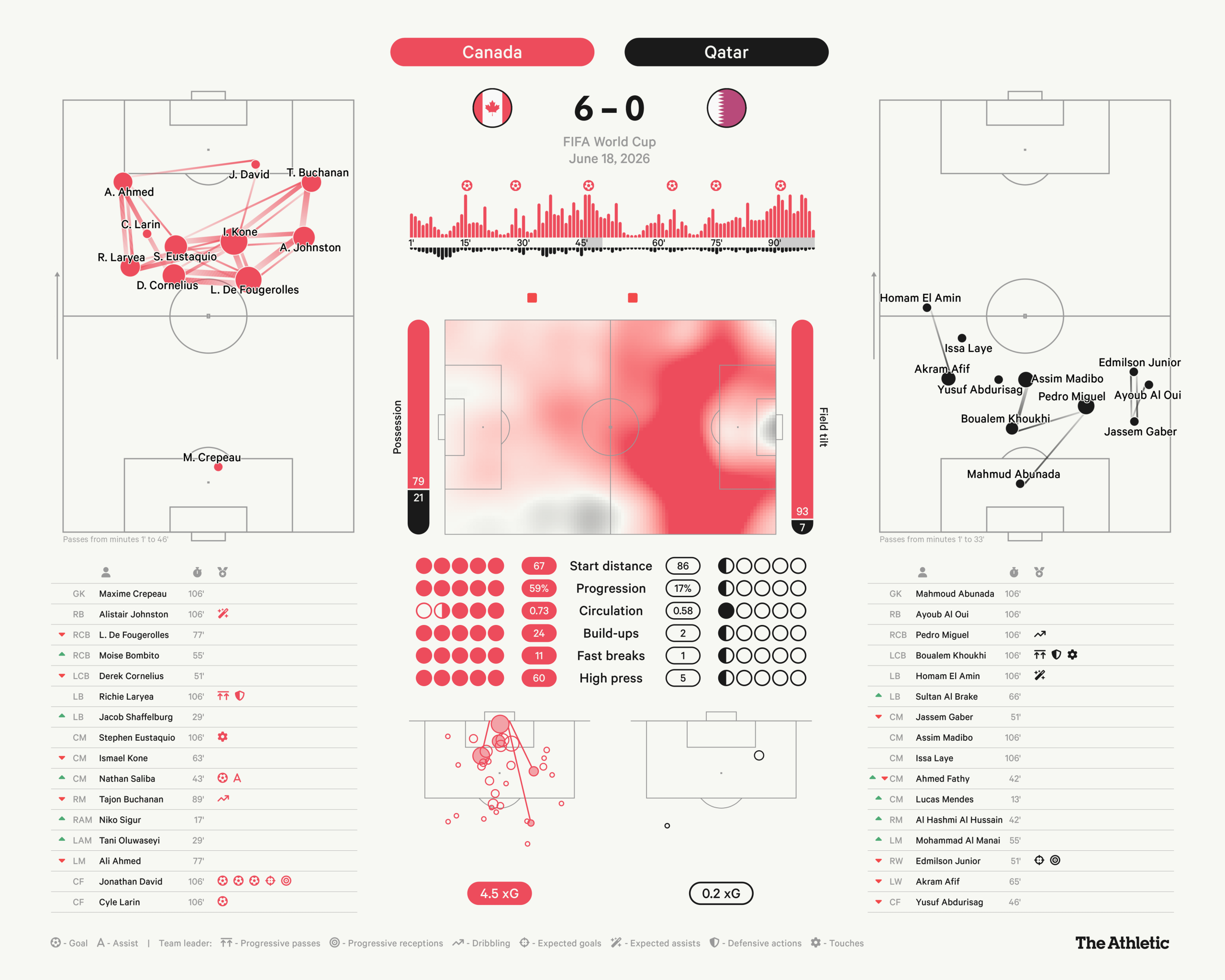
Qatar offered nothing in attack or defence with 11 men and made multiple ridiculous tackles. Two of those brought red cards, with one seriously injuring Ismael Kone to cast a dark cloud over a dominant win.
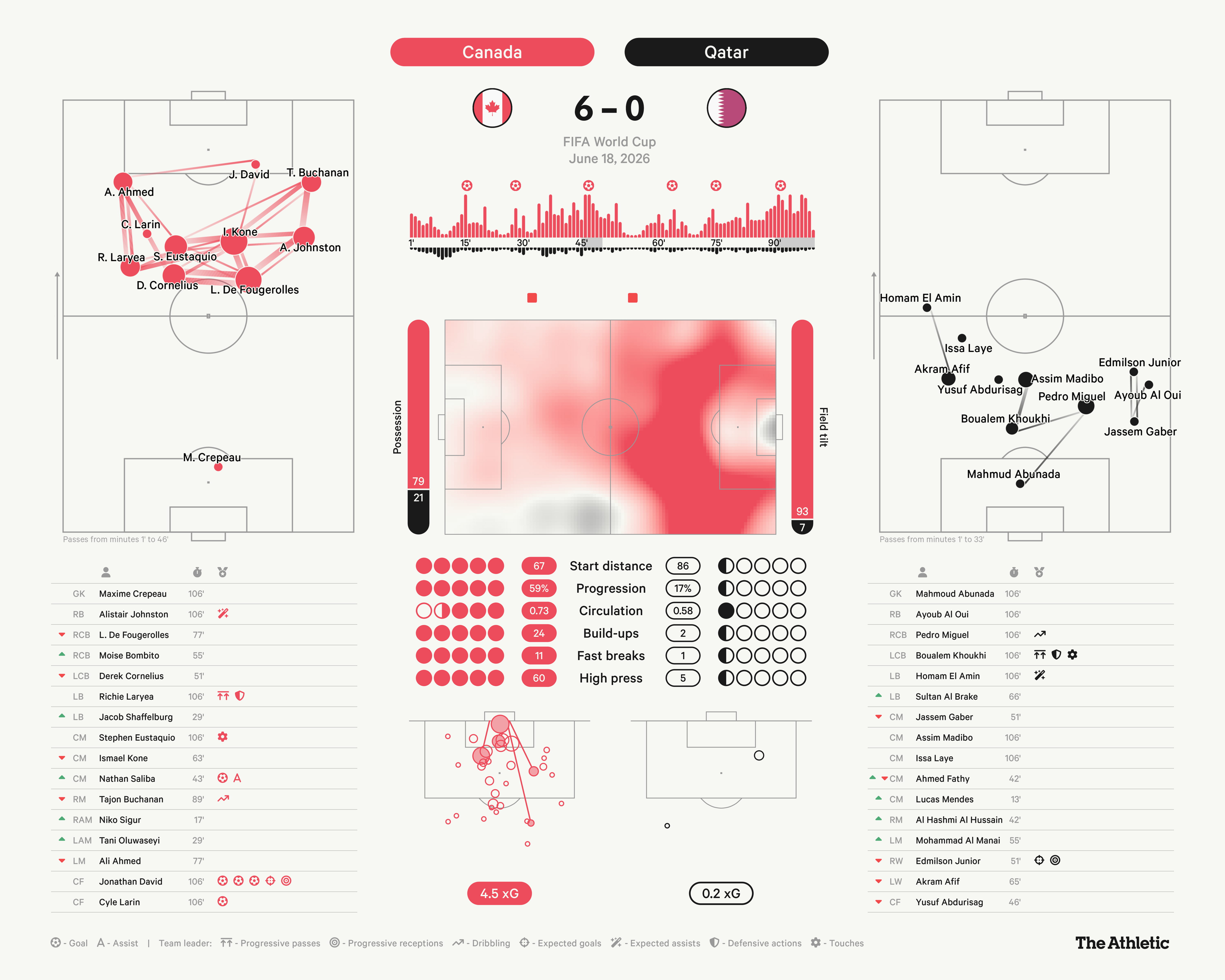
The only blot on an otherwise solid Week 1 for the World Cup expansion loyalists. Livano Comenencia’s equalizer and Dick Advocaat’s emotional reaction were great but this was a muscle flex if there ever was one. Germany’s xG of 4.2 was still only the fourth-most by a team in the last three World Cups and the second-most of this edition (behind Canada’s 4.5 against Qatar).
Egypt did not look overly reliant on Mohamed Salah even though he assisted Emam Ashour. They posed a constant threat on the break against Rudi Garcia’s side, whose defensive organisation was suspect and they needed Romelu Lukaku — who played 64 minutes for Napoli in all of 2025-26 — to force an own goal for a point.
Panama dropped into a back six at times in the first half, keeping Croatian chances to a minimum while posing a threat on the break. Zlatko Dalic’s side took the lead in the 54th minute through Ante Budimir, tapping home a perfect Josip Stanisic cross. Panama had more possession after the goal but got just one shot on target in that time.
Another slice of Kylian Mbappe history as he converted two of his eight shots, twice Iraq’s total, and ran riot with Ousmane Dembele and Michael Olise before and after a frustrating 131-minute delay due to thunderstorms.
Neither team was keen to move out of first gear in a first half with six shots and just 374 completed passes. Daizen Maeda’s well-constructed goal — and multiple Sweden players not knowing a draw would be enough to progress — made for an entertaining second half, with a beauty from Anthony Elanga levelling things up.
Uruguay scored from one of 27 shots, with their conversion rate of 3.7 per cent the second worst by a team in World Cups since 2018 (minimum one goal scored).
Saudi Arabia were well worthy of their point. They defended with numbers and a high line that caught their opponents offside six times. Only two teams have done better in the same timeframe: Spain against Costa Rica in 2022 (seven) and Saudi Arabia themselves in that famous win over Argentina one day earlier (10).
Switzerland had two-thirds of the ball, and Dan Ndoye alone matched Qatar’s shot attempt tally of six. Yet, they only had Breel Embolo’s penalty to show for it and let the game wander, with Miro Muheim’s 94th-minute own goal securing Qatar’s first World Cup point.
Ismael Saibari’s finish after 67 seconds – the earliest goal in this tournament – was brilliant before, as with their first game, Morocco’s energy dropped in the second half. Scotland were better after the break but quality chances were hard to come by.
A historic result manufactured by an aggressive defensive strategy and the counter-attacking threat of Yoane Wissa and Cedric Bakambu. DR Congo completed just 96 passes compared to Portugal’s 724 but still managed more shots (eight to seven) — talk about efficiency.
Expectations were higher from a game between the two highest-ranked teams in Group J, but Austria did little to trouble a physical Argentina side. Lionel Messi missed a penalty but scored twice, including a vintage left-footed low curler from the edge of the box, to become the World Cup’s all-time top scorer with 18 goals.
Brazil racked up 4.46 xG, the fourth most in the past three World Cups, and feasted on Scotland’s errors to secure a convincing win. Steve Clarke’s side were better after half-time and Scott McTominay had three great chances, but this was yet another sobering major tournament defeat for the Scots.
The Yan Diomande game! The RB Leipzig winger was electric on both flanks, almost single-handedly making up for both teams leaving their shooting boots at home. Ivory Coast’s depth ultimately won out, with Manchester United’s Amad coming off the bench to score a 90th-minute winner.
Scoring early feels like Spain’s best route to success and Lamine Yamal, in his first World Cup start, provided it. Saudi Arabia offered little resistance, but this was the Spain people expected to see.
Cristiano Ronaldo arrived at the World Cup with a double in a game where Portugal’s high-risk approach paid off handsomely. They unleashed plenty of set-piece trickery too, none bigger than Nuno Mendes’ fine first-half free-kick goal to make it 2-0.
Two Dutch goals in the first seven minutes made for a one-sided first half. Hazem Mastouri’s goal prompted a bit more adventure, but Ronald Koeman’s side were simply better and scored a third as Tunisia suffered a third straight defeat.
Emotional celebrations followed Jordan’s first goal at a World Cup scored by Nizar Al Rashdan with a clean strike against the run of play. Algeria had 71 per cent possession and completed over thrice as many passes (561 to 181), ultimately scoring from two of their 10 corners to eliminate Jordan.
Nicolas Pepe’s double booked Ivory Coast’s first World Cup knockout appearance in a largely comfortable victory. Curacao gave it their all despite going behind after seven minutes, but they just lacked a cutting edge in the final third.
South Korea had eight shots in the first half, with plenty of free-flowing football, but they got just one of those on target. The two teams then had nine of 12 combined shots on target in the second half.
The Czech Republic channelled their inner Premier League influence to score from a throw-in, while Korea’s equaliser by Hwang In-beom came at the end of a 25-pass move.
A headline World Cup debut for Erling Haaland, who scored his signature backpost goal and then pressed Iraq goalkeeper Jalal Hassan into gifting him a second. For Iraq, Aymen Hussein scored at either end in a forgettable showing.
A standout example of what many envisioned when Brazil hired Carlo Ancelotti. They utilised their pace in behind to perfection, creating 0.86 xG from fast breaks and scoring twice from those situations, the joint-most by a team in the last three World Cups.
South Korea did not have a shot on target for 86 minutes and could have equalised with their first effort on goal. Goalkeeper Kim Seung-gyu kept them in the game after, gifting Mexico — who were booed for a flat first half — the winner. Football’s just like that sometimes.
Ecuador finally came to the party after struggling to put away their chances in their first two games. Nilson Angulo’s strike was excellent and Gonzalo Plata’s winner, which will live long in the Ecuadorian memory, ensured Germany’s shortcomings were punished.
The first half of this match was entertaining. Brazil struggled to cope with Morocco’s flair, movement and purpose in the first half and Ismael Saibari’s goal was just reward. A moment of genius from Vinicius Junior drew them level but has been somewhat forgotten given some of the tournament’s other star players’ exploits since.
The second half, however, included both teams combining for eight shots and 117 possessions lost.
A game of inconsistent football and great saves. Iran’s Alireza Beiranvand was crucial to keeping Belgium at bay with seven stops, including an extraordinary block from point-blank range by left-back Maxim De Cuyper, who attempted a game-high five shots.
Thibaut Courtois bailed out his defence when needed with a couple of reflex saves, too.
At 39, Lionel Messi might not be the best player in the world anymore, but this was evidence that mileage can be made up for with intelligence. His performance had all the classic elements — passes from deep, quick one-touch plays and three left-footed goals — and a foul for which he should have been booked and could have been worthy of a red card.
The first signs of vulnerability in the Canadian back line? Switzerland worked around them with ease to open the scoring and their second goal was a case of judgement and goalkeeping both being poor. Promise David’s goal for the co-hosts was delightfully executed but this game raised some questions for Jesse Marsch ahead of the knockouts.
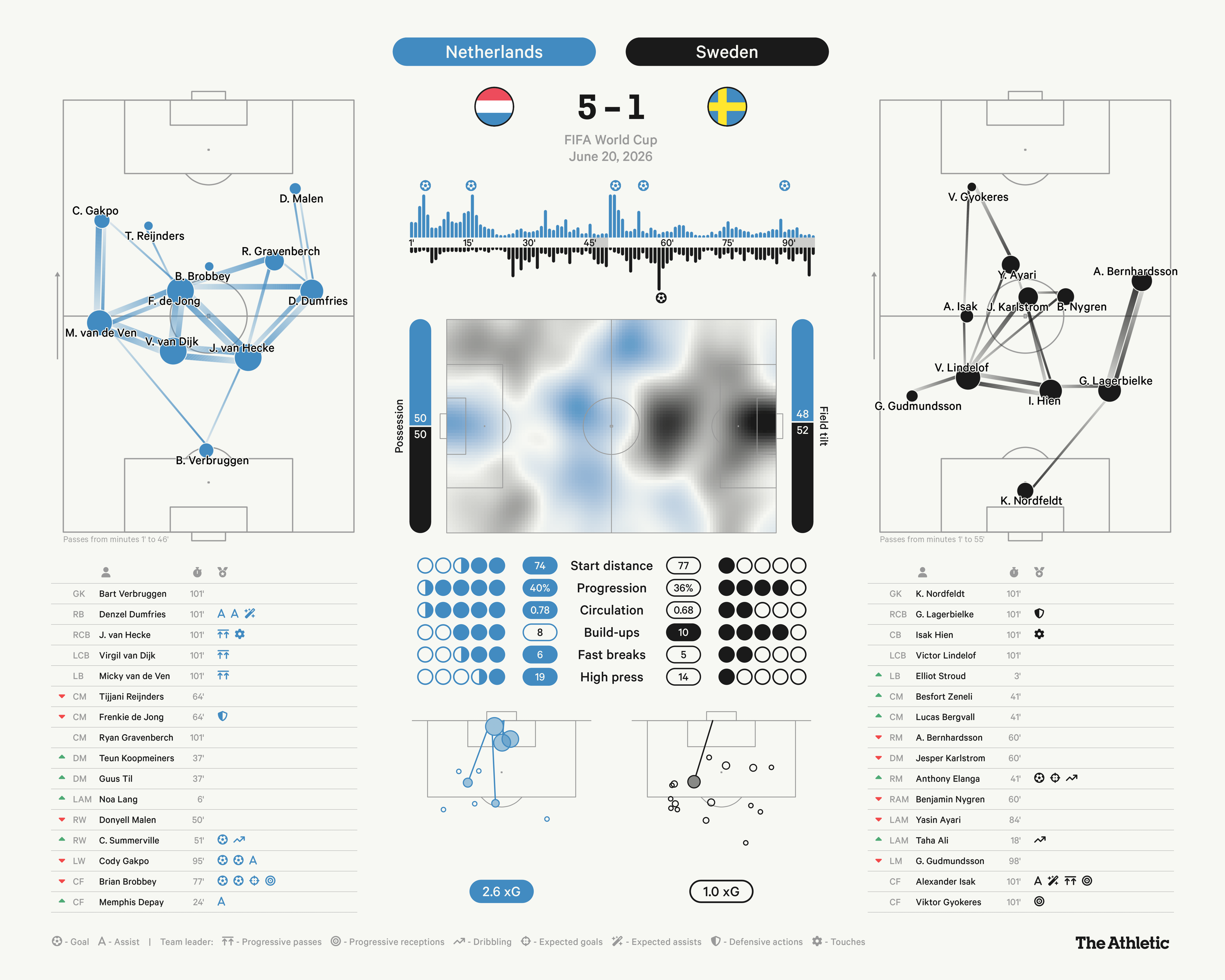
Sweden scored their five goals from just 1.3xG, the second-highest overperformance (+3.7) across the past three tournaments behind England’s 6-1 win over Panama (+3.9) in 2018. Yasin Ayari had his own goal-of-the-tournament competition, and Alexander Isak and Viktor Gyokeres both scored from each other’s assists.
There was the first sighting of a football ‘Snicko’ and this game led to Tunisia head coach Sabri Lamouchi being axed, too. Welcome back to the World Cup, Herve Renard.
An enjoyable end-to-end affair where the first half felt like a rout with Australia having as many shots as yellow cards — two, the same number of goals the United States had scored. The second half was more even but the damage was done.
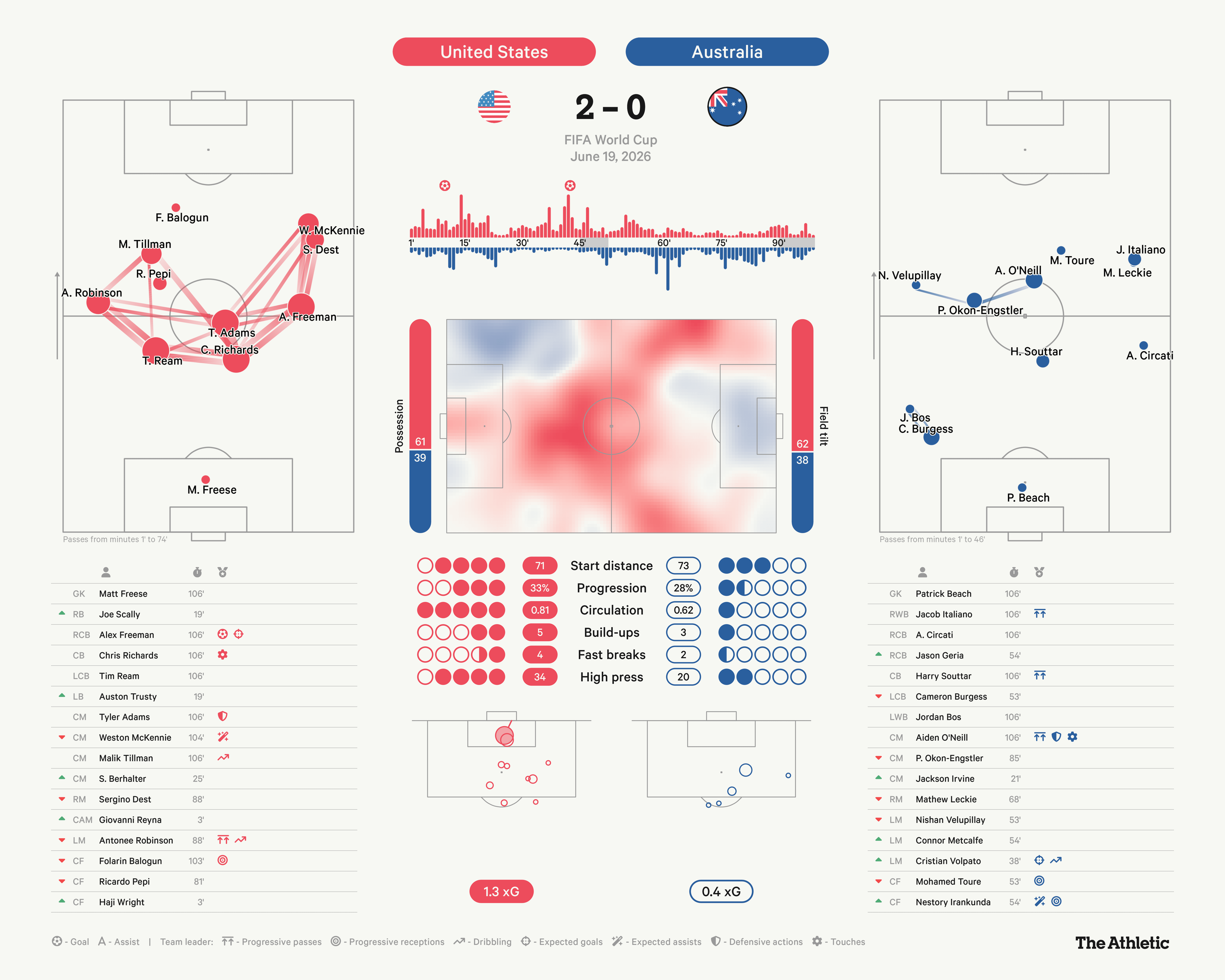
For 74 minutes, this game was goalless, but part of the joy of World Cups comes from substitutes actually making their mark. They did, making this the first game in World Cup history to feature five goals scored after the 70th minute.
Enter 20-year-old Johan Manzambi and 62-cap veteran Ruben Vargas with Switzerland struggling to pick the lock. The duo scored a goal apiece, Vargas set up Manzambi for Switzerland’s third and there was still time for a Bosnian thunderbolt from another substitute, Ermin Mahmic, and a Granit Xhaka penalty.
A clinical performance that oozed technical quality and produced excellent goals. Japan scored twice in each half and kept a hapless Tunisia down to a shot apiece either side of the break.
Austria under Ralf Rangnick play fluid, relentless football but Jordan made a decent fist of their first World Cup match, creating nine chances despite having just 37 per cent possession and matching Austria’s 11 shot attempts. They reacted well to going behind and equalised, and it took Austria an own goal from a set piece and a 102nd-minute penalty to win.
An action-packed first half with a brilliant Kerim Alajbegovic strike, an own goal, a vintage Hassan Al-Haydos goal from a cutback and two shots cannoning off the post. Things got more tense in the second half, with the two teams’ desperation to win and qualify for the knockout phase before Bosnia sealed it with a late third.
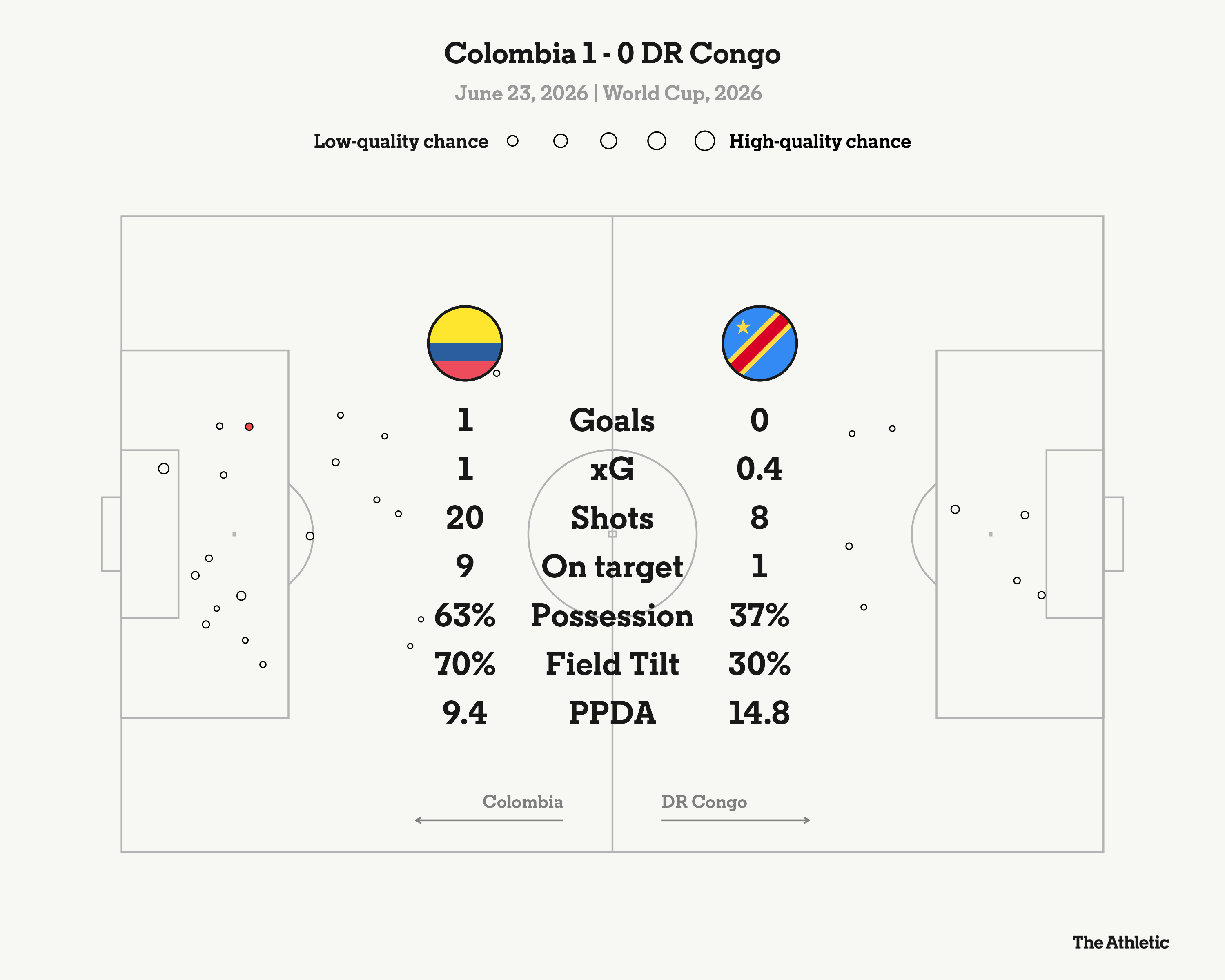
Another great goalkeeping performance, this time from DR Congo’s Lionel Mpasi, to savour in an entertaining contest. Colombia peppered him with shots from all parts of the attacking third, as seen below, and had three goals disallowed before Daniel Munoz’s deflected strike — cruelly — finally beat Mpasi on 76 minutes.
DR Congo’s aggressive defending was easily worked around by Nestor Lorenzo’s rampaging side, the only rogue dark horses at this tournament to live up to that billing.
Egypt’s first World Cup win was a memorable comeback, propelled by a second half in which they kept New Zealand down to four shots while racking up 13 and scoring three goals. Set pieces were expected to be a theme and both teams (literally) delivered.
Colombia were one of the most entertaining teams across World Cup qualifying but were made to work hard by a disciplined Uzbekistan in the first half. Daniel Munoz’s goal was cancelled out in the second half, but Luis Diaz added to his assist with the go-ahead goal.
Uzbekistan went close to an equaliser before Jaminton Campaz scored in stoppage time, immediately followed by a shot at the other end that thundered back off the crossbar. Entertaining stuff.
There is joy in watching less-fancied teams battle adversity and succeed.
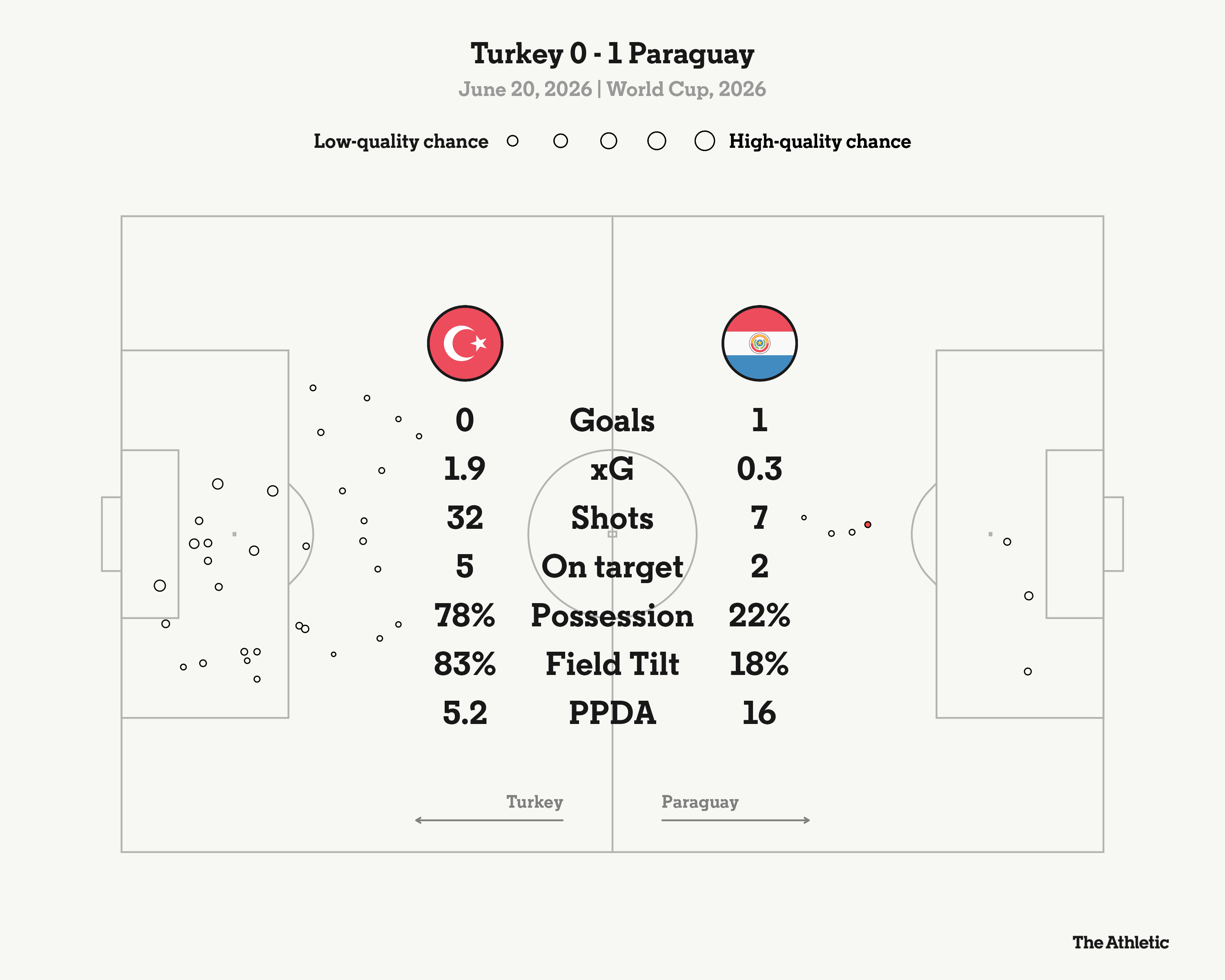
Paraguay scored early, then lost Miguel Almiron to a red card for covering his mouth — a first — but remained resilient enough to bounce back. Turkey attempted 32 shots, raising their tournament tally to 62 — the most over two World Cup games without a goal scored since records began in 1966.
Ecuador had 27 shots worth 2.8xG and 15 efforts on target worth 2.3xGOT (expected goals on target, a measure of shot quality after the shot is taken). Eloy Room stood tall in the face of it all to make the most saves in a 90-minute World Cup match to secure a historic point for Curacao.
It wasn’t all one-sided though — Dick Advocaat’s team had 10 shots and forced Hernan Galindez into a couple of great saves too.
This would have evoked annoying memories of the 0-0 draw against Morocco in 2022 and 1-1 draw with Russia in 2018 for Spain. They struggled to up the ante without Lamine Yamal and could not break down a disciplined, shapeshifting defence.
For Cape Verde, Vozinha was excellent at snuffing out the few good chances Spain created on his way to becoming an Instagram phenomenon after one of the World Cup’s great results.
Senegal could and should have scored first, having disrupted France’s rhythm. They didn’t and Kylian Mbappe punished them first before Bradley Barcola’s chipped finish moments after coming on. Senegal did not even get to celebrate a late consolation, with Mbappe thumping the ball home brilliantly from distance.
This is his stage and he put down an early marker.
A perfect example of the immaculate vibes generated when a host team, backed by a boisterous crowd, absolutely coasts to victory. Christian Pulisic and Weston McKennie looked like Serie A regulars, Folarin Balogun’s finishing was on song and Gio Reyna put to rest any doubts about his selection by channelling his inner Luka Modric.
An even better example of the above. Mexico punished the Czech Republic’s sloppiness with aplomb after weathering their opponents’ good start, scoring all three goals in the second half. Goalkeeper Guillermo Ochoa coming on late in the game to participate in a sixth World Cup at age 40 and playing a small part in the final goal only enhanced the experience in a raucous Estadio Azteca.
Franck Kessie and Deniz Undav scored from cutbacks into the box, but the chaos of this game came from the number of opportunities from that same route that went begging. Both teams overcomplicated the basics in the final third for 93 minutes before Undav’s winner broke Ivorian hearts.
Listen, the game itself was not a classic, with chances at a premium. But for South Africa to leap from last place at kick-off up to second and qualify for the knockout phase of a World Cup for the first time in their history was incredible to witness. Thapelo Maseko had already four attempts where cutting onto his left foot allowed defenders to recover before thumping home a 63rd-minute winner that will surely attain cult status back home, like Siphiwe Tshabalala’s strike against Mexico on home soil in the opening match of the 2010 finals.
Before Lionel Messi, Kylian Mbappe, Erling Haaland and Harry Kane, there was Elijah Just.
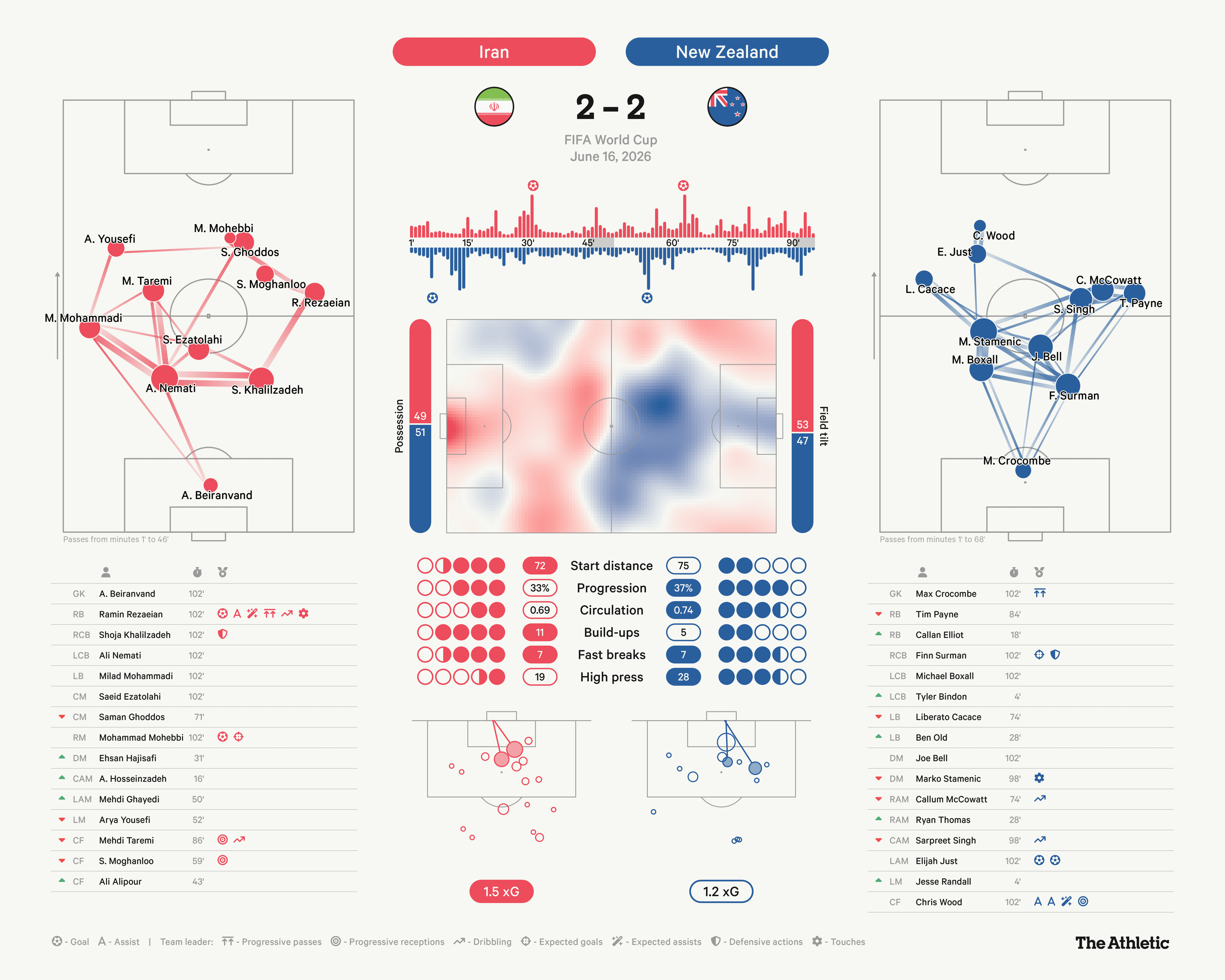
Two excellent goals, facilitated by some classic No 9 hold-up play from Chris Wood, meant New Zealand led twice. Iran responded both times in a classic cat-and-mouse game that included 31 shots, 12 on target and a near-even possession split (51 to New Zealand and 49 to Iran). Really good fun.
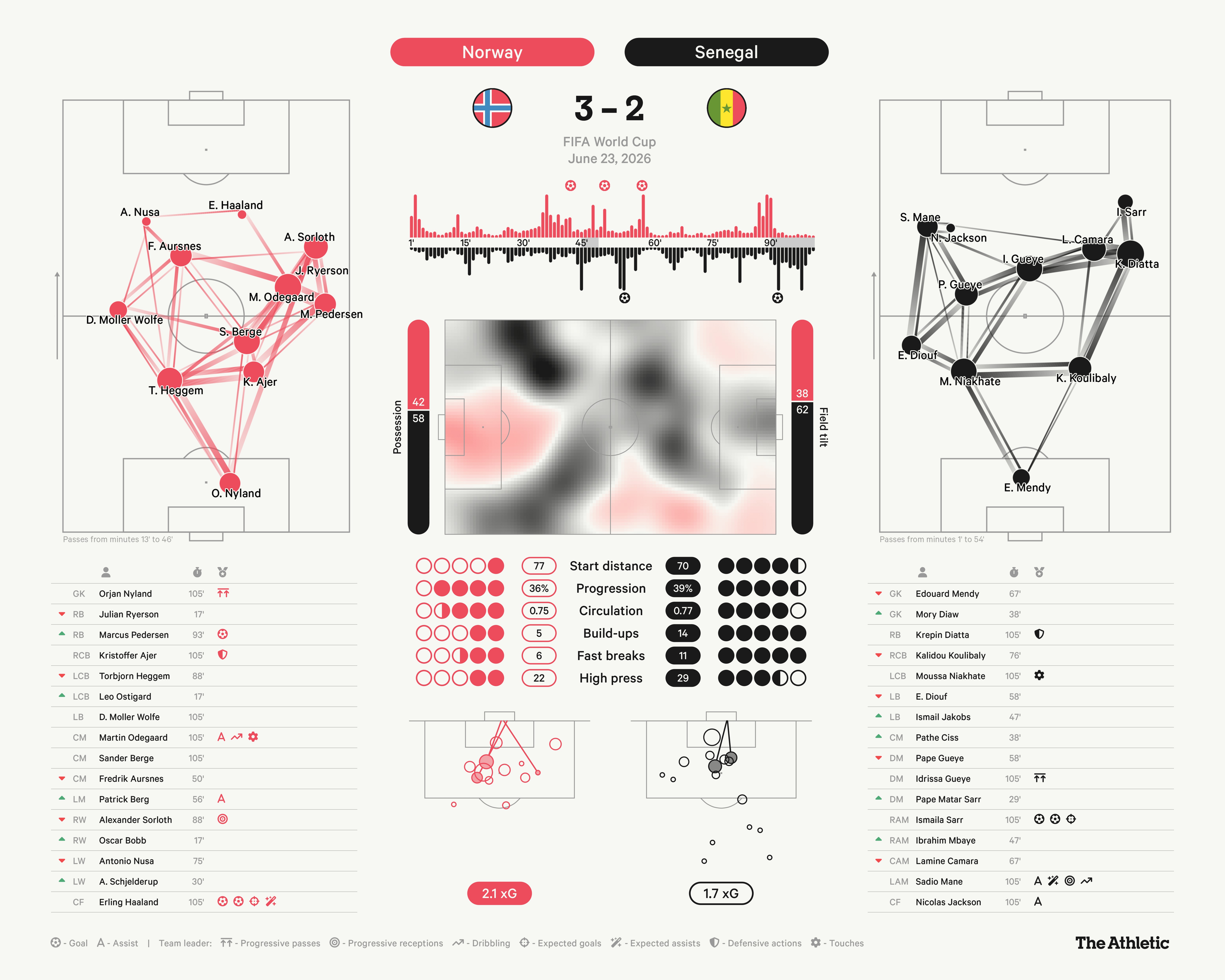
Had Senegal been more proactive in the first half or awarded a penalty late on after the ball deflected off David Moller Wolfe’s arm, this game could have gone differently.
Before they could really wake up, an Edouard Mendy error was punished by Marcus Pedersen before Erling Haaland scored once on the counter and then with a cushioned volley having leaned forward in frustration seconds earlier. Ismaila Sarr took both his goals brilliantly, even scoring while on the ground
He could have equalised late on with a header too, moments after Senegal needed a goal-line clearance to avoid conceding a fourth.
This game was top-class entertainment, showcased both teams’ tactical flexibility, and could have ended with a very different scoreline.
Brian Brobbey and Cody Gakpo feasted off low crosses to each score twice, punctuating this as the World Cup of cutbacks. But between their doubles, Sweden could have levelled things.
Graham Potter’s side ended the game with more shots (16 to 10) and shots on target (eight to seven) but endured a role reversal from their handsome win over Tunisia.
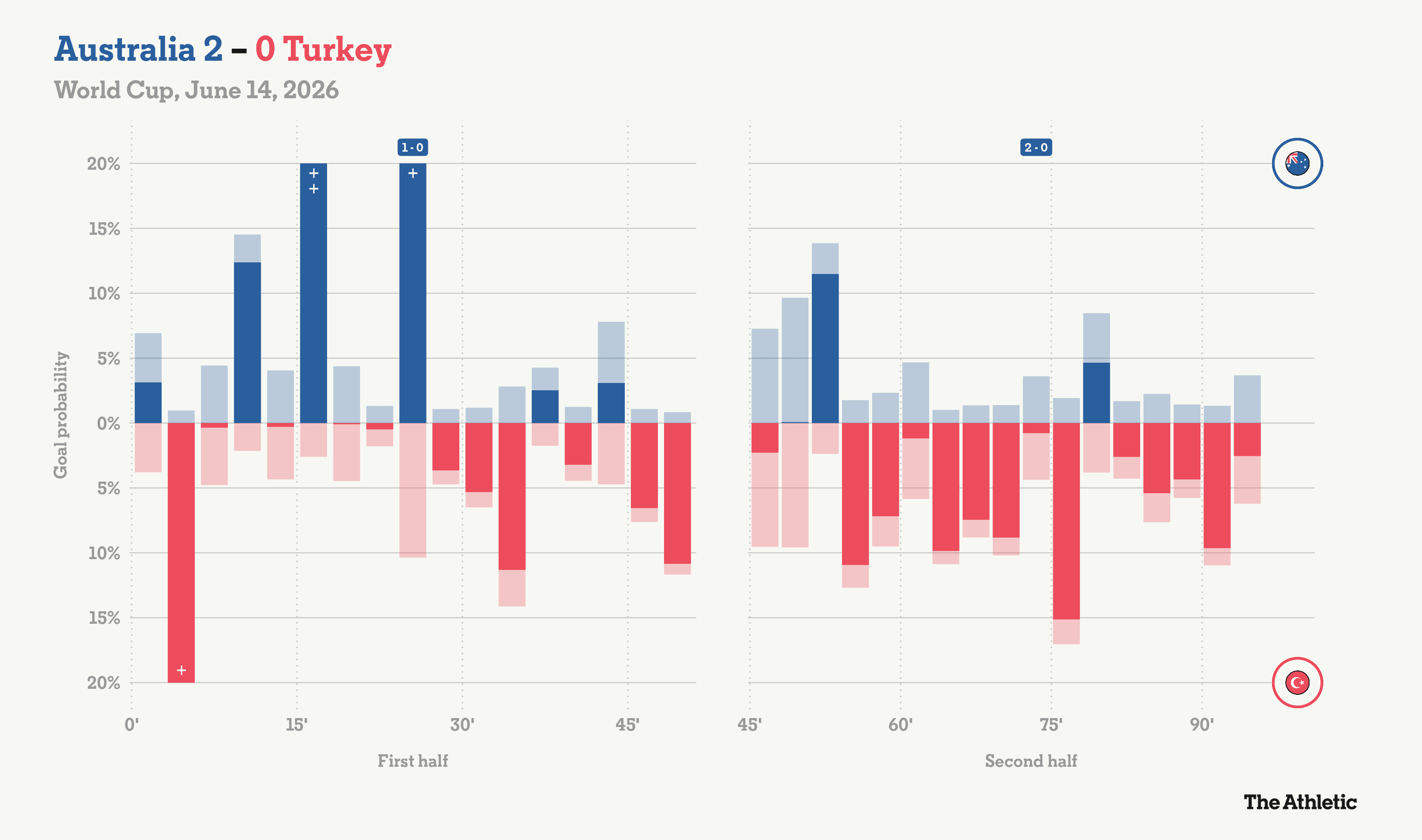
The adrenaline from a smash-and-grab of this kind is difficult to match. Turkey attempted 30 shots, 12 of which were blocked — both the highest by a team across the past three World Cups — while Australia goalkeeper Patrick Beach was excellent.
Australia had just nine shots but nearly matched Turkey’s xG of 1.36 (with 1.18). Nestory Irankunda and Connor Metcalfe’s goals were top-drawer.
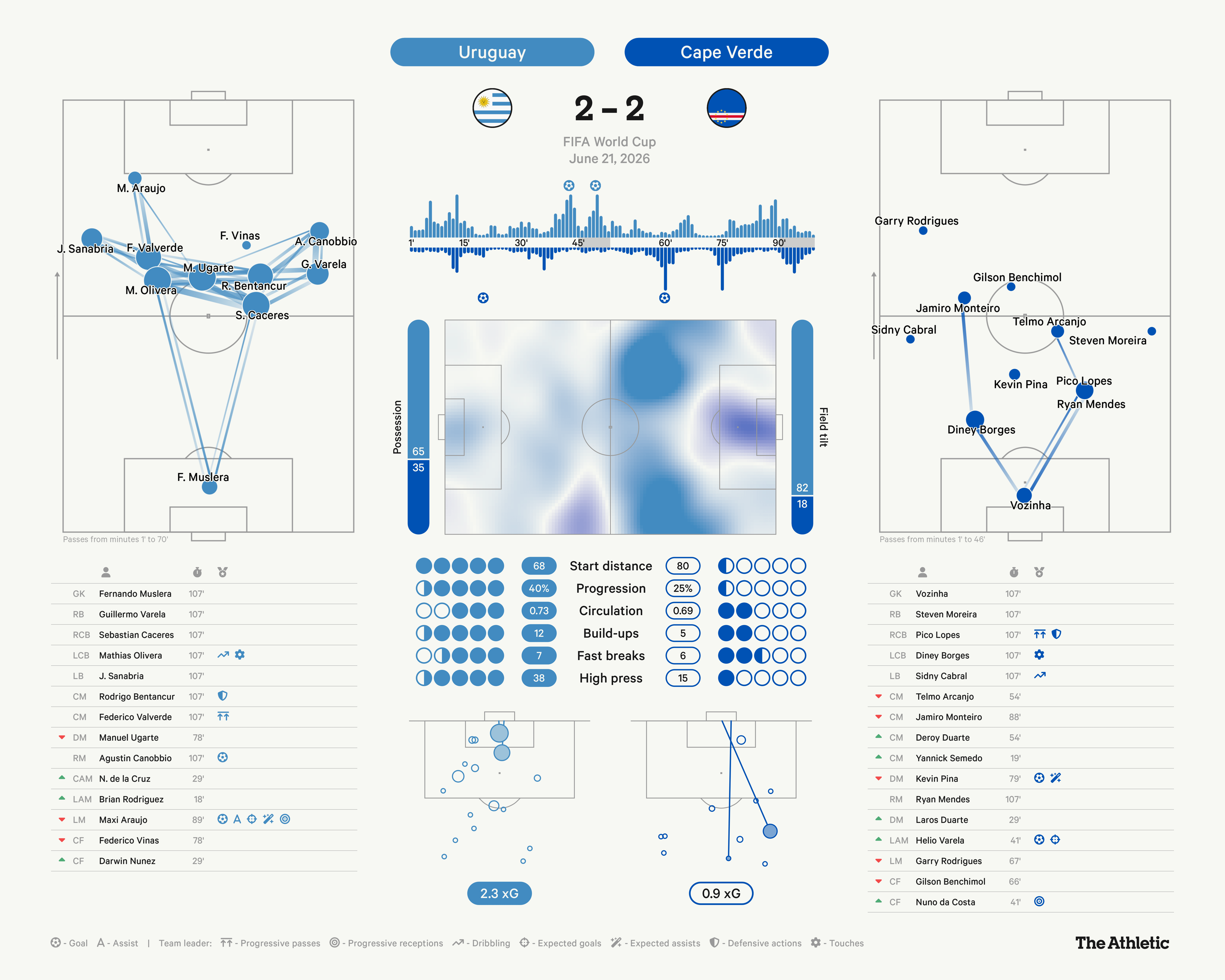
If the draw against Spain was viewed as a one-off, this game emphatically reaffirmed the resilience of this Cape Verde team.
Kevin Pina’s rocket set off an eruption of joy, only for Cape Verde to trail at half-time mostly because of Maximiliano Araujo, the only Uruguay attacker showing any semblance of form.
To not only equalise but outshoot Uruguay 10-6, with 35 per cent possession, in the second half deserves a high spot on this list.
Turkey were out of the tournament, while the United States had already secured top spot. But what could have been a dull dead rubber was instead an emotionally super-charged contest between two teams desperate to prove a point.
The co-hosts made nine changes but continued the theme of starting halves well, scoring in the third and 49th minutes. Turkey, not wanting to go out without a fight, converted all of their three shots on target (from nine attempts) after failing to convert any of their previous 13 (from 62 attempts).
The quality of chances was high, with both teams underperforming their xG in one of the most entertaining no-stakes games we’ve seen.
Tense, engaging and a first sight of two top teams playing at full tilt for 90 minutes. This game is one of the reasons the best teams in a group should play on the first or second matchday, when the jeopardy and desperation are more palpable.
Penalty (and a retake)? Check. Set-piece goal? Check. Two well-taken equalisers? Check. Lengthy passing sequence ending in a solo goal? Check. Barrage of attacks prompting one save after another? Check. Goal on the counter? Check.
This game, unlike most England outings in recent tournaments, delivered emphatically.
Haiti, already eliminated, embraced all hell breaking loose with a fast start. Their goals, which included a best of the tournament contender from Wilson Isidor, and the celebrations that followed them will be long remembered by those who were at Mercedes-Benz Stadium in Atlanta. They also defended resolutely in the second half, with goalkeeper Johny Placide forced into eight total saves.
Morocco’s quality and desperation ultimately proved the difference as Ismael Saibari scored for the third group game running before Soufiane Rahimi’s second-half cameo got them the win.