
A small, yellow toy frog lies abandoned as the pole plunges into the ground.
“This is how you search for bodies,” the mothers of the missing explain. “We search with our noses. Like wild dogs.”
When the earth is soft, it means it has been dug recently. Sometimes, they find concrete underneath — a calling card of concealed cartel burials. It is usually only the work of a few intense minutes for the women to break through with pickaxes.
Forcing their construction pole into the dirt, they draw it back out gently, and raise its tip to smell. They say they know the scent of flesh, the depth of the marker telling them how far to dig. Sometimes it is animal, more often it is human.
“If we find a body, we say a small prayer,” they say. “It’s to tell them: ‘Here we are. We’ve found you.’”
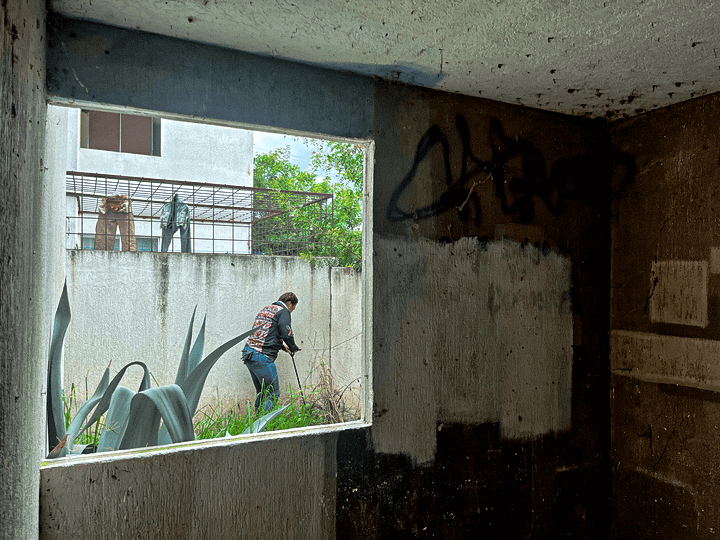
Gabriela using her probe to search for bodies in Villa Fontana, Jalisco (The Athletic)
These are the Guerreros Buscadores de Jalisco (Jalisco Search Warriors), a collective of families whose loved ones number among the 130,000 disappeared recorded by Mexico’s government, though experts believe the real number to be far higher. The vast majority are victims of narcoviolence. Since the beginning of last year, this group alone says it has found at least 350 bags of remains in the wasteland, backyards, and construction sites of Guadalajara.
According to them, at least 22 shallow graves have been unearthed in the immediate vicinity of the Estadio Akron, host of four World Cup games, situated on open scrub to the city’s west. A further 270 bags were found in Las Agujas, just eight miles north.
Many of the families of the disappeared say the presence of the World Cup is unwelcome while their sons and daughters remain unfound.
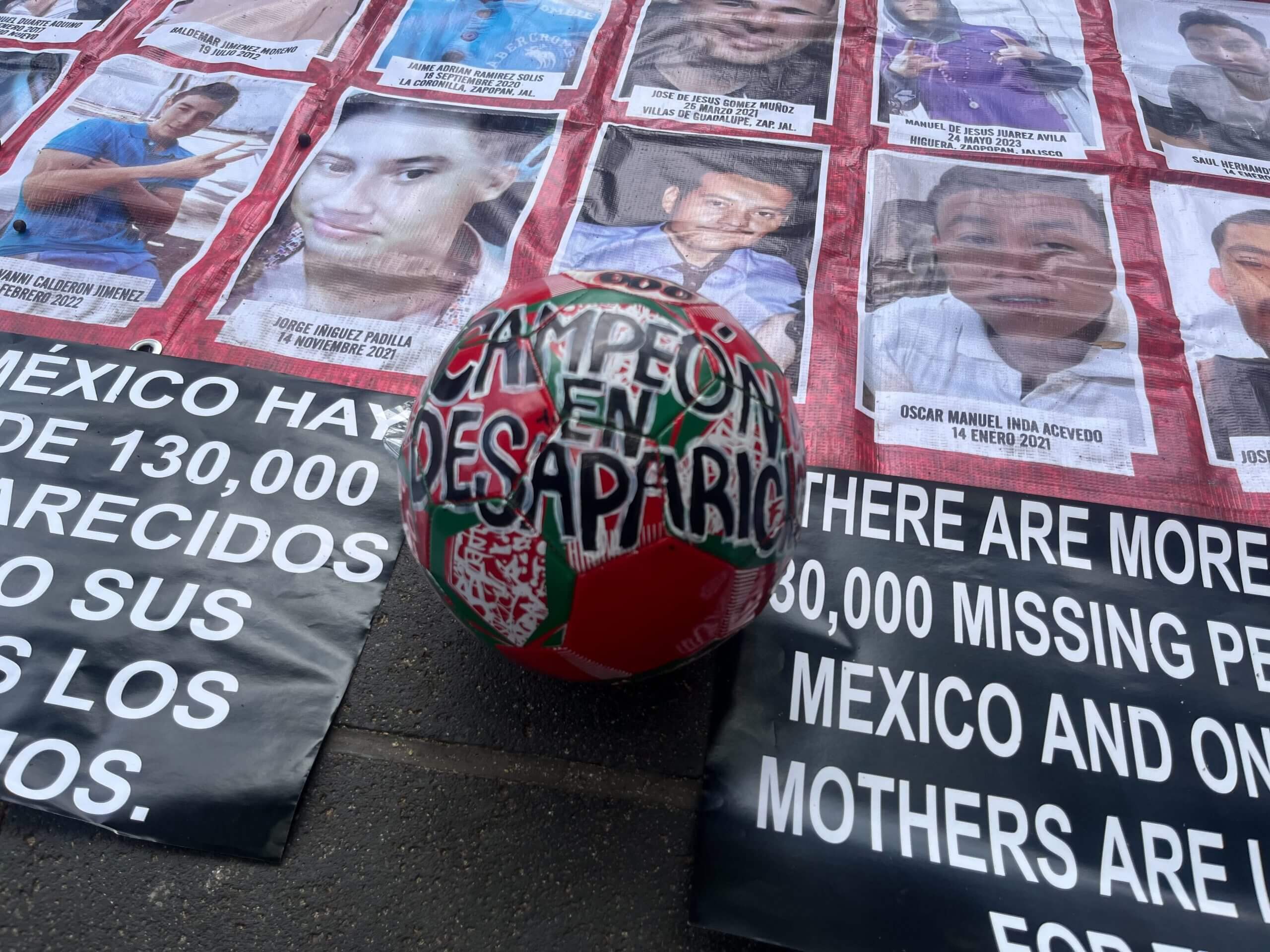
‘Champion in Disappearances’ reads a ball at a protest in Guadalajara (The Athletic)
“Everything we have was spent on renovations, to make this a beautiful city when it’s not this city to us,” says one member of the Buscadores, Victoria. She says that in two days, it will be the sixth anniversary of her son’s disappearance.
“The World Cup victimises us more. The ball comes back, but when are our children going to return?”
In Guadalajara, the Glorieta de los Niños Héroes (Roundabout of the Boy Heroes) symbolises the scale of Mexico’s disappeared.
Flyers pile over the borders of their neighbours, a wave of absent faces staring back at drivers. They hang off lampposts too, yet never look frayed. There is always a new poster ready to be pasted. It is now nicknamed the Glorieta de las y los Desaparecidos — the Roundabout of the Disappeared. Drive west, and the junction for Estadio Akron is less than 30 minutes away.
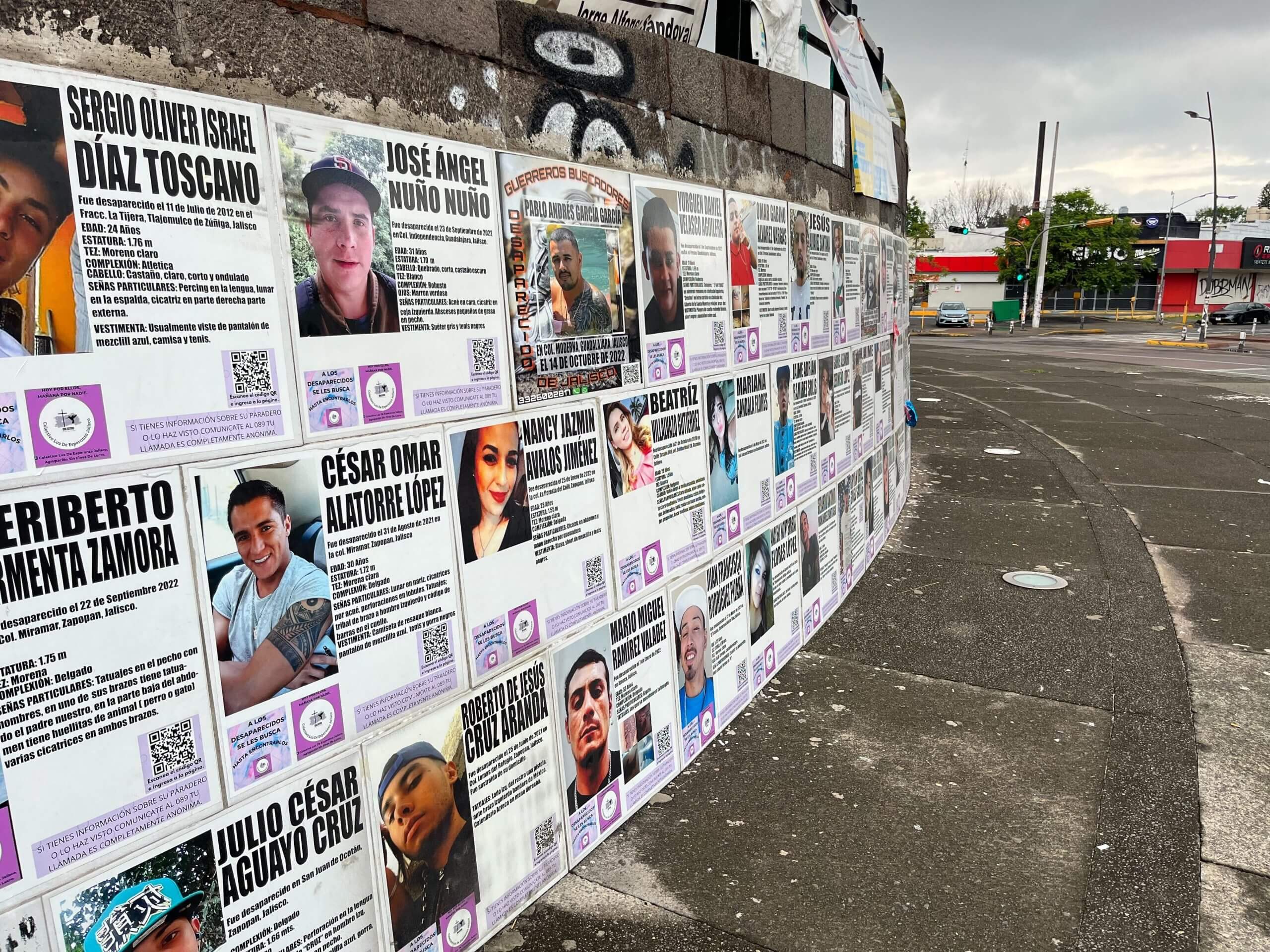
The Glorieta de los Niños Héroes in central Guadalajara (The Athletic)
On the day of the World Cup’s opening game, the families of the disappeared stage coordinated marches across Mexico. Graciela holds out a necklace, decorated with the face of her daughter Jessica. A member of the Buscadores, Graciela has lost two children to the violence. She is speaking in Spanish like all those quoted in this article, with her words translated into English.
“Jessica was 24 when she disappeared in 2019,” she says. “She was babysitting for two children, and that’s all we know. They took them all. Some months ago, I found out from a person that had been released from prison that she had already been killed, and buried in a house.”
Graciela claims the government has not yet allowed her attempt to retrieve her daughter’s remains, which she says are situated on private property.
“My son also disappeared in 2011,” she adds. “I found him, yes, I found him. But he was given to me in ashes. I don’t yet have a death certificate. They assure me that they are the remains of my son, but I am still fighting for him.”
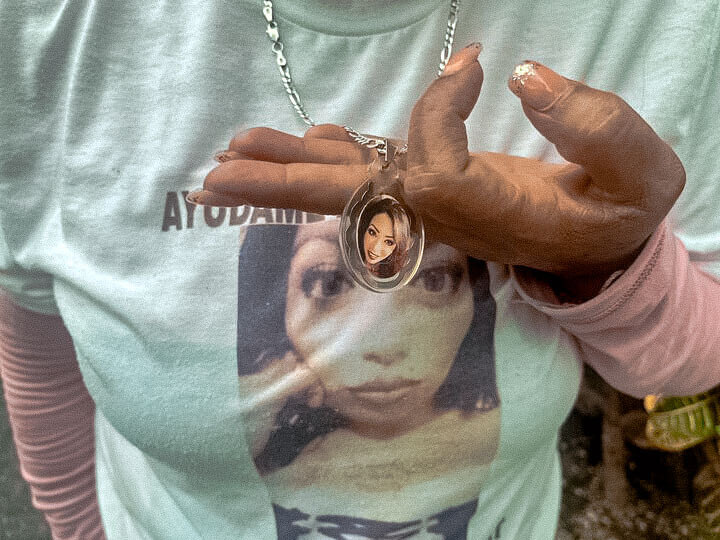
Graciela’s daughter, Jessica (The Athletic)
The Buscadores meet at a petrol station on the city’s southern fringe. It is Father’s Day.
For their safety, the searchers have a non-negotiable rule — they arrive at the search site in convoy, they leave the search site in convoy. Unusually, they are not accompanied by a police escort, which makes the day’s search even riskier. In recent years, the group says eight of their members have disappeared or been killed. The Athletic has decided to use only the searchers’ first names to protect their identities and photographs they have consented to using.
Susana is loading digging equipment into the flatbed of the group’s truck. Its number plates, along with every vehicle in the convoy, have been covered to make it more difficult for organised crime groups to track. Some members cover their faces to avoid being recognised.
“Look, there is a lot of danger,” she says, matter-of-factly. Two years ago, her brother Erick went to work as a waiter at a party. He never returned. “At the beginning, when I started searching, I was very scared. I would put on a hat, sunglasses, and a buff. I didn’t know who might want to hurt me.
“But over the years, I have lost my fear. You learn to live with it, you get used to it, don’t you? When I put on my boots, I feel like they give me superpowers. I can go into abandoned houses, I can find strange things. As a civilian, in my home, I would be scared. With my boots on, I can do anything.
“And somebody has to do it. If the government doesn’t dare, if they are scared to go into these neighbourhoods on a search, it is down to us.” She wears a long-sleeve T-shirt bearing her brother’s face, his name, and the date of his disappearance.
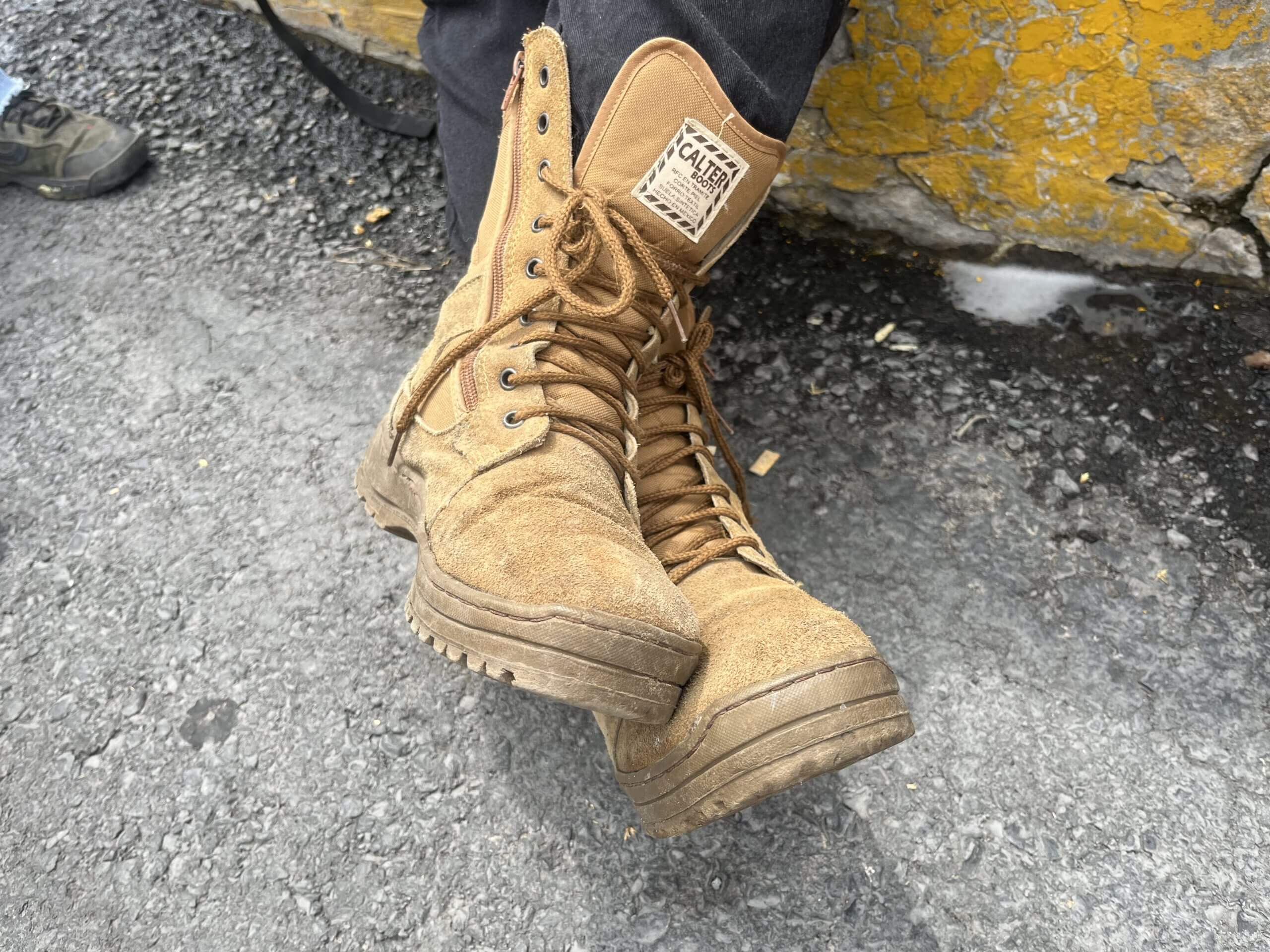
Susana says: “With my boots on, I can do anything” (The Athletic)
The group operates through anonymous tips, which they say are delivered by locals to a central hotline. “Some people say organised crime tells us where to look,” says Ruth, another member of the group. “That’s a lie, it’s the people who tell us.”
Today, they are bound for Villa Fontana in the suburb of Tlajomulco, a social housing project which lies 20 minutes south of Guadalajara in a low-income neighbourhood.
“Tlajomulco is a pit,” says Susana. “That’s what we call it. An open grave.”
Guadalajara is only Mexico’s third-largest city, yet possibly its most affected by narcoviolence. The city is a stronghold of the Jalisco New Generation Cartel (CJNG), which over the past decade, has established a reputation as the country’s most violent organised crime group.
According to government figures, the CJNG has been responsible for more than 75 per cent of cartel-related murders since 2017, almost doubling the national homicide rate in just four years. Those caught in the violence include not just those directly involved in the drug wars against the government and rival groups, but also the victims of robberies, extortion, activists, and environmental defenders.
More than 16,000 are missing in Jalisco alone according to the state registry, the most of any Mexican state. Last March, the Buscadores discovered what has since been described as a CJNG-operated “extermination camp” at the Izaguirre ranch, the other side of the Primavera forest from the stadium. There, they found three giant kilns, charred remains, and over 200 pairs of shoes.
On February 22, Mexico’s president Claudia Sheinbaum ordered the capture of the CJNG’s leader, Nemesio Oseguera Cervantes, better known by his alias El Mencho. After a gunfight in the town of Tapalpa, the operation ended in his death. El Mencho is now buried in Zapopan, just a 10-minute drive from Estadio Akron.
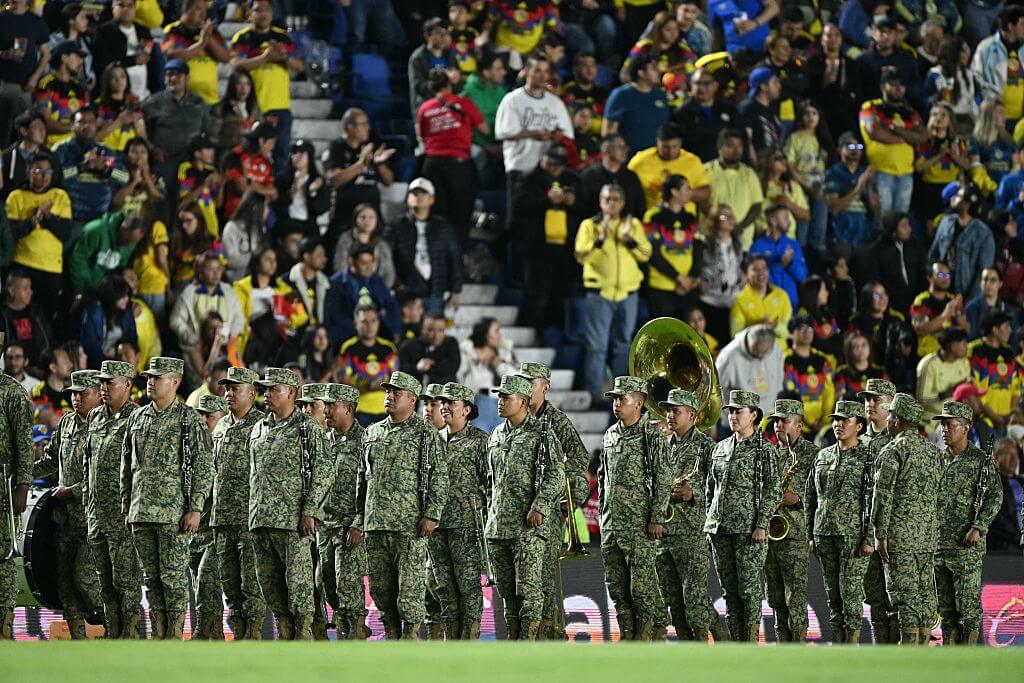
A minute’s silence is held at a match in Mexico City to honour military personnel killed in the attempt to capture El Mencho (Photo: Yuri CORTEZ / AFP via Getty Images)
The CJNG reacted with immediate violence, burning cars, blocking roads, and ambushing police officers. Incidents were reported in 20 of Mexico’s 31 states, with 70 people killed. One of the streets shut down was the central highway in Zapopan, leading to the Estadio Akron, stoking fears of violence during the World Cup. Almost 15,000 security personnel were deployed to Guadalajara in response.
Over recent months, the security situation has calmed to an uneasy truce. The government has not launched any more major operations for fear of sparking further violence, with local experts explaining that cartels favour a smooth World Cup due to their financial interests, which run deeply across Mexico’s major cities.
But though the violence may be less overt, the suffering of the families remains. The disappearances have not stopped — and neither have the searchers.
As the Buscadores arrive in Villa Fontana, one father gently asks if they would mind moving their truck a few metres further forward. It is his daughter’s 10th birthday, and they are hoping to put a small bouncy castle in the space in front of their house.
Luz, the group’s search leader and spokesperson for the day, immediately motions with her hand for the group to drive forward. It is important, she explains, to be friendly and open with the local population. The Buscadores rely on individuals for anonymous tips.
A calling card of the CJNG, in Jalisco, has been to bribe families in low-income neighbourhoods to bury the corpses in their backyards, according to the searchers. On private property, the bodies are harder to find.
As they enter the first house, the Buscadores are clustered by the street’s residents. Already, after less than five minutes, they have several more tips.
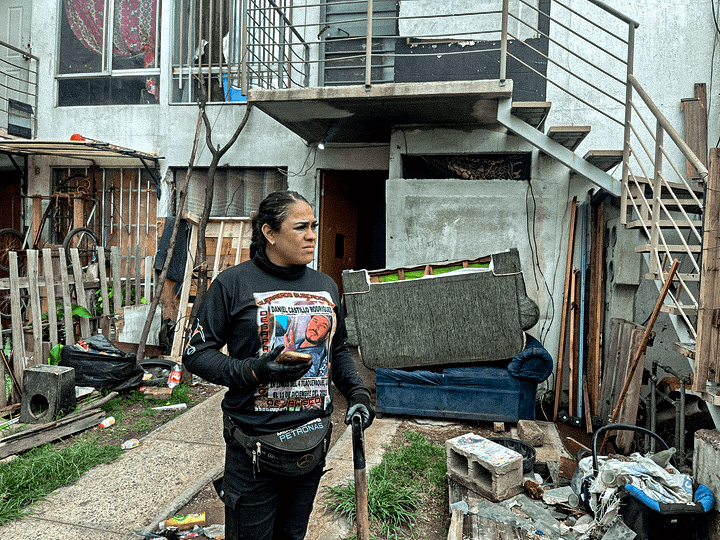
Luz, who was happy to be photographed leading the search in Villa Fontana (The Athletic)
In the house’s tiny garden, the homeowner explains that the soil was filled with glass and debris. She says the family had dug in several areas after moving in, but they are suspicious there was something underneath that. Upstairs, through an open window, television commentary of Spain’s win over Saudi Arabia drifts in the air.
Luz forces her pole into the soil. “The dirt is too compact,” she says. “The earth hasn’t been moved. It can’t be a grave.”
Like her fellow searcher Gabriela, Luz’s hair is tightly tied back into a matching plait. Both are dressed all in black; their long-sleeve T-shirts bear the same faces. They are sisters-in-law, whose husbands ran a car business, fitting and maintaining bespoke alarms and horns. At 3pm on January 2 2024, an armed group in two vans arrived at the shop, the women say. Three men were taken: their husbands, Fernando and Daniel, and an employee who had started work just three weeks before.
“They were robbed, they were beaten, and they were taken away,” says Gabriela. “We don’t know anything else.”
Their next search location was once abandoned, before its occupants stripped the house of debris and moved in. The Buscadores think the smell might be sewage, but wish to dig to make sure. They are correct.
Another false alarm is ruled out 10 minutes later, over the street. There are hordes of mice and cockroaches in this backyard; the women flick them at each other and joke about a huge marijuana plant growing nearby. They laugh that when they get home, they are going to decompress with a herbal tincture. It is another unsuccessful search; the soil here is too hard again.
“If we struggle with the dirt, so will the people that dig,” says Susana. “It means they’re lazy, they leave the body near the surface.”
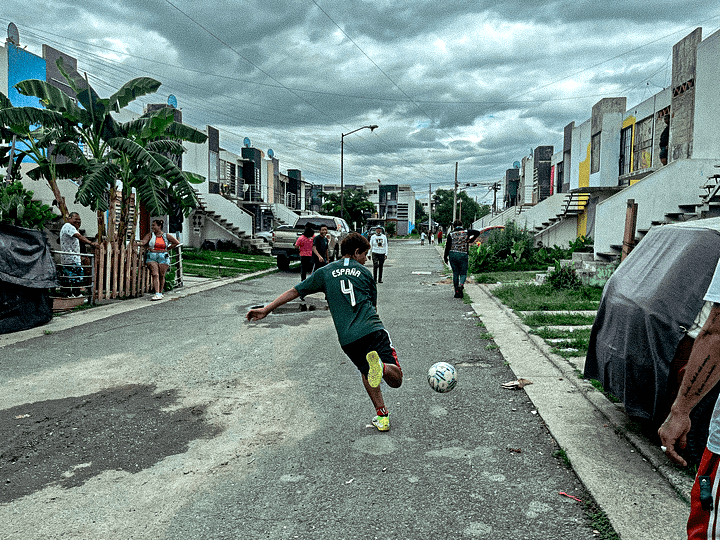
Street football games in Villa Fontana’s social housing (The Athletic)
For the Buscadores, ruling out every tip is part of the process. In the face of such vast suffering, their only option is to be systematic. The previous week, the group uncovered 11 bags of human remains in Santa Anita, some 10km west. They had already found 20 bags nearby.
“Sometimes it’s positive, sometimes it’s not,” says Gabriela. “Sometimes, we go to 10 different places and find nothing, other times, we find them as soon as we arrive.”
She describes one occasion last summer, when they discovered 10 bodies on a huge ranch property on the outskirts of the city. They had to use machinery to dig the corpses out.
“They were recent,” she says, gripping onto the side of the truck. “One of our colleagues on the search, she thought that one might have been her son. They were recent bodies, only maybe a month old. They were still complete. They all looked like they’d been tortured.”
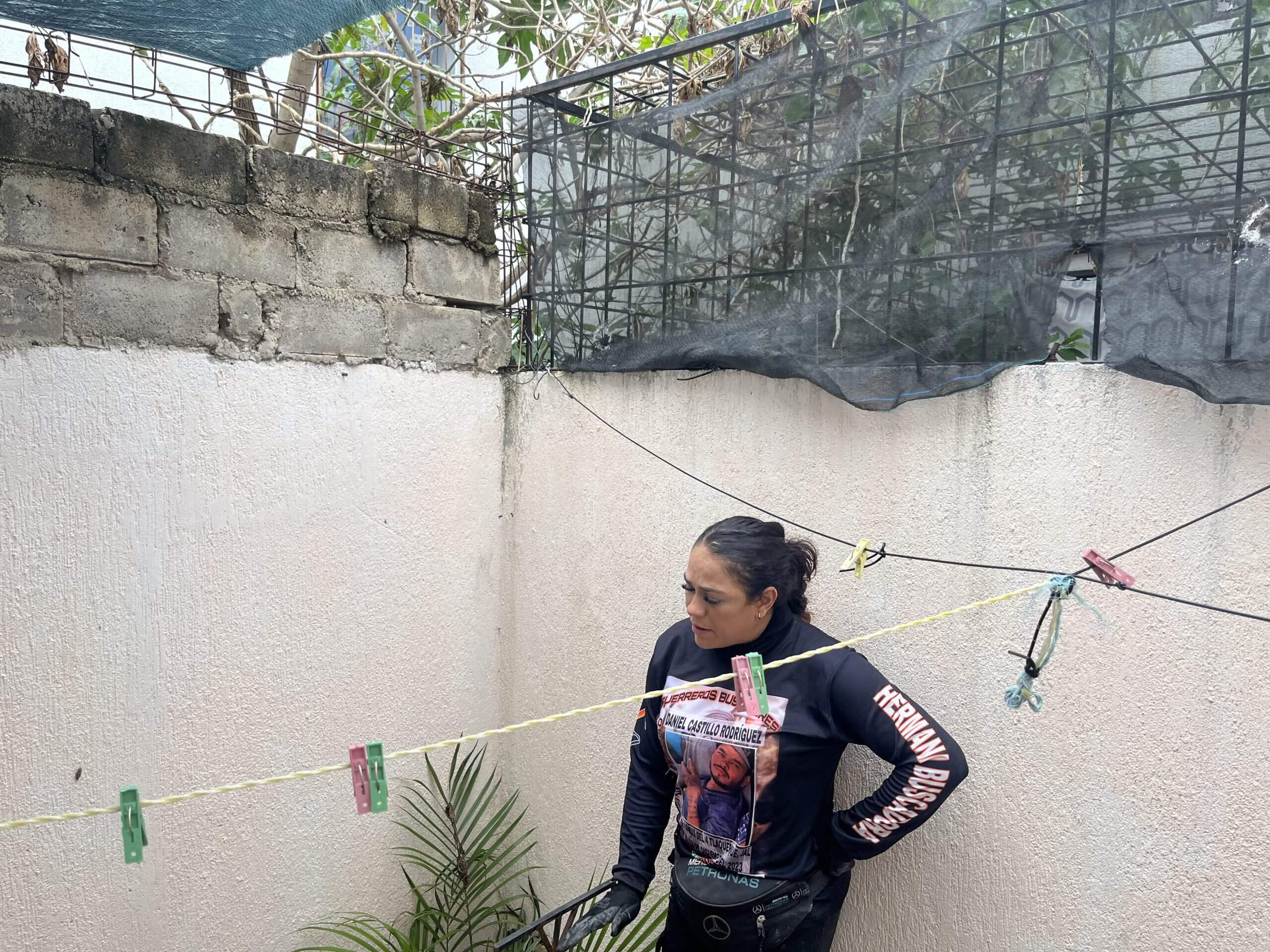
Luz recovers during a brief break in the search (The Athletic)
As she speaks, an old man limps past. He stops and turns. “Get out of here,” he spits. “Liars!”
It demonstrates the difficulty of carrying out their work within communities of competing interests. Gabriela looks on sadly. “We’re used to it,” she says. It is the first direct hostility they have faced, aside from figures watching from afar, who she suspects are keeping the cartel updated.
“Sometimes when they go by, they shout rude things, an infinite number. But they can’t have empathy. Maybe it hasn’t happened to them. They don’t know what it’s like to search underground for the people you love.”
Four hours before Mexico face South Korea at Estadio Akron, Guadalajara is awash with the national team’s shirts. One of them, at the centre of a group outside Ex Convento del Carmen, has been thickly daubed with red paint, as if to look like blood.
“Los Mexicanos no estamos invitados al Mundial,” it reads. Mexicans are not invited to the World Cup.
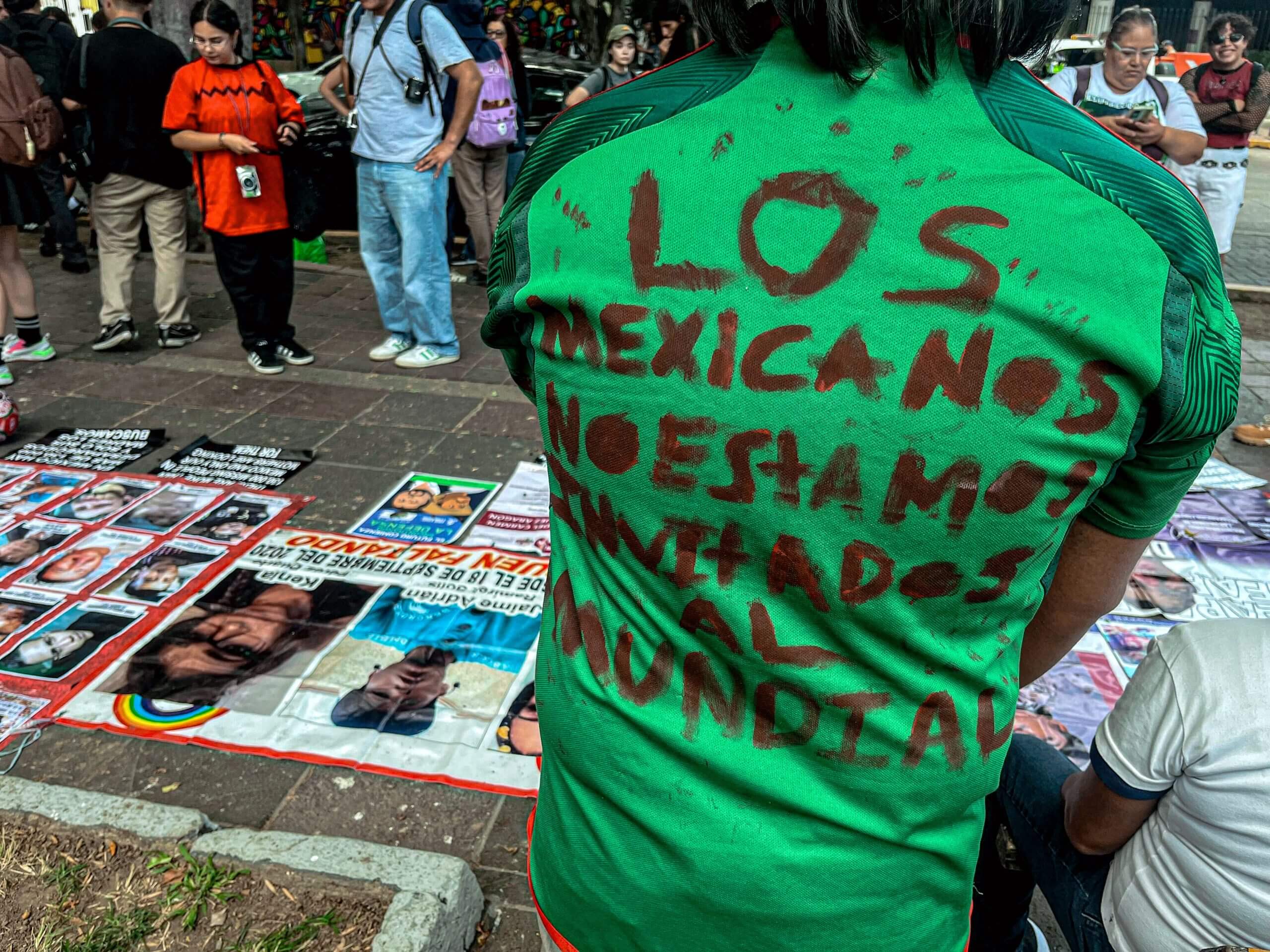
A protest before Mexico face South Korea at Estadio Akron (The Athletic)
Among the families of the missing, there is anger at the perceived excesses of the World Cup. Protestors point to a 9m statue of Pelé commissioned for this World Cup, along with another 100 monumental sculptures of soccer balls dotted throughout the streets.
Beatriz is wearing her own Mexico jersey, decorated with the face of her son, a jeweller who went missing on a vacation to Jalisco. She has travelled across Mexico from Veracruz to stand with the activists.
“As mothers, we are not against sports,” she says. “(The government) have spent millions of pesos when they don’t look at the mothers, at the disappeared. We lack forensic scientists, we lack investigators, we lack tools. We are looking for the missing, but all we have to help us are ghosts.”
For Andrea, their fight is an “invisible struggle”. She is particularly upset that games will be held at Estadio Akron, given the number of bodies discovered in Zapopan over recent months.
“It is a bittersweet feeling to see how they are decorating the windows while there are corpses downstairs,” she says. “My country can be so contradictory, it shows this union and companionship — but people need to know these things are happening.”
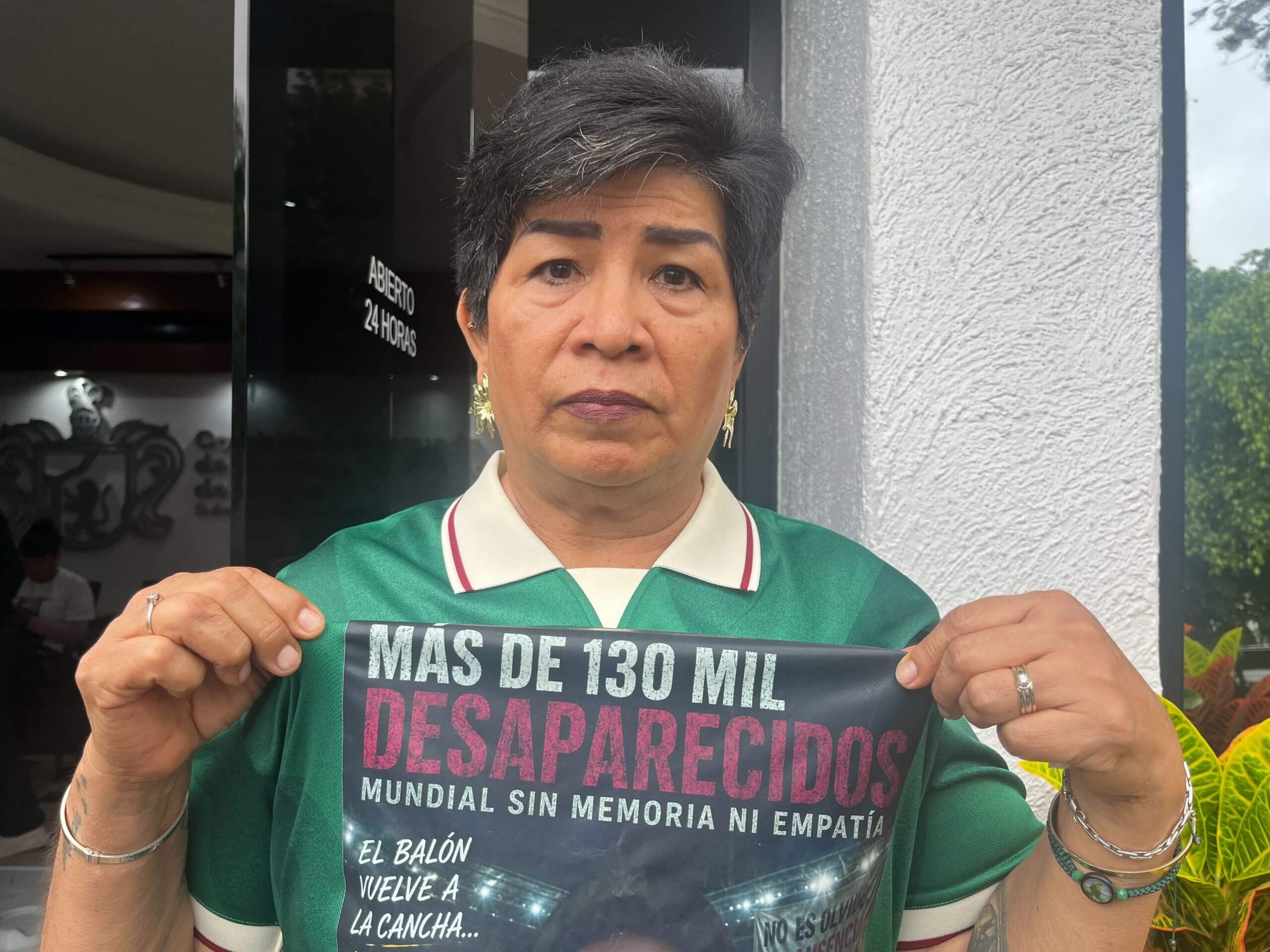
Beatriz travelled over eight hours to raise awareness of the missing (The Athletic)
Sheinbaum’s government have acknowledged that a lack of forensic investigators “are the major outstanding issue” in the country, but say “unprecedented steps” are being taken to locate and identify more of the disappeared.
One shirt at the demonstration stands out. Alejandro is wearing an England kit, given to him by a psychological support group for the families of the missing. They drew lots for jerseys; his friends picked Belgium and South Africa.
Alejandro is not against the World Cup’s presence. His son, Hector, worked less than a mile from Estadio Akron at the National Forestry Commission. He just wishes Hector was here to see it.
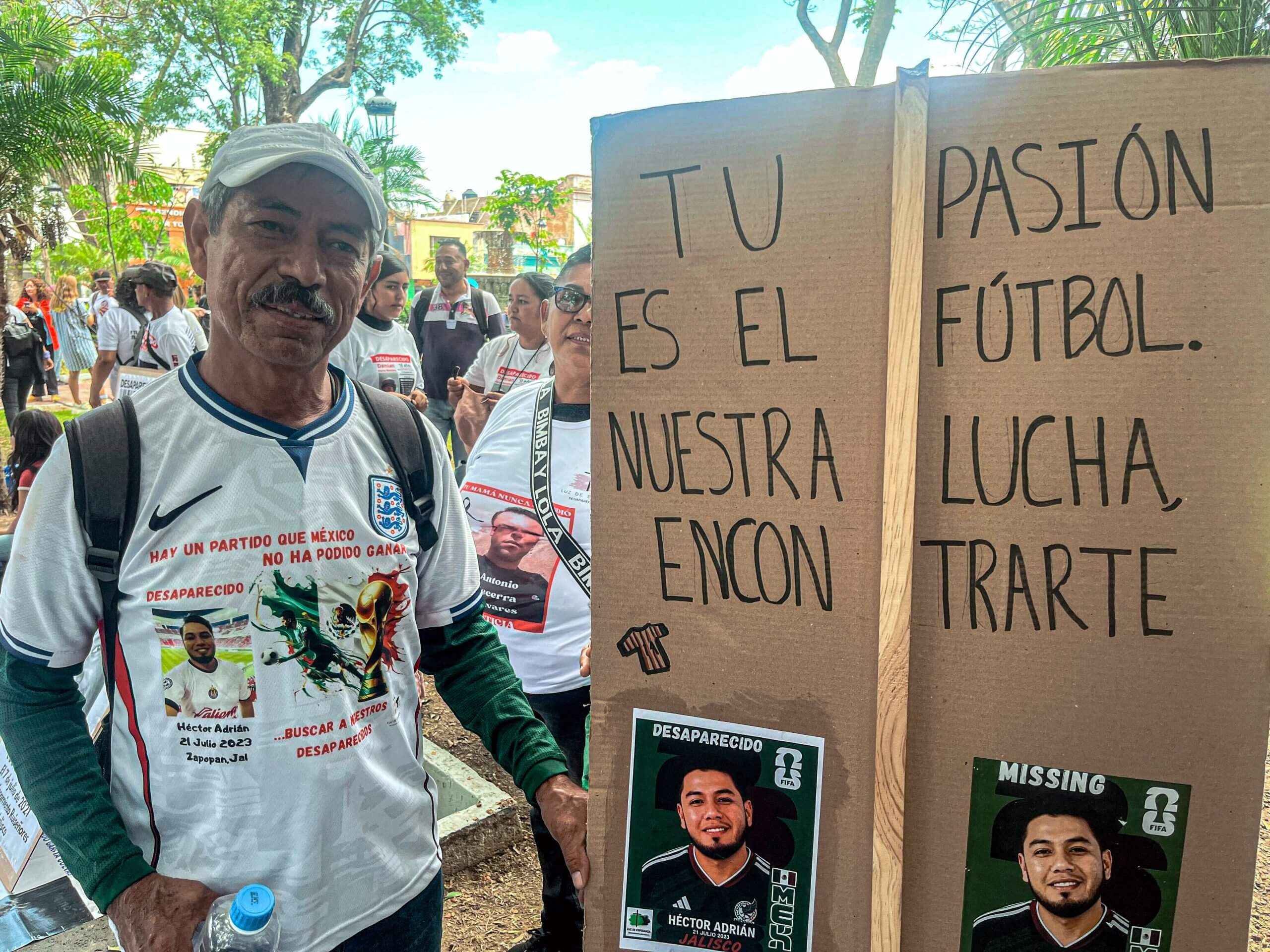
Alejandro wishes his son could have seen the World Cup (The Athletic)
“He disappeared a month after graduating,” Alejandro says. “He did nothing wrong. He went to that stadium every two weeks to watch Chivas play, he had his membership, they gave him his badge.
“I support the World Cup. The problem is that I need my son. Every four years we would get together to watch football. A lot of shouting, a lot of laughing, a lot of talk. He should be here. Watching, playing. I need my son.”
His cardboard sign is written in marker pen, a tiny Chivas shirt doodled in its corner. “Your passion is football,” Alejandro reads. “Our passion is finding you.”
The children are shouting in the street as the truck rolls by.
“It’s the Madres de Buscadores,” they cry, running over. Luz and Gabriela smile. The windows are down and a song is playing, ‘Hasta la Raíz’ (Down to the Root) by Natalia Lafourcade, adopted by the searchers as their rally.
They pull up on the edge of a cow field bordering the social housing, fly-tipped waste forming a natural barrier between the road and the land. Swallows forage its peaks, newly-arrived with the rainy season.
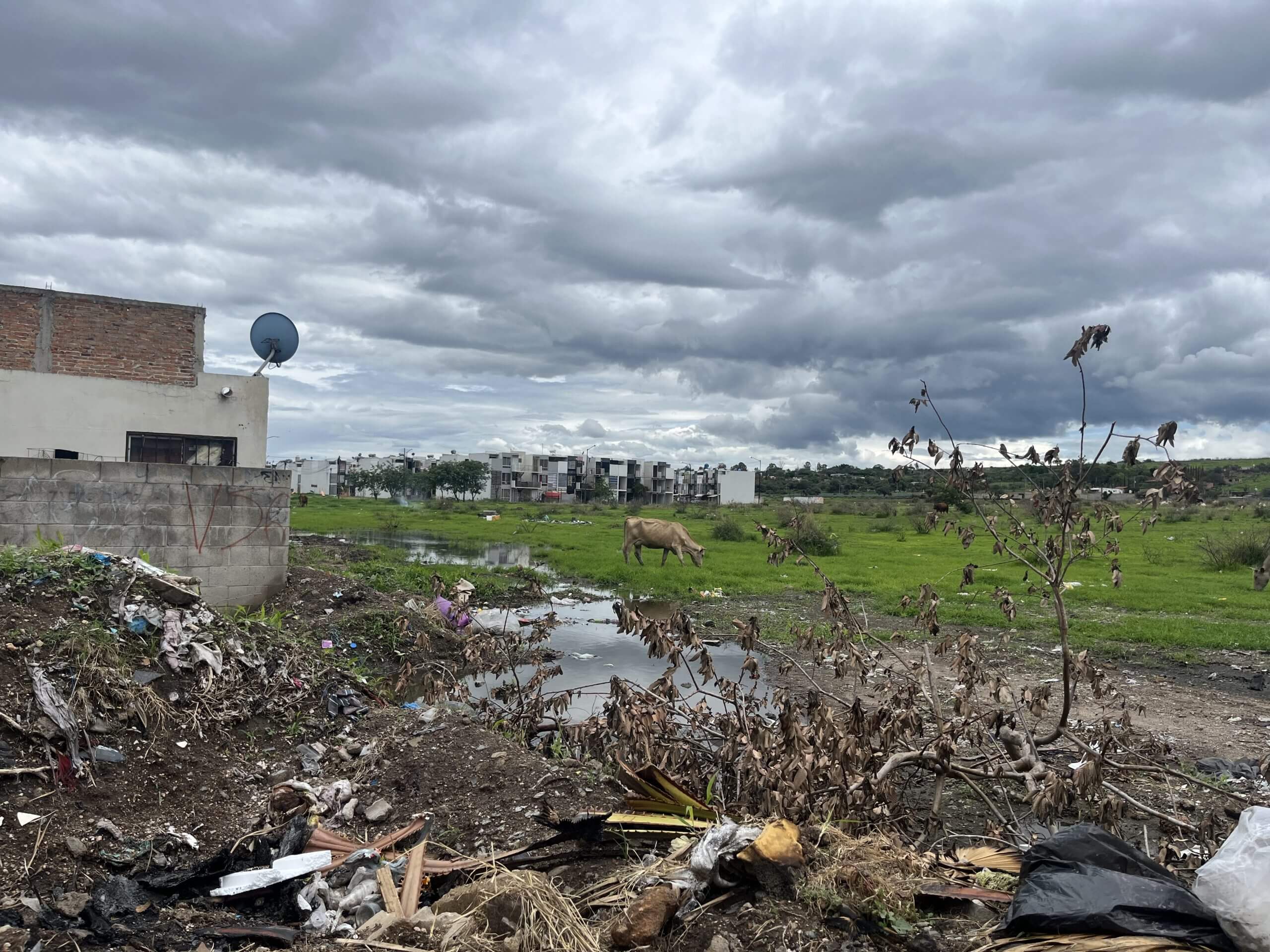
The present scene of a mass burial site in Villa Fontana (The Athletic)
Luz identifies a puddle. Seven bodies were found on that spot recently. “The first thing the searchers found was a skull,” she says. “Then the bags with body parts.” Nothing can be located today. There are only dead dogs and cow bones.
Locals point to a house on the corner nearby, previously inhabited by individuals linked to the cartel. They say that drug deals still take place, that they hear gunshots at night, and are convinced that it has been reoccupied — and that with the police considering the location to have been searched, it gives organised criminals free rein.
Another occupied house nearby is considered too risky to enter, despite possessing a tip. They will not consider returning without a police guard — and preferably with more numbers.
It means they are anxious to discover something tangible by the time they arrive at their final location of the morning. It is bordered by a playground, tended by a man who cuts back the grass borders with a scythe.
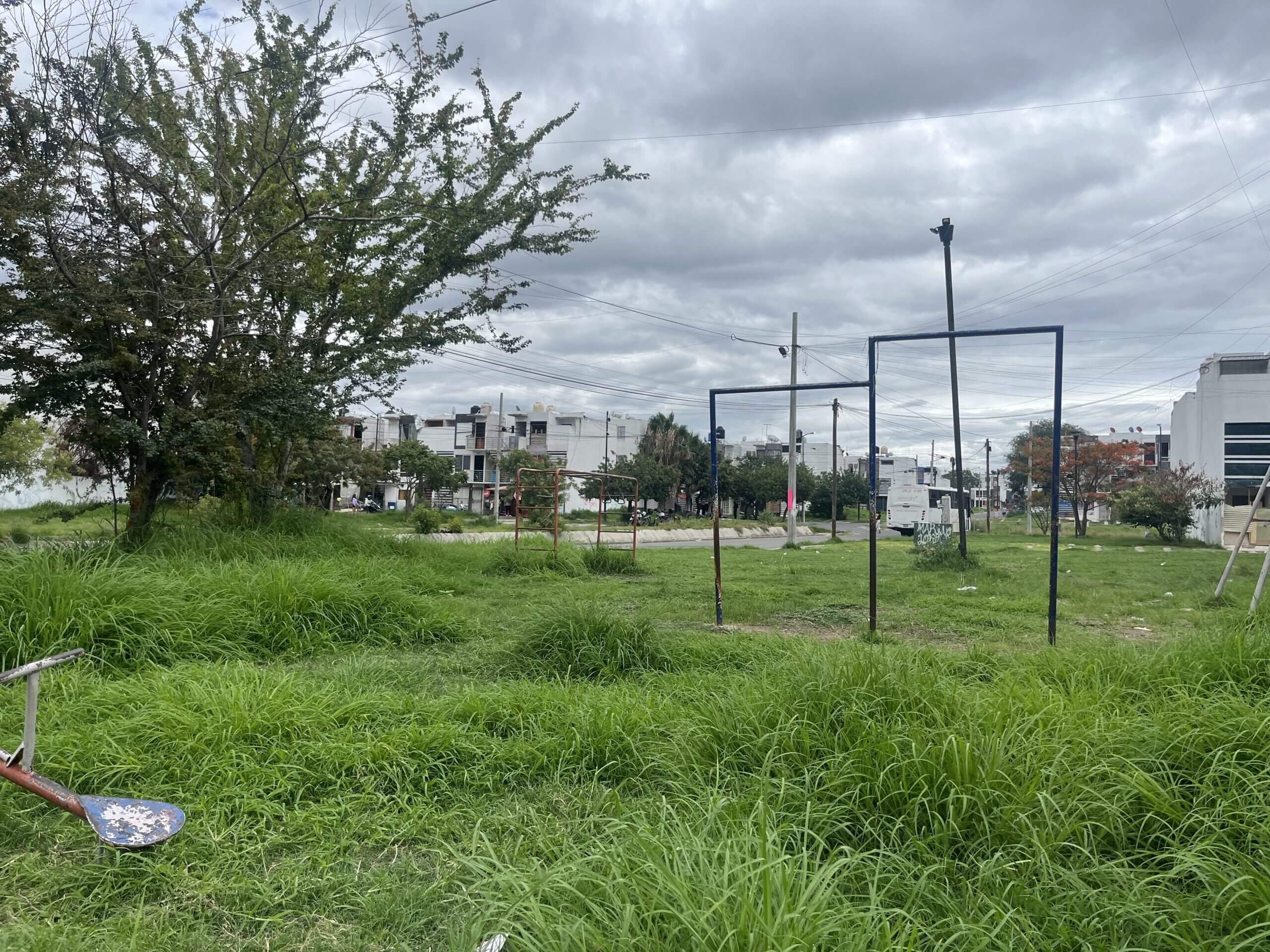
The children’s playground in Villa Fontana (The Athletic)
In the neighbouring block, four years ago, seven bags of human remains were found in another children’s playground in Tlajomulco. According to local media, police authorities had previously declared there was no evidence of graves in the area.
Graffiti is sprayed on the wall as they enter the grass–filled garden. “Solo vine, solo me voy,” it says, a gun painted underneath. “I came alone, I go alone.” No residents have come to watch this search; their only witnesses are half-demolished walls and empty bottles.
The Buscadores begin to dig. The ground is immediately soft until it is not. Concrete. Susana takes her pickaxe, striking it up to 30 times before it lies shattered at her feet. Luz inserts the construction pole; Susana sniffs. It is sticky.
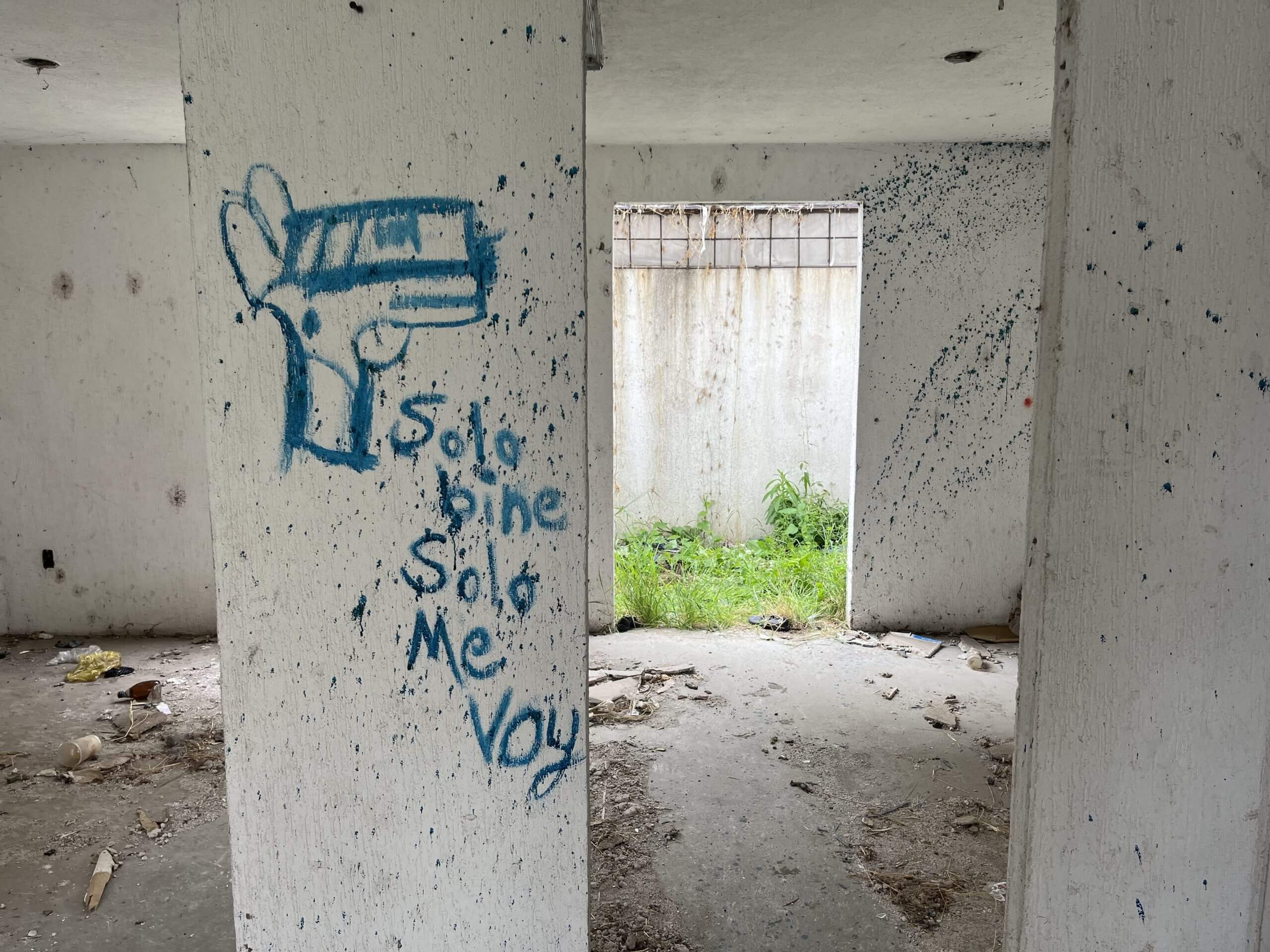
The graffiti reads: “I came alone, I go alone.” (The Athletic)
They begin to dig in a frenzy, the toy yellow frog cast aside with the dirt. Ten inches, 15 inches, 20. The hole is almost half a metre deep before they stop, exhausted. Underneath the concrete, the soil is hardened once again, and filled with debris. They are shaken that there is nothing there.
“Why else would there be concrete there?” one asks. Luz begins to weep, frustrated. They refill the hole, scraping the dirt with the soles of their boots. Susana says she will stay until she finds something, until nightfall if necessary, on this Sunday and the Sundays to come.
“I’m dead while I’m alive,” Gloria, another of the Buscadores, had explained a few days earlier. “I’m not looking for culprits and I know I can’t fool myself that I’m going to find the remains of my son.
“But every morning I ask for the strength to continue, to get out of bed and continue to look. He was a being that was taken from me. You don’t stop as a mother until you find it.”