
New Jersey’s NJ Transit has this week discussed pricing for a return rail ticket close to or around $150 for a round-trip rail ticket from New York’s Pennsylvania Station to MetLife Stadium for FIFA World Cup games.
The 18-mile rail journey, which includes a stop at Secaucus station, ordinarily costs $12.90 for a return ticket — the same pricing for the FIFA Club World Cup final last summer.
New special event pricing, however, is due to come into effect for the World Cup, and The Athletic reported earlier this week that the price modelling had forecast a price of over $100 per passenger.
According to a source with direct knowledge of the plans, who asked to remain anonymous in order to protect relationships, a return ticket purchased via NJ Transit, New Jersey’s transportation provider, may now be significantly beyond even the $100 figure. Indeed, The Athletic learned on Thursday that a price in the region of $150 has been discussed within the agency this week — more than an 11-fold increase from its usual prices during this summer’s tournament.
While NJ Transit ordinarily offers reduced fares for seniors, children and disabled passengers, the World Cup pricing will be a blanket fare for all categories.
A final decision on the price is expected to be announced on Friday. A spokesperson for the New York/New Jersey host committee declined to comment on Thursday lunchtime. NJ Transit has been approached for comment.
Why are prices for the train services for World Cup games so high?
Sources at NJ Transit told The Athletic earlier this week that the overall cost to the agency to put on services for the eight games, and account for all the disruption to commuter services, will cost as much as $48 million to ferry fans to the suburban stadium.
They say that FIFA’s security requirements are such that the games constitute the highest level security perimeter of any events hosted in New Jersey. While it is usually the case that around 10,000 fans per game go to a New York Jets or New York Giants game at MetLife via the rail service, NJ Transit is preparing for up to 40,000 supporters to use the service to get to the games this summer.
The importance of the rail service is also further ramped up because, while there are ordinarily 19,000 car parking spaces available for use at the venue, this number will be much lower during the tournament, owing to the security demands of the games. NJ Transit is also needing to hire hundreds of personnel to guide fans in different languages at stations towards the venues.
Advertisement
As such, it leaves NJ Transit in the position of needing to lose a huge amount of money by subsidising fares, or for costs to be transferred to New Jersey taxpayers. Or, a third option: to ask those attending World Cup games to carry the financial burden. Sources familiar with the plans at NJ Transit denied that their increased prices will be about profiteering.
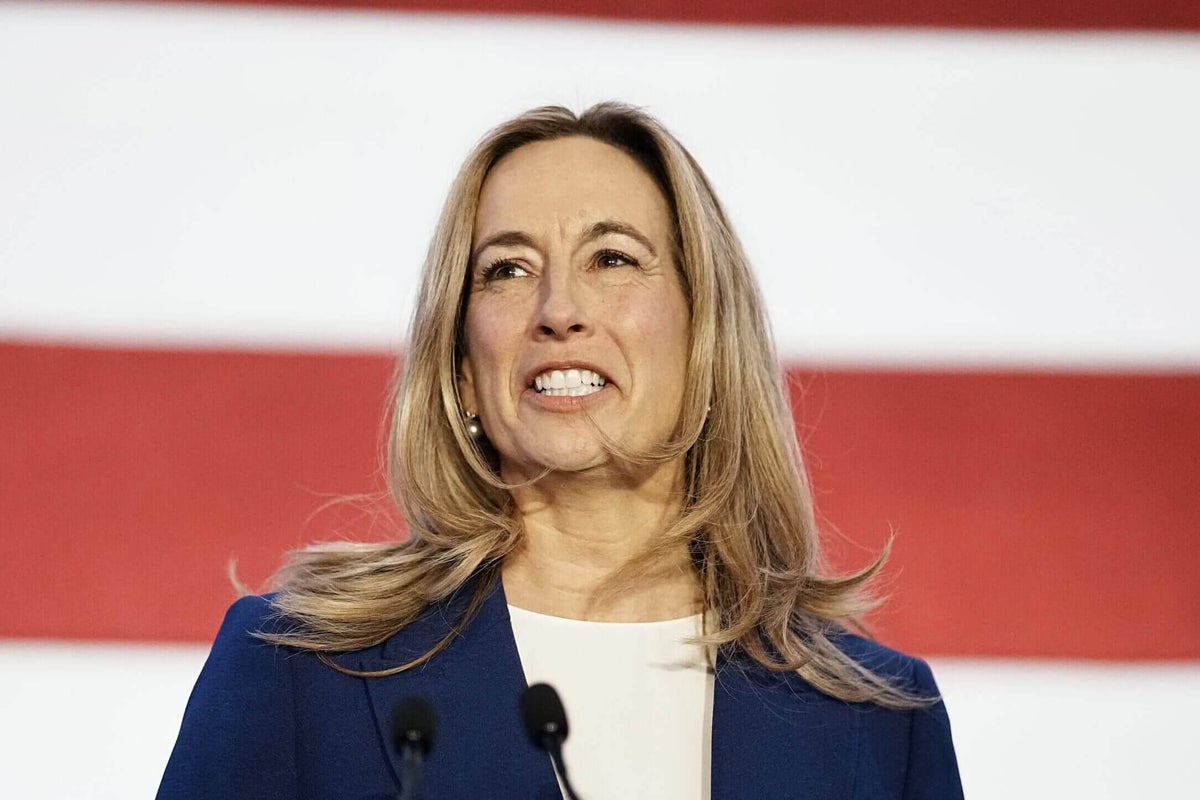
The New Jersey Governor Mikie Sherrill has made abundantly clear this week she does not want New Jersey taxpayers to carry the burden, leading to a public dispute with FIFA in the past 24 hours.
What has Gov. Sherrill said?
Sherrill mounted a strident defense of expensive train tickets to World Cup games at MetLife Stadium, insisting that competition organizers FIFA ought to step up and share the financial burden on U.S. host cities.
“I won’t stick N.J. commuters with that tab for years to come, that’s not fair,” Gov. Sherrill said in an early-evening post on Wednesday. “FIFA should pay for the rides, but if they don’t, I’m not going to let N.J. commuters be taken for one.”
We inherited an agreement where FIFA is providing $0 for transportation to the World Cup.
And while NJ TRANSIT is stuck with a $48 million bill to safely get fans to and from games, FIFA is making $11 billion.
I’m not going to stick New Jersey commuters with that tab for years… pic.twitter.com/pugU8davkW
— Governor Mikie Sherrill (@GovSherrillNJ) April 15, 2026
Sherrill, on Wednesday night, told a WNYC phone-in show, “Ask Governor Sherrill”, that she is prepared to support proposed pricing in excess of $100.
“I will, if that’s what it takes, because I’m not putting this on the back of New Jerseyans,” Sherrill said.
On Wednesday, Sherrill, whose office has been involved in discussions with NJ Transit and the New York City/New Jersey host committee over transportation plans for the World Cup, hit back at critics of the pricing and pinned blame on FIFA.
In a social media post, she explained that her administration inherited a hosting agreement with FIFA in which FIFA does not provide any dollars to assist with transportation costs for the World Cup.
Sherrill cited FIFA’s own numbers against the organization, saying that FIFA is forecasting $11 billion in revenue during the tournament while tickets are going for up to $10,000 to watch the World Cup final at MetLife Stadium. She then laid out that she is faced with a choice: either to transfer the cost to New Jersey taxpayers and commuters, or to soccer fans during the tournament. She then challenged FIFA to step up and cover the costs.
What has FIFA said in reply?
FIFA, the World Cup organizers, very rarely go public against host cities or countries. Even when President Donald Trump threatened to relocate World Cup games from cities he deems unsafe, FIFA remained deferent on the matter.
Yet on this occasion, FIFA let rip. In response to Sherrill’s comments, a FIFA spokesperson told The Athletic: “We are quite surprised by the NJ Governor’s approach today on fan transportation. The original FIFA World Cup 2026 Host City Agreements signed in 2018 required free transportation for fans to all matches.
“Recognizing the financial strain this placed on the host cities, back in 2023, FIFA adjusted the Host Agreement requirements across all host cities as follows: All Match Ticket holders and accredited individuals shall be able to access transport (public or additionally planned transport) at cost to allow travel to Stadiums on match days.
“Moreover, FIFA has worked for years with host cities on their transportation and mobility plans, including advocating for millions of dollars in federal funding to support host cities for transportation.
“The FIFA World Cup will bring millions of fans to North America, along with the related economic impact. Many of these fans will travel to NYNJ to enjoy the eight matches scheduled, including the FIFA World Cup Final. FIFA is not aware of any other major event previously held at NYNJ Stadium, including other major sports, global concert tours, etc., where organizers were required to pay for fan transportation.”
Gov. Sherrill pushed back once more on Thursday.
Her spokesperson Sean Higgins told The Athletic: “Governor Sherrill is always going to fight for New Jersey, so FIFA shouldn’t be ‘quite surprised’ that she wants it to pay for transporting its fans. The governor isn’t going to allow FIFA to make $11 billion in profits and then stick New Jerseyans with a massive bill.
Advertisement
“The agreement our administration inherited allowed FIFA to eliminate parking at MetLife Stadium. As a result, NJ Transit must move four times as many riders as it does during a normal event at the venue. So NJ Transit will provide transportation for ticket holders coming into New Jersey ‘at cost’ — and the cost to NJ Transit is at least $48 million.”
What do the contracts really say?
The host city contracts agreed with FIFA are, in many ways, generous to the competition organizers. FIFA banks the income from tickets, broadcasts, concessions, sponsorships and official parking fees. FIFA president Gianni Infantino has said his organization will earn around $11 billion in revenue from the World Cup in North America, while its budget is around $3.6 billion.
Cities carry the cost burden for “safety, security and protection,” plus stadium adjustments — which have cost many cities huge sums of money — as well as public transportation expenses.
In return, FIFA and the cities themselves often touted the World Cup’s huge economic impact, with Infantino citing a report that claimed the U.S. economy would gain $30 billion by hosting the tournament. Several city executives have cast doubt on those figures, with agencies now seeking to claw back revenue where they can.
Not all cities went for FIFA’s demands to host the World Cup. Chicago, which boasts an iconic venue in the 61,500 capacity Soldier Field, withdrew from the U.S.’s joint bid in 2018, with the office of then-Chicago Mayor Rahm Emanuel saying in a statement at the time that it would not be in Chicago’s “best interests.”
What about the local politics?
This is an important factor. Gov. Sherrill entered office earlier this year and has taken a significantly different approach to the World Cup than her predecessor, Gov. Phil Murphy. As part of a blitz of policy changes, she also made a decision to pull an official FIFA Fan Fest at Liberty State Park, instead diverting a lesser amount of money to smaller watch parties and street fairs.
Murphy’s wife Tammy remains the chair of the joint New York City/New Jersey World Cup host committee board, even as the spirit of their many years of planning appears to be being undermined. The pricing would likely have been different had Gov. Murphy remained in position, such was his enthusiasm for the tournament.
Advertisement
For FIFA, this is one of the challenges of dealing with a host country that has multiple layers of elected officials and stakeholders. At previous men’s World Cups, notably Qatar in 2022 and Russia in 2018, there was no shortage of complications, but the nature of their political systems contained power more centrally and avoided some of these challenges when incumbents change in key positions.
There may also be some old-fashioned politics at play between New York and New Jersey.
On social media on Tuesday, the planned NJ Transit pricing drew stinging criticism from New York politicians. New York Gov. Kathy Hochul wrote on X: “The World Cup should be as affordable and accessible as possible. Charging over $100 for a short train ride sounds awfully high to me.”
What are other cities charging?
On Wednesday, Kansas City rolled out a much gentler pricing plan, with the host committee offering complementary bus services for visitors to travel downtown from the airport during the World Cup. Matchday round-trip buses to the stadium will be available for $15, and drivers will collect and drop off fans from four different locations.
Philadelphia, meanwhile, also announced on Wednesday that its SEPTA subway service will remain priced at $2.90 for fans to get to World Cup matches at Lincoln Financial Field.
However, the MBTA (Massachusetts Bay Transportation Authority) took the decision to raise its pricing for travel from Boston to Foxboro’s Gillette Stadium to $80 for World Cup games, up from $20 for travel to an NFL game, sparking similar anger. It was also confirmed that Boston’s alternative bus service to the stadium would cost $95 per seat.
Kansas City rolled out a much gentler pricing plan on Wednesday. (Jamie Squire / Getty Images)
What about the fans?
For soccer fans attending the World Cup this is yet another cost for supporters, compounding the highly expensive match tickets and hotels this summer.
Advertisement
During the 2022 men’s World Cup in Qatar, official ticket-holders received free access to Doha’s metro system throughout the tournament. Similarly, at the 2024 European Championship in Germany, match-ticket holders also had access to free public transport on game day in host cities.
The U.S. was never likely to follow the lead on this, with cities and states seeking to recover huge investments into the World Cup via the proposed economic impact of the tournament, while the Qatar central government poured vast sums into its competition as a part of a broad state-building project.
Yet the scale of the price rises has stunned many locals and potential visitors, who are staring at huge costs to follow their teams during the tournament.
Ronan Evain, executive director of Football Supporters Europe, pleaded with FIFA earlier this week to intervene and help cities to reduce costs for fans.
He told The Athletic: “These prices are completely unprecedented and will significantly increase the financial burden on visiting fans. This series of last-minute announcements only adds insult to injury at a time when the vast majority of fans have already made their travel arrangements and are left with no choice but to pay more.
“We understand that many costs are being transferred by FIFA to local authorities, but this should not fall on fans who are already paying a fortune to attend the tournament. These issues should have been addressed years ago, but it is not too late for FIFA to fulfil its role as tournament organiser and ensure that fans can travel to matches at a fair price.”