
Get free access to the most comprehensive World Cup coverage in The Athletic app.
As the World Cup’s group stage finished, 16 countries packed their bags and headed home, leaving 32 remaining — the same number of teams that started recent World Cups.
It took 72 matches to get to the point where the last-32 ties were set.
The expansion was controversial but it also opened up football’s biggest tournament to lots of countries that might otherwise not have made it.
Some of those are out, others have impressively made it into the knockouts. But there can be no doubt the expansion has had an impact on everyone involved.
The Athletic has spoken to fans of many of the nations eliminated after the group stage to find out what they made of this World Cup, whether the expansion worked for their country and how they will come to look back on this tournament.
Best World Cup group stage stories
Curacao
Roald Balentien and Stephany Seinpaal
Was the expansion to 48 teams a good thing for your country?
Balentien: It was a good thing for us. It made the path a little easier, although we had to play the qualification series and earn our spot at the World Cup.
Seinpaal: I would say yes because CONCACAF was able to send more teams. I hope it stays that way so that we can make it to the World Cup again in 2030.
What was the best and worst thing about this World Cup from your country’s perspective?
Balentien: The best thing for us was for Curacao to be seen at the World Cup. I must say this is bigger than football to us. The world got to see us play on the biggest stage and the world got to know our beautiful island, Curacao! It was a big win for us.
Seinpaal: It has got us exposure. Before the World Cup, we had to explain where we were on the map. Now, we don’t have to! Even though we got knocked out in the group stage, we had the chance to show that it is possible for a small island to make it. We definitely need to improve some things and bring the team to a higher level. But it is possible!
When you look back on this tournament, how will you think about it?
Balentien: Personally, I will be forever thankful for this moment. I got to see our flag on the field, our national anthem, our first goal, our first point. What made the experience even more special was that many fans from all over the world were supporting Curacao, wanting to exchange jerseys with us, taking pictures and talking about how happy they were for us. I’m sure I can speak on behalf of all my people. We are all super proud and thankful.
Seinpaal: For me, as a football fan, it was the best thing in the world. The boys worked very hard and they showed the world they do have the potential.
Which player from your country deserves a move to a top club?
Balentien: This is not only based on their performance at the World Cup but knowing their game and potential: Armando Obispo, Juninho Bacuna, Tahith Chong, Livano Comenencia and Deveron Fonville.
Stephany Seinpaal: I would have to say Obispo, Comenencia and Fonville as well. Also, Tyrese Noslin.
Czech Republic
Tomas Kleinhampl
Was the expansion to 48 teams a good thing for your country?
I think it was a good thing. If that didn’t happen, the Czech Republic and many other nations would never experience that World Cup excitement. It is so nice that nations like Cape Verde or Curacao can be there, even though quality-wise, they probably don’t belong there. Unlike the Czechs, they played fearless football and showed great enthusiasm. We definitely don’t belong there and we played like that. We didn’t enjoy it, and the dream became a nightmare.
What was the best and worst thing about this World Cup from your country’s perspective?
The best thing was the excitement before the tournament. The worst was everything else: our performances, coaching decisions, players’ individual displays and the mood around the team overall. I think it is good that we got exposed that way and it is up to us how we are going to react. I would say we are in a similar situation to Italy but on a smaller scale
When you look back on this tournament, how will you think about it?
As an eye-opening experience. Czech football got exposed on the biggest stage and we were shown that we are miles behind in terms of quality (and) football IQ, and it is clear that generally we treat football the wrong way.
Which player from your country deserves a move to a top club?
Based only on the World Cup performances, nobody. But generally, Stepan Chaloupek had a breakthrough season at centre-back for Slavia Prague, being solid at the back and also a goal threat, scoring in the Champions League. Also, Czech captain Ladislav Krejci (who spent last season at Wolverhampton Wanderers on loan) should be playing for a club in the Premier League.
Who makes the final four of the World Cup?
Liam Tharme and Liam Twomey
Haiti
Jacob Herard
Was the expansion to 48 teams a good thing for your country?
The expansion to 48 teams was a genius idea. The level of football around the world has grown to the point where there are very few truly weak teams. This new format certainly benefited Haiti, and we were able to show what we’re capable of. We were competitive in every match and proved that we belong on this stage.
What was the best and worst thing about this World Cup from your country’s perspective?
Hearing our national anthem gave me goosebumps every time. The worst part was the officiating in the Scotland match. There were too many missed calls, and I was also disappointed with some of the coach’s decisions regarding the line-up and formation. I truly believe we had the talent to reach the knockout stage, but our coaching held us back. Going forward, I believe we need a new coach to help this team reach its full potential.
When you look back on this tournament, how will you think about it?
Part of me will always see this as a missed opportunity because I genuinely believe we could have achieved more. At the same time, I’ll never forget the joy, pride, and unity it brought to the Haitian people. We needed that, and it reminded us of what football can do for a nation.
Which player from your country deserves a move to a top club?
There are several players who deserve serious consideration from some of the world’s top clubs. Wilson Isidor has already shown his quality with Sunderland, and I believe he deserves an opportunity at an even bigger club. I also think Lenny Joseph (Ferencvaros), Ruben Providence (Almere City), Martin Experience (Nancy) and Louicius Deedson (FC Dallas) have earned the chance to play at a higher level.
Iran
Pedram Maleknia
Was the expansion to 48 teams a good thing for your country?
Iran would have qualified this time without the expansion, but you would hope it helps us in the future. Honestly, FIFA is about making money. The more teams that are there, the more they make. I don’t think it damages the quality of the tournament.
What was the best and worst thing about this World Cup from your country’s perspective?
Iran played very well in the circumstances. They played well enough to get to the knockouts. The way the team fought through the adversity, going through what they had to go through. The way they acted and the pride they showed was a positive.
But they weren’t given a chance to compete. They (FIFA) could have switched the games to outside the U.S., to make things easier. It wasn’t a coincidence that two of the games were in Los Angeles, which has the biggest Persian population. They could have changed them. It was just unfair.
It was also a difficult pill to swallow with the disallowed goals. People want to see goals. Looking back, the New Zealand game was a must-win. We played well against Egypt but the ending was absolutely gut-wrenching.
When you look back on this tournament, how will you think about it?
I made a lot of memories with my family, watching the games and whatnot. But I have a bad taste in my mouth with what happened in Austria vs Algeria (a draw in that game meant Iran were eliminated), and Iran had two major goals overturned by VAR.
Which player from your country deserves a move to a top club?
Ramin Rezaeian, he won two of the three player of the match awards. There’s something to say for that, but he’s also 36 years old and plays for Foolad in the Persian Gulf League. I don’t know if anyone will want to sign him.
Iraq
Hassanane Balal
Was the expansion to 48 teams a good thing for your country?
Look at a team like DR Congo and it shows you why the World Cup should be 48 teams. They qualified, like Iraq, through the play-offs and they’re now through to the next round. It shows you that when you give these teams an opportunity, they can flourish. Not just them but teams like Cape Verde. No one was expecting them to do anything but they have quality and they’ve been able to demonstrate that.
On a personal level, it’s also great to see fans whose voices are unheard. They can showcase their country, their culture and their people. What did people know about DR Congo or Haiti? Unfortunately, not a lot. But we’ve learned something, whether it’s through their players or their fans. That’s the beautiful thing about this.
What was the best and worst thing about this World Cup from your country’s perspective?
Just being able to experience something new. I didn’t think in my life I’d get to see Iraq score at a World Cup, so to be in the stadium in Boston when that goal went in against Norway was amazing. The worst thing to me is that I felt America just isn’t a football nation. In Boston, it was a two-hour drive from the city, you pay $200 (£265) to park and in Boston itself, we genuinely didn’t run into that many football fans. You’ve seen all the teams scattered across North America and that diluted the experience. Logistically, it wasn’t very good. The prices, the visas. We didn’t get to see many Iraqis from Iraq, which was a huge disappointment.
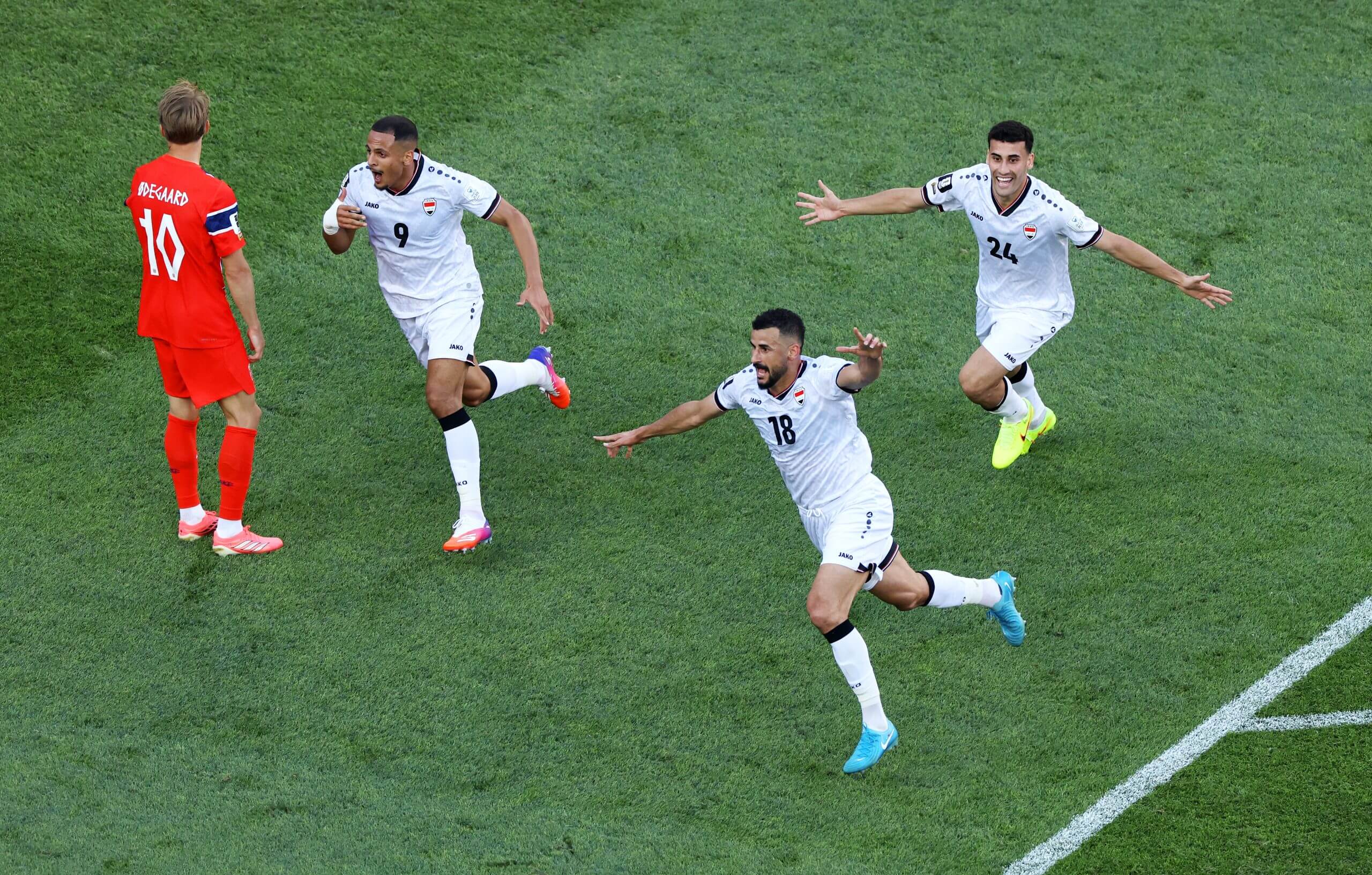
Iraq had their World Cup moment when Aymen Hussein (No 18) equalised against Norway (Buda Mendes/Getty Images)
When you look back on this tournament, how will you think about it?
As a pivotal point in Iraq’s journey, where we were able to break a barrier of 40 years to qualify. The team also had to learn some brutal home truths about how far we are behind everyone else. But I’m hoping we can use it as a platform to keep developing Iraqi football.
Which player from your country deserves a move to a top club?
I’d like to focus on Akam Hashim, the 27-year old centre-back from Al-Zawraa. I felt he was amazing. Very reliable and very strong. Very comfortable on the ball and I’d be shocked if a big team doesn’t come in for him.
Jordan
Isam Ammari and Nasser Kalaji
Was the expansion to 48 teams a good thing for your country?
The 48-team expansion actually didn’t matter for us, as we qualified as one of the first teams. So we would have qualified with the 32-team format anyway. However, in the future, the 48-team expansion will hopefully help us qualify for the next World Cup. We are hoping we become regulars at the World Cup and not one of those nations that make it once every 40 years…
What was the best and worst thing about this World Cup from your country’s perspective?
The best thing was definitely the first ever goal, Ali Olwan vs Austria. It was a beautiful goal on the counter and it was our first at a World Cup. A lot of people probably didn’t even expect us to score.
The worst was some of the reaction from social media, and some pundits on TV, and the fact we really could have gotten something from both games but for silly mistakes.
When you look back on this tournament, how will you think about it?
Definitely positively, especially if this tournament puts some of our players on the map. I am already seeing people I follow talking about Mohannad Abu Taha, for example. I think everyone fought for the badge and they made us proud.
It depends on what happens in the Asian Cup and the year after that. Will we show that we improved? Are players moving to better leagues? Is new talent coming, through?
Which player from your country deserves a move to a top club?
It’s either Odeh Fakhoury, a left-winger/striker who is only 20 and just signed for Pyramids FC in Egypt. Or Mohannad Abu Taha, who is our left wing-back. Only 23 and very versatile, he plays for Al-Quwa Al Jawiya in Iraq.
Panama
Fatima De Freitas
Was the expansion to 48 teams a good thing for your country?
Yes, absolutely. For countries like Panama, expanding to 48 teams creates more opportunities to compete on football’s biggest stage. Our first World Cup in 2018 changed how an entire generation viewed football. More spots do not guarantee qualification, but they make the dream feel more achievable and encourage investment in youth development. For smaller football nations, that’s huge.
What was the best and worst thing about this World Cup from your country’s perspective?
The best: Watching Panama compete fearlessly and prove we belong. Every tournament gives our players valuable experience and inspires kids back home to believe they can wear the national team shirt one day.
The worst: Knowing we were capable of even more, playing great games, but still losing by one goal. As fans, we always want that next step, whether it’s reaching the knockout stage or pulling off a historic upset. The expectations keep growing because so has our football.
When you look back on this tournament, how will you think about it?
I’ll remember it as another chapter in Panama’s football journey. Not because everything was perfect but because every major tournament helps build our identity. We may be a small country but our passion is enormous, and every World Cup experience pushes us closer to becoming a consistent international competitor. They respect Panama now.
Which player from your country deserves a move to a top club?
Cristian ‘Fulo’ Martinez, without a doubt. He’s the kind of player every fan wants on their team. Technically gifted, fearless, tireless, and always ready to fight for the badge. He’s the only Panamanian to win a Player of the Match award at a World Cup, and he did it also at the Copa America. He’s proven he can perform on the biggest stages, and I truly believe, at 29 and playing in Israel for Ironi Kiryat Shmona, he deserves the opportunity to show his quality at a top club.
Qatar
AbdulMohsin Al-Yafei
Was the expansion to 48 teams a good thing for your country?
Yes. The 48-team format gave Qatar a more realistic path to qualify for the 2026 World Cup, reflecting the growth of Asian football. However, the tournament also showed that earning a place is one thing — competing successfully is another.
What was the best and worst thing about this World Cup from your country’s perspective?
Qatar proved it belongs on the World Cup stage by qualifying and still having moments of hope, especially the draw with Switzerland. The heavy 6-0 loss to Canada and the early exit brought back the same problem: Qatar can reach the World Cup, but still needs a big jump to compete at that level.
When you look back on this tournament, how will you think about it?
I will remember it as a mix of pride, emotion, and frustration. Pride because Qatar was there on merit, competing again on the biggest football stage. Emotion because being part of the Al Annabi supporters, living the atmosphere, and seeing Qatar represented means a lot beyond the result.
But also frustration because we all felt this team had more to give. The opportunity was there, especially in the final match, but the performance did not match the hope.
So I will remember it as a valuable experience, but also as a reminder that reaching the World Cup is not enough anymore. The next step for Qatar must be to compete better, show more character, and turn participation into real progress.
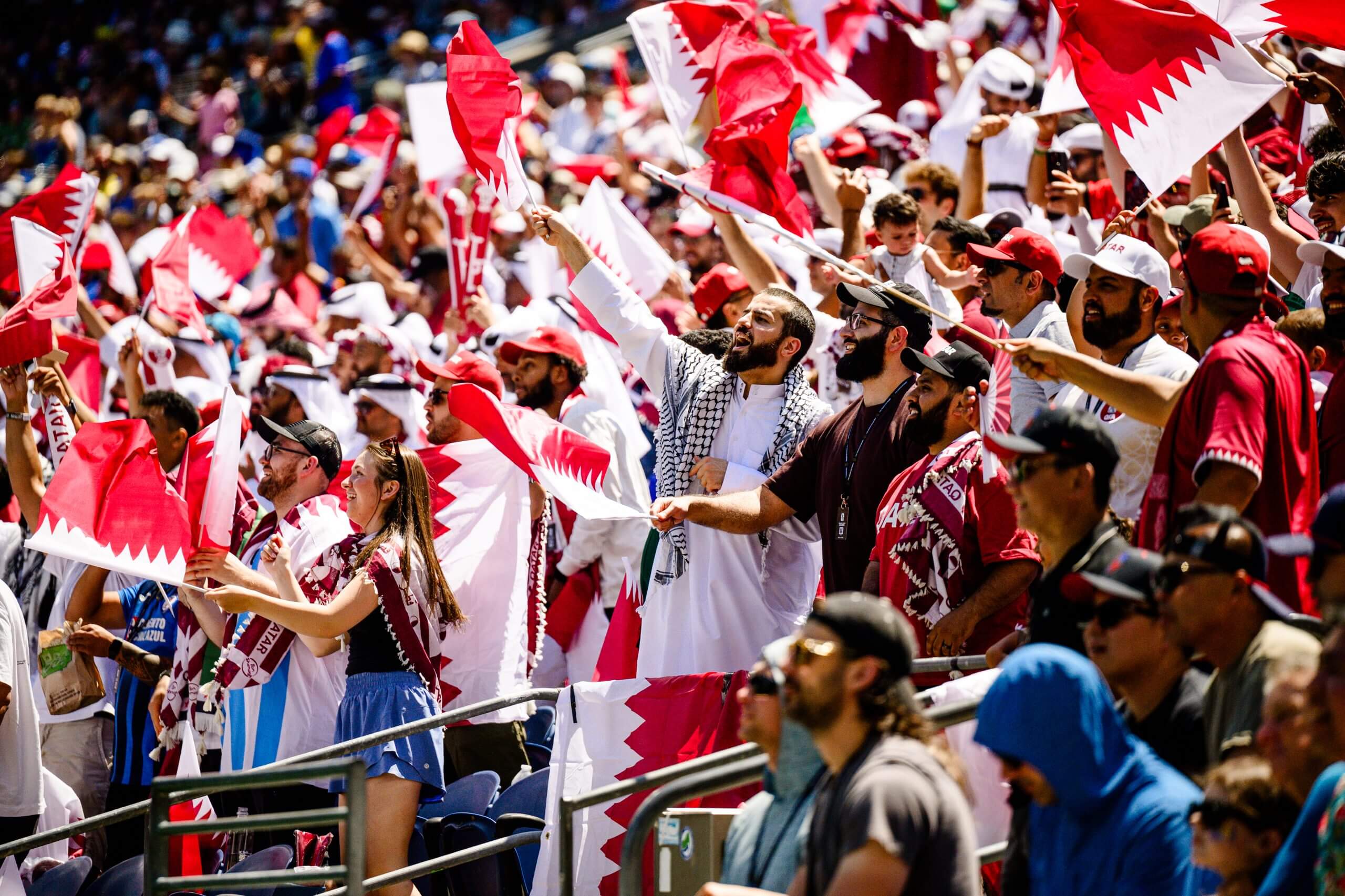
Qatar fans support their team against Bosnia and Herzegovina (Jane Gershovich/ISI Photos via Getty Images)
Which player from your country deserves a move to a top club?
Hassan Al-Haydos. Not just because of his goal but because of what he brought to the team. He came back from international retirement when Qatar needed him, made an immediate impact whenever he played, and gave everything until he had to leave injured. He may be 35, but the Al Sadd forward’s leadership and commitment deserves huge respect.
Saudi Arabia
Mohammed Bakri Hassan
Was the expansion to 48 teams a good thing for your country?
The expansion was the natural next step for the tournament. It brings in the best sides from every corner of the world, which makes the competition stronger, more balanced, and fairer for nations that previously had little chance of qualifying. For Saudi Arabia specifically, it meant the opportunity to face elite international opposition — and that exposure alone has value, regardless of the result. The chance to test yourself against the world’s best is something no amount of domestic football can replicate.
What was the best and worst thing about this World Cup from your country’s perspective?
The best thing was the group-stage format itself — having two strong sides and two weaker ones in each group created genuine tension, and kept every match meaningful. The worst things were practical: the scheduling and the climate didn’t suit supporters of all nationalities and all ages, and that took something away from the atmosphere.
For Saudi Arabia on the pitch, the competition was brutal. Despite being the third-best team in Asia, they were either unlucky with the draw or simply placed in a group that was too steep a mountain to climb. Going out before the round of 32 is a painful result, both financially and in terms of morale.
When you look back on this tournament, how will you think about it?
A diverse, well-rounded World Cup, but for Saudi supporters, the reflection will be sharper and harder. The team has genuine talent — that much is clear. The problem was preparation: they needed to study each opponent’s style before stepping onto the pitch, develop more rigorous tactical plans for both attack and defence, build clearer systems for creating chances, and stop relying almost entirely on the captain or the goalkeeper to make things happen.
Beyond the squad itself, the bigger issue lies with the Saudi Football Federation. The moment results go wrong, it sacks the manager. That is its most damaging habit. Firing the coach, dismantling the squad, and breaking team morale every time there’s a setback solves nothing. The focus should be on identifying weaknesses and fixing them systematically, not starting from zero each time.
Which player from your country deserves a move to a top club?
Saud Abdulhamid (Lens), Salem Al-Dawsari (Al Hilal) and Mohamed Kanno (Al Hilal). All three showed enough across the tournament to suggest they could hold their own at a higher level.
Scotland
Gordon Sheach
Was the expansion to 48 teams a good thing for your country?
For Scotland, it was and it wasn’t, given that only three of the additional slots went to Europe and we won our qualifying group, which would have got us there automatically in any other year. The renewed format of qualifying helped more, with a six-game sprint over three months meaning we were less affected by fluctuating form across multiple seasons.
What was the best and worst thing about this World Cup from your country’s perspective?
The best — basically everything that came off the pitch. I was part of the massed Tartan Army invasion of Boston, a city with Celtic connections that welcomed us with open arms. We’d waited a lifetime to reach a men’s World Cup and we were not going to miss the opportunity to have the time of our lives.
Also, the chance to meet and interact with fans from beyond Europe was incredible — sharing culture, songs and (more than) a few drinks. Having the moment on matchday one with Haiti, themselves playing their first World Cup game in over 50 years, was the purest reflection of the magic and joy the World Cup is uniquely placed to deliver.
The worst — as a smaller nation, you look back on tournaments as a collection of moments on the pitch and ultimately, what we take from this one, is that we scored a deflected John McGinn goal in the first game. Yes, we were up against it with effectively two pot one-level teams in the group in Morocco and Brazil, but we went out without truly making our mark on the pitch.
When you look back on this tournament, how will you think about it?
The greatest trip of our lives packed with memories to last a lifetime, tinged with regret that we were not able to reach the holy grail of knockout football, something no Scotland team has ever achieved.
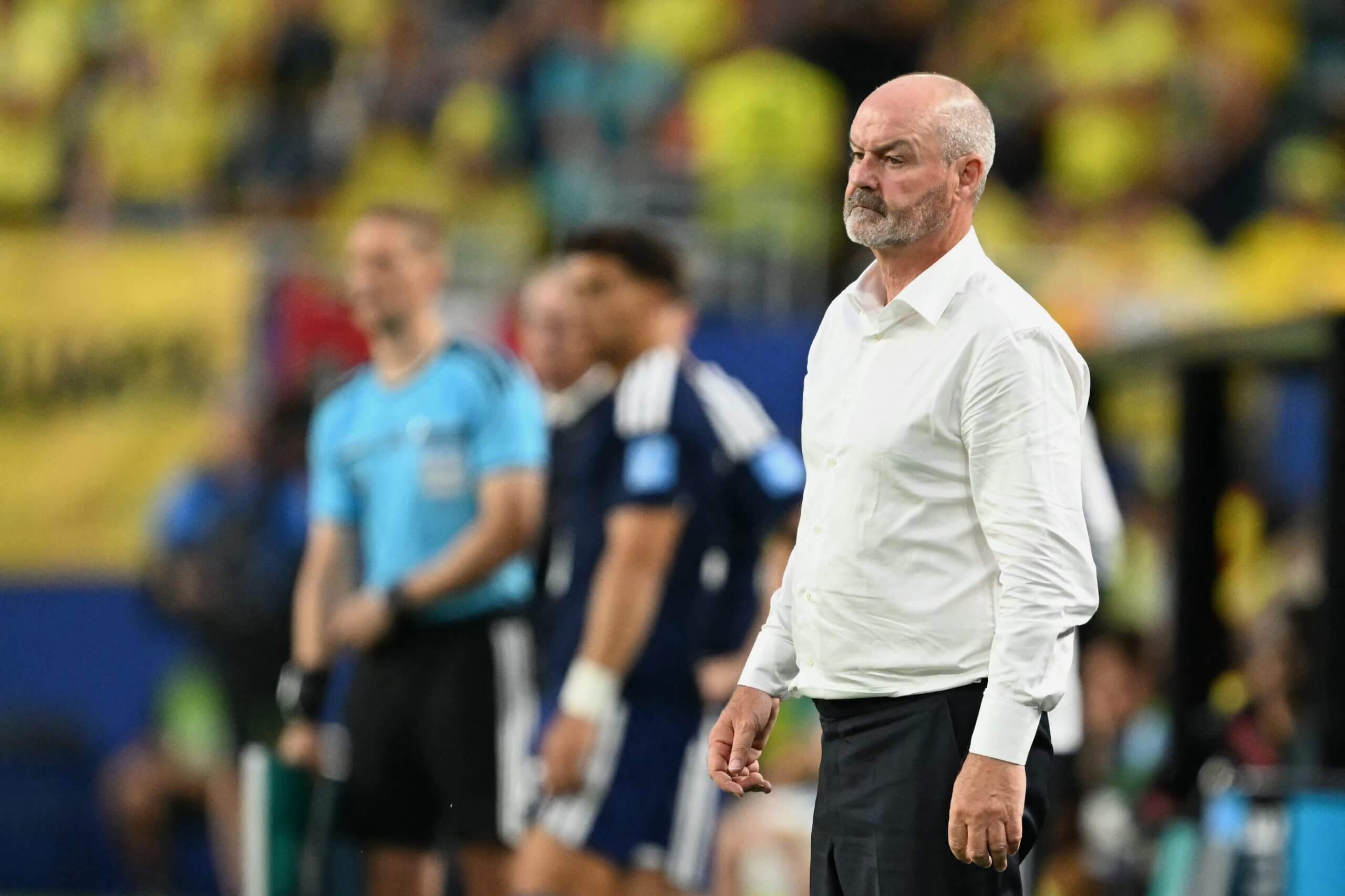
Steve Clarke stepped down as Scotland head coach following his team’s World Cup campaign (Chandan Khanna/AFP via Getty Images)
Which player from your country deserves a move to a top club?
Bologna’s Lewis Ferguson leaves the World Cup with his reputation massively increased. Billy Gilmour’s pre-tournament injury put a lot of pressure on him to cover vast swathes of ground on the pitch, contribute defensively and keep the ball moving forward. He broadly excelled across all roles (covering the most ground of all Scotland players).
Ben Gannon-Doak went into the World Cup broadly unknown on the world stage but caught the eye with his direct running style and positive play.
South Korea
Jinwoong Heo
Was the expansion to 48 teams a good thing for your country?
When the draw was made, many Korean fans expected us to finish second in the group and reach the last 32. In the end we finished third, which would have meant immediate elimination under the old format anyway.
Korea ultimately did not make it through but the format made matches involving other teams feel more relevant to us. In that sense, it added another layer of excitement and kept supporters engaged for longer.
It was also enjoyable to see national teams and players whom we might not normally see in a 32-team World Cup.
What was the best and worst thing about this World Cup from your country’s perspective?
The best thing was that, even in a disappointing tournament, some Korean players showed that they belong on this stage, particularly Hwang In-beom and Lee Kang-in, while Oh Hyeon-gyu’s goal gave supporters a glimpse of what the next generation might offer.
The worst thing was the feeling that this squad had far more potential than the final result showed.
With Son Heung-min, Kim Min-jae and Lee, many supporters saw this as one of the strongest and most talented Korean squads in recent history. That made the early exit especially difficult to accept.
For many fans, though, this failure felt predictable from the moment Hong Myung-bo was appointed as manager. That has left Korean fans not only disappointed by the tournament itself, but angry and frustrated about the direction and governance of Korean football.
When you look back on this tournament, how will you think about it?
Ultimately, this will be remembered as one of Korea’s most disappointing World Cups.
It may have been one of the most highly-anticipated squads Korea has ever taken to a World Cup, but it produced one of the weakest outcomes.
With what many regarded as a golden generation, expectations had built for four years. Instead, this World Cup will be remembered as a missed opportunity — and, for many supporters, as a failure that felt foreseeable because of the way the manager was appointed.
I also feel particularly sad that this may have been the last time we see Son perform at a World Cup.
Regardless of the team’s result, watching him represent Korea on football’s biggest stage has always been a source of pride and excitement. The possibility that there may not be another opportunity to see that feels especially painful.
Which player from your country deserves a move to a top club?
Hwang deserves a mention first. He has been impressive both at the 2022 World Cup and in this tournament, particularly with his positioning, work rate and ability to dictate play.
After Korea’s first match, some overseas fans even compared elements of his style to Vitinha’s. He is already at Feyenoord, which is a very good club, but I believe he has the quality to compete at an even bigger European side.
The only concern is that, born in 1996, he is no longer a young prospect.
Another player to watch is Oh of Besiktas. He scored at this World Cup and, at 25, still has the potential to establish himself in one of Europe’s top five leagues.
He may not be ready for an elite club immediately, but he has the physicality, mentality and upside to take another major step in his career.
Tunisia
Omar Belghith
Was the expansion to 48 teams a good thing for your country?
Before the tournament, many Tunisian fans believed the expansion would increase our chances of qualifying and give countries like Tunisia more opportunities. In the end, qualification alone wasn’t enough. The tournament showed that simply reaching the World Cup means very little if the team isn’t competitive. The expansion is positive in principle, but it also exposed the gap between Tunisia and the world’s top teams.
What was the best and worst thing about this World Cup from your country’s perspective?
Conceding 12 goals and scoring only two made this arguably Tunisia’s worst World Cup campaign in seven appearances. It was painful for supporters. If there was one positive, it is that this tournament should force serious reflection. Many fans hope it marks the end of years of poor management and that the federation finally accepts responsibility. There is also hope that if Herve Renard stays on after his mid-tournament appointment as manager, he can rebuild this team with a clearer vision.
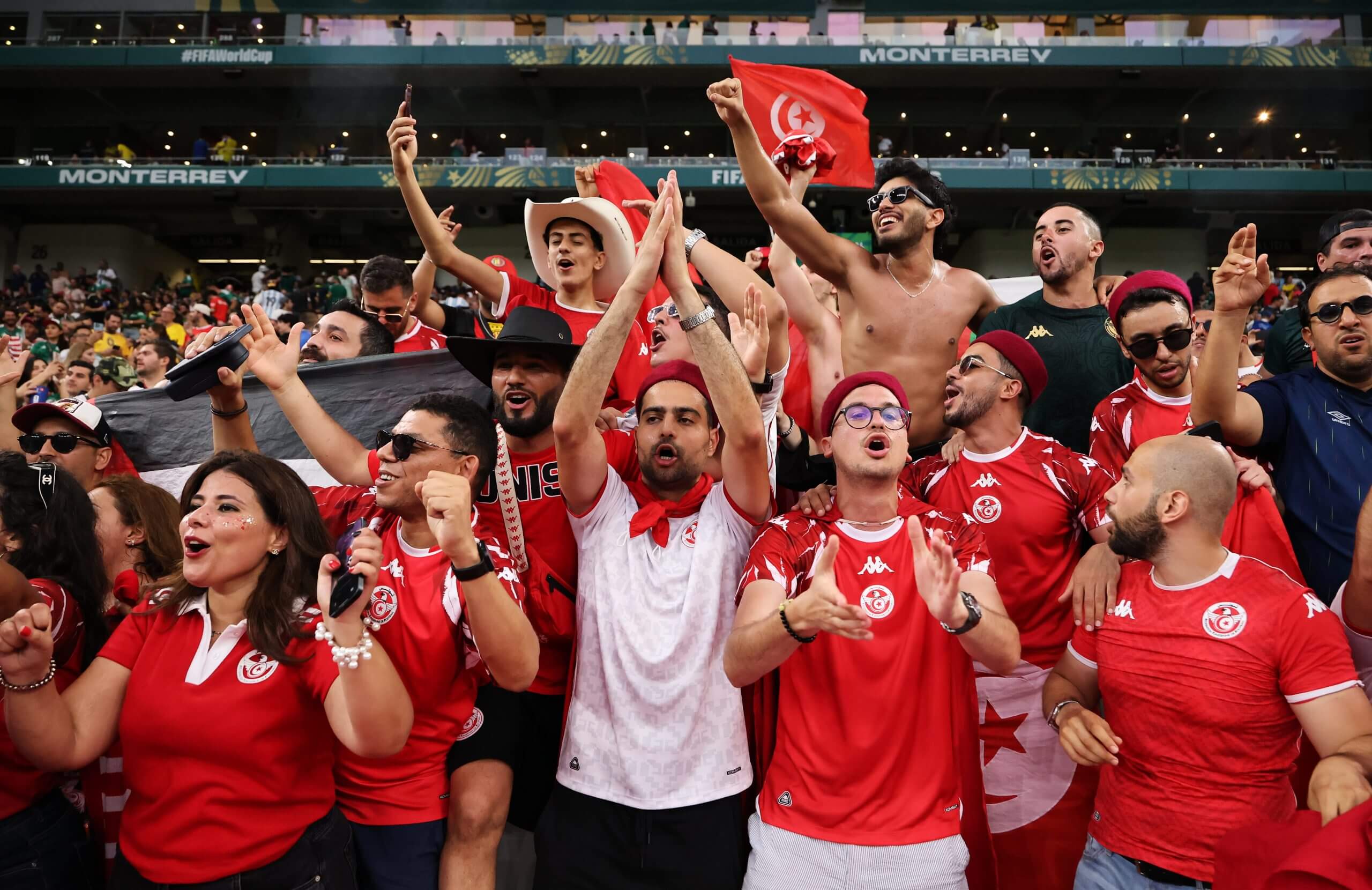
Tunisia fans support their team before playing Sweden, a game they lost 5-1 (Hector Vivas – FIFA via Getty Images)
When you look back on this tournament, how will you think about it?
I think Tunisian fans will remember it as a wake-up call. For years, many people felt that structural problems in Tunisian football were being ignored because simply qualifying for tournaments was considered enough. This World Cup exposed those problems on the biggest stage. Hopefully, it becomes the starting point for real change rather than just another disappointment.
This is probably the most disappointed I’ve ever felt after a World Cup. I’ve followed all of the World Cups Tunisia have played in, apart from 1978, and this was the hardest one to watch. I just hope this disappointment finally leads to real reform rather than another cycle of excuses.
Which player from your country deserves a move to a top club?
Burnley’s Hannibal Mejbri has the talent, intensity and personality to play at a higher level if he continues developing consistently. Ismael Gharbi is another player with huge technical quality and potential. Both still have room to grow but they could become key players for Tunisia over the next decade.
Turkey
Mehmet Emir Evran
Was the expansion to 48 teams a good thing for your country?
Absolutely, from Turkey’s perspective, it was a good thing. Expanding the tournament significantly increased our chances of qualifying and, as a result, we finally made it back to the World Cup after 24 years, even if our campaign ended in disappointment.
As a football fan in general, I also think having more teams made the tournament more enjoyable because it gave us more unforgettable stories. Seeing nations like Cape Verde, Curacao, DR Congo and Haiti introduce themselves on the world stage, witness their first World Cup goals and create memorable moments for their players made the competition feel even more special.
That said, I think the best third-placed teams format confused a lot of people and, in some groups, made the final round of matches feel less meaningful. I believe that part of the system could definitely be improved.
What was the best and worst thing about this World Cup from your country’s perspective?
Undoubtedly losing our first two matches in a way that nobody expected and being knocked out of the tournament so early. On top of that, there was a lot of tension between the players, the coaching staff, the federation and the fans, which made everything even more disappointing.
The positive side is that we have a very young generation of players. Simply experiencing the atmosphere of a World Cup, even with poor results, was incredibly valuable for many of them. I’m confident the lessons they learned from this tournament will benefit Turkish football in the years to come.
When you look back on this tournament, how will you think about it?
For Turkish fans, this World Cup won’t be remembered fondly, but it certainly won’t be forgotten either.
Because the tournament was held in North America, Turkey’s matches kicked off at 5am, 6am or even 7am local time. Fans either set alarms to wake up before sunrise or stayed awake all night trying to pass the time until kick-off. There was a real sense of sacrifice and excitement, only for the team to fall far short of expectations.
At the same time, the tournament also gave us some valuable lessons. Our matches against Australia and Paraguay showed that football outside Europe can be very different, both tactically and physically. It reminded us that success in European competitions doesn’t automatically translate to success on the world stage. If Turkey want to become a consistent World Cup nation, we need to prepare specifically for opponents from every footballing region, not just Europe.
If I had to describe it in one sentence, I’d say: the mountain laboured and brought forth a mouse. We expected something huge but ended up with a deeply disappointing outcome.
Which player from your country deserves a move to a top club?
Based purely on their performances at this World Cup, I’d say none of our players really reached the level they normally show for their clubs. There were many reasons for that, including tactical decisions, questionable squad selections by the coaching staff, planning issues during the team’s training camp and travel, and the fact many players simply didn’t look physically or mentally ready.
Even so, a few still managed to show their quality. Ferdi Kadioglu, who was named Brighton & Hove Albion’s player of the season, Ozan Kabak after another strong season at Hoffenheim, and Orkun Kokcu, Besiktas’s captain and most valuable player, all demonstrated why they have bright futures ahead of them.
I believe all three are capable of playing at an even higher level, just as Kenan Yildiz and Arda Guler have already shown they belong among Europe’s top clubs.
Uruguay
Franco Cassoni
Was the expansion to 48 teams a good thing for your country?
I don’t think it made a difference for us to be honest. We’ve usually qualified for the World Cup with the smaller format as well, so it didn’t really give us a benefit to go to 48 teams, and it wasn’t a negative either.
What was the best and worst thing about this World Cup from your country’s perspective?
The best thing was where the games were played. Miami is a place where a lot of Uruguayans live and go on vacation, so it really felt like we were the home side when we played there. The worst thing was our performance — we had good potential but were eliminated by making too many avoidable mistakes.
When you look back on this tournament, how will you think about it?
On a personal level, it is bittersweet because it was the first World Cup I was able to attend in person, but also frustrating as we went out due to lots of errors. On paper, we shouldn’t have been given too much trouble by the group but we made it difficult for ourselves.
Which player from your country deserves a move to a top club?
Maximiliano Araujo was brilliant. He’s already at Sporting CP in Lisbon but it would be good to see him get a little more recognition in the Premier League.
Uzbekistan
Akbar Yusupov
Was the expansion to 48 teams a good thing for your country?
The expansion to 48 teams changed everything by nearly doubling Asia’s direct qualification slots. This structural shift drastically altered our trajectory, making our road to qualification far more achievable. By widening the gate, the expansion allowed Uzbekistan to finally break through its historic glass ceiling, secure its place on the global stage, and spark an unprecedented wave of football enthusiasm across our nation.
What was the best and worst thing about this World Cup from your country’s perspective?
The best thing was it was an invaluable learning experience. Playing against world-class opponents gave us a clear, realistic look at the exact margin that exists between elite global teams and Uzbek football. This exposure demonstrated our tactical weaknesses and showed our players the speed, physicality and precision required at the highest level.
The worst part of our campaign was that we failed to showcase our true capabilities because our squad was visibly paralysed by the magnitude of the occasion. Instead of playing our signature style, the players looked completely overawed by being on the World Cup stage.
When you look back on this tournament, how will you think about it?
Because stage fright took over, we did not perform anywhere near our actual potential, leaving us with a bittersweet feeling that we couldn’t give the world a true look at what Uzbek football is capable of.
Which player from your country deserves a move to a top club?
Behruz Karimov, despite being just 18 years old, is absolutely the player who deserves a massive move to a top European club from our squad. In terms of raw footballing skills, the right wing-back is still a bit unpolished and has a lot of developing to do. However, his ceiling is exceptionally high. What sets him apart is his character, mental fortitude and sheer physical resilience.
If a top club signs him now from Uzbek club Surkhon and refines his tactical skills, he will develop into a world-class asset.