
The Athletic has live coverage of the latest 2026 FIFA Men’s World Cup news.
Another World Cup has arrived at last, but this one draws a direct line between the U.S.’s past and present. For the first time since 1994, a men’s World Cup hits American soil, and it’s one that has us all feeling nostalgic.
As part of our walkup to the tournament, we wanted to take stock of the U.S.’s modern-era World Cup history (1990 and on), and to do so we conducted a fantasy draft of all players who have reached the World Cup stage in that time.
Our drafters were The Athletic’s Paul Tenorio, Henry Bushnell and Tom Bogert, who are on the road chronicling the USMNT’s 2026 World Cup; former standout U.S. forward and The Athletic contributor Charlie Davies; and three-time U.S. World Cup veteran, 2014 World Cup assistant coach and special guest Tab Ramos.
Our rules were rather simple:
- We conducted 16 rounds (good for 11 starters and five reserves; 80 players in total) and operated with snake draft rules, reversing order in alternating rounds from 1-16.
- Players eligible to be drafted had to have been on a U.S. men’s national team World Cup roster beginning in 1990 through 2022 (our draft was conducted prior to the announcement of Mauricio Pochettino’s 26-man 2026 squad).
- With five teams, managers could only select one goalkeeper maximum — only five have started for the U.S. in a World Cup since ’90 — and players had to fit any kind of reasonable formation (i.e., no 1-9-1).
- A player who featured in multiple World Cups could only be picked once — so it’s not like 2006 Clint Dempsey and 2014 Clint Dempsey were different players eligible to be selected.
- The most prominent criteria when considering players was their national team peaks and not necessarily their club production — though it’s not as if a player’s full profile was disregarded. It’s admittedly an inexact science.
As for why players on the 1930, 1934 and 1950 U.S. World Cup teams were not included in this exercise, we felt bridging the gap between eras did not make for a proper and appropriate comparison, and so we limited the scope to the modern era of the program’s history.
Get free access to the most comprehensive World Cup coverage in The Athletic app.
So before the 2026 squad etches its name in U.S. lore, here are our round-by-round results, followed by the drafters’ explanations and full rundown of their picks:
USMNT Modern-Era World Cup Player Draft
| ROUND | TAB | PAUL | HENRY | TOM | CHARLIE | |
|---|---|---|---|---|---|---|
|
1 |
F Clint Dempsey |
F Landon Donovan |
F Christian Pulisic |
MF Tab Ramos |
MF Jermaine Jones |
→ |
|
2 |
MF Claudio Reyna |
F Brian McBride |
MF Tyler Adams |
MF Michael Bradley |
MF John O’Brien |
← |
It’s not surprising that the top pick came down to Dempsey and Donovan, who are tied for the all-time team lead in goals (57). On picking Dempsey first overall, Ramos said: “Goals cost a lot of money and they are never easy to find. Clint Dempsey could score goals created by others but could also create his own. Best piece to build a team around.”
After taking Pulisic — long thought to be the heir apparent to the USMNT GOAT throne — third, Bushnell indicated that he would’ve done so at No. 1 overall. “No, he hasn’t accomplished what Dempsey and Donovan did for the national team, but he’s a better soccer player and has proven it for clubs and country — even though he’s only halfway through his career,” he said.
As for Bogert picking one of our drafters, there was no brown-nosing involved. He simply sees Ramos, who was on the 1990, 1994 and 1998 teams, as many do: at his peak, one of the best, most technically sound and talented players to ever suit up for the U.S. “Do yourself a favor and go watch Tab Ramos highlights on YouTube if he was before your time,” he said.
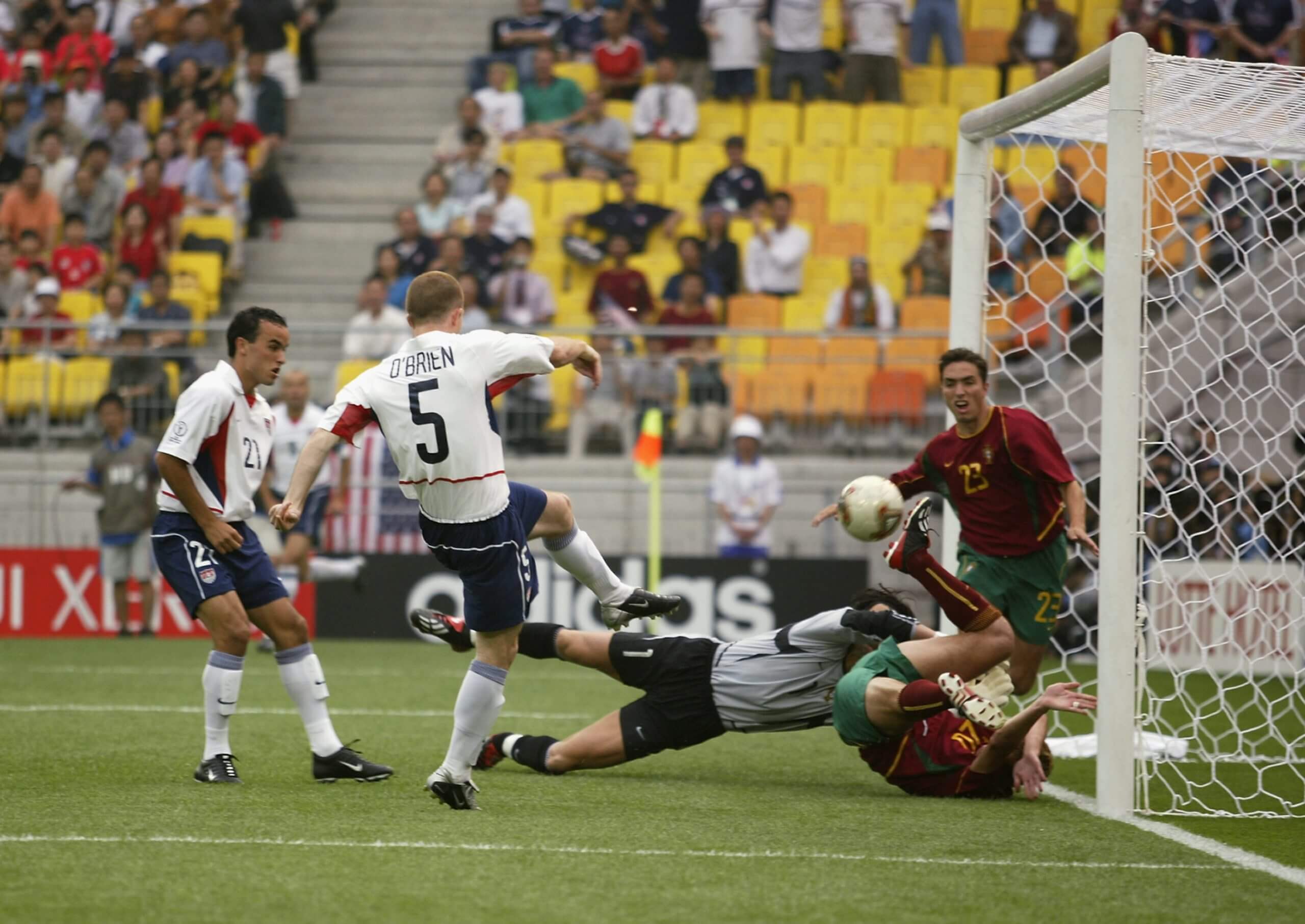
John O’Brien — with Landon Donovan looking on — opens the scoring for the USMNT vs. Portugal just four minutes into one of the 2002 World Cup’s stunning results (Gary M Prior / Getty Images)
Davies transitioned from the first round to the second by solidifying the center of his team. He touted O’Brien’s “world-class” ability, particularly in the 2002 World Cup. When Davies was on trial at Ajax, for instance, he said he had players coming up asking about the technically savvy, two-footed midfielder and former Ajax player, whose career was decimated by injury, but whose peak was sensational — and clearly memorable.
“If injuries hadn’t robbed him of so much of his career, we’d talk about him very differently. He remains one of the most naturally gifted midfielders the U.S. has ever produced,” Davies said.
As for Jones, Davies felt he didn’t get full credit for his tenacious career (he would know first-hand: the two were New England Revolution teammates and reached an MLS Cup final together). Jones is also the scorer of one of the great all-time U.S. World Cup goals, with his curling stunner vs. Portugal in 2014. In fact, Jones and O’Brien both arguably had their best World Cup moments come against Portugal, 12 years apart.
Defensive midfield was on Bushnell’s mind when making his second pick, pouncing on the positional scarcity and snagging Adams, the 2022 World Cup captain.
“This draft pool is thin on true defensive midfielders. Adams’ VORP (value over replacement player) is off the charts,” he said.
| ROUND | TAB | PAUL | HENRY | TOM | CHARLIE | |
|---|---|---|---|---|---|---|
|
3 |
MF Weston McKennie |
D Eddie Pope |
D Oguchi Onyewu |
F Jozy Altidore |
D Marcelo Balboa |
→ |
|
4 |
F Eric Wynalda |
D Tony Sanneh |
D/MF DaMarcus Beasley |
D Steve Cherundolo |
GK Tim Howard |
← |
|
5 |
D Antonee Robinson |
GK Brad Friedel |
D Sergiño Dest |
D Carlos Bocanegra |
F Eddie Johnson |
→ |
|
6 |
D/MF/F Tim Weah |
MF John Harkes |
D Tim Ream |
GK Tony Meola |
F Clint Mathis |
← |
After going with two stalwarts of the USMNT’s 2002 attack, Tenorio was first to dip into the defenders, taking another fixture from the ’02 quarterfinalists in Pope, and that left him feeling pretty confident following the first three picks.
“I feel like I got the best overall player (Landon), the best No. 9 (McBride) and the best center back (Pope),” he said.
That started a mini-run at the center back position, with Onyewu – dominant until a knee injury hampered his 2010 World Cup — and Balboa following suit.
“Before center backs were expected to be comfortable stepping into midfield and playing, Marcelo was already doing it,” Davies said of his third-rounder. “A true U.S. Soccer pioneer who brought leadership and swagger to the group.”
Added Bushnell, of his picks in the third and sixth rounds: “Ream and Gooch might just be the perfect center back pairing. Name any attribute you’d want from a center back, and I can almost guarantee that one of the two will have it.”
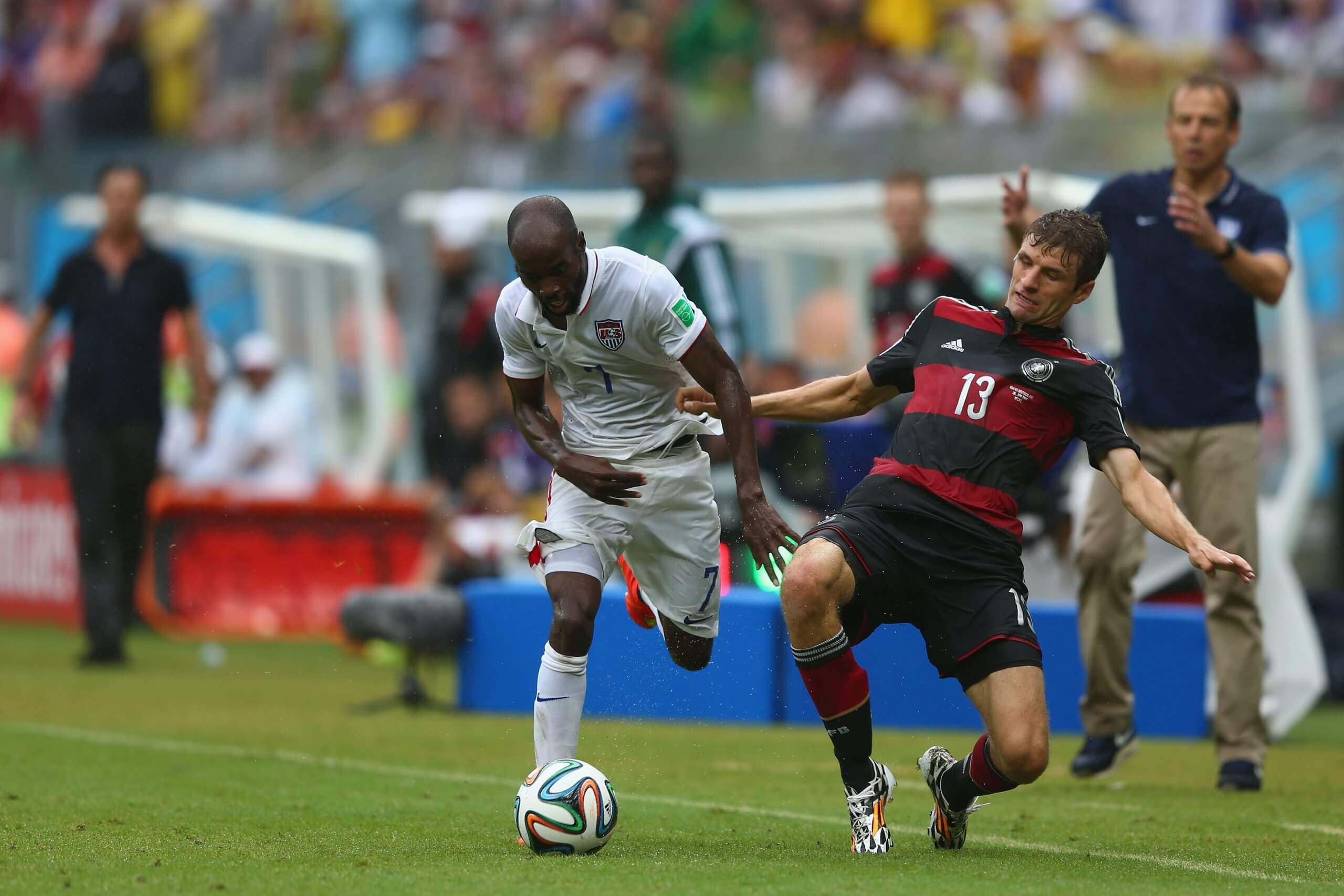
DaMarcus Beasley, here dribbling by Germany’s Thomas Müller at Brazil 2014, is the only U.S. man to feature in four World Cups (Michael Steele / Getty Images)
A run of fullbacks — or potential fullbacks, depending on where you envision four-time World Cup veteran Beasley playing — came next.
“I really like the Sanneh pick. People forget how good he was at his peak around the 2002 World Cup. Just an absolute stud at right back,” Tenorio said.
While Ramos is a veteran of the older guard, he clearly saw value in the current core as well, nabbing McKennie, Robinson and Weah to supplement his squad’s foundation.
Davies, meanwhile, waited long enough to address a position after his own heart: forward. But he’s happy with the outcome on his consecutive picks. “Up front, the combination of Johnson and Mathis gives me goosebumps,” he said. “EJ’s pace stretched defenses and his finishing could punish any mistake. Mathis was a handful for opponents. … There wasn’t another American player quite like him in his era. He could create goals from absolutely nothing, could strike the ball with either foot with equal confidence and power and terrified defenders when he was feeling it.”
On the other end, the record-setting Howard became the first of the goalkeepers off the board in the fourth round, followed quickly after by Friedel and Meola.
| ROUND | TAB | PAUL | HENRY | TOM | CHARLIE | |
|---|---|---|---|---|---|---|
|
7 |
D/M Thomas Dooley |
D Frankie Hejduk |
MF Pablo Mastroeni |
MF Cobi Jones |
D Geoff Cameron |
→ |
|
8 |
F Earnie Stewart |
MF Kyle Beckerman |
D Fabian Johnson |
F Joe-Max Moore |
MF/D Maurice Edu |
← |
|
9 |
D Alexi Lalas |
D Jeff Agoos |
MF Gio Reyna |
D Paul Caligiuri |
MF/D Eddie Lewis |
→ |
|
10 |
MF Hugo Pérez |
D Omar Gonzalez |
MF Yunus Musah |
D Jay DeMerit |
F/MF Brenden Aaronson |
← |
There was still ample talent to be had in the middle rounds, with some legends of the 1994 team going off the board. It was also an area where interpretation of the mission came into play as well.
“At the very beginning of this draft, I asked for clarity that we were considering players at their peak,” Bushnell said. “Everyone confirmed we were. Gio Reyna at his peak — which, sadly, might have been several years ago, before his body began failing him — has abilities that nobody else in this entire pool has. That Gio is my No. 10. Also: Peak Yunus Musah bossed games at the 2022 World Cup. How did he fall to the 10th round?!”
Beyond the space for historic achievement, flash and potential, there’s also the need for steel and productivity, which Tenorio thinks he landed in Round 8.
“Anyone who wants to talk trash to me about Kyle Beckerman needs to go back and watch how much better the 2014 team played when he was on the field,” Tenorio said.
| ROUND | TAB | PAUL | HENRY | TOM | CHARLIE | |
|---|---|---|---|---|---|---|
|
11 |
MF Alejandro Bedoya |
M Preki |
F Roy Wegerle |
D John Brooks |
MF Benny Feilhaber |
→ |
|
12 |
GK Kasey Keller |
F Josh Wolff |
D Gregg Berhalter |
F Haji Wright |
MF Stu Holden |
← |
|
13 |
D DeAndre Yedlin |
D Matt Besler |
F Bruce Murray |
MF Chris Henderson |
F Jordan Morris |
→ |
|
14 |
D Clarence Goodson |
MF Graham Zusi |
GK Matt Turner |
MF Ben Olsen |
MF Ricardo Clark |
← |
|
15 |
F Herculez Gomez |
F Frank Klopas |
F Robbie Findley |
D Walker Zimmerman |
D Desmond Armstrong |
→ |
|
16 |
D Fernando Clavijo |
D Timmy Chandler |
D Jimmy Banks |
F Julian Green |
D Jonathan Spector |
← |
For the final stretch of rounds, there was still quality to be found, even if the depth began to thin out. It was a place where our final two goalkeepers went off the board and drafters leaned more into moments and, in some cases, what could have been.
Take Holden, for example, who was a star at Bolton but couldn’t stay healthy. “Had injuries not intervened, he would be remembered as one of the best midfielders of his generation. Endless engine, quality on the ball, tough tackler and tactical intelligence,” Davies, his former U.S. teammate, said.
As for Preki, Tenorio said: “Before Messi, just one player won two MLS MVP awards. It was Preki Radosavljevic, a magical left-footed player who became a citizen in 1996 and played at the 1998 World Cup. He scored the goal to beat Brazil in the 1998 Gold Cup semis. Class player. Class pick.”
There was also a nod to under-appreciated and pioneering fullbacks like Banks and Armstrong and a place for Berhalter, who in our fictitious world winds up teaming with seven players from the 2022 World Cup rather than coaching them.
Assessing the squads
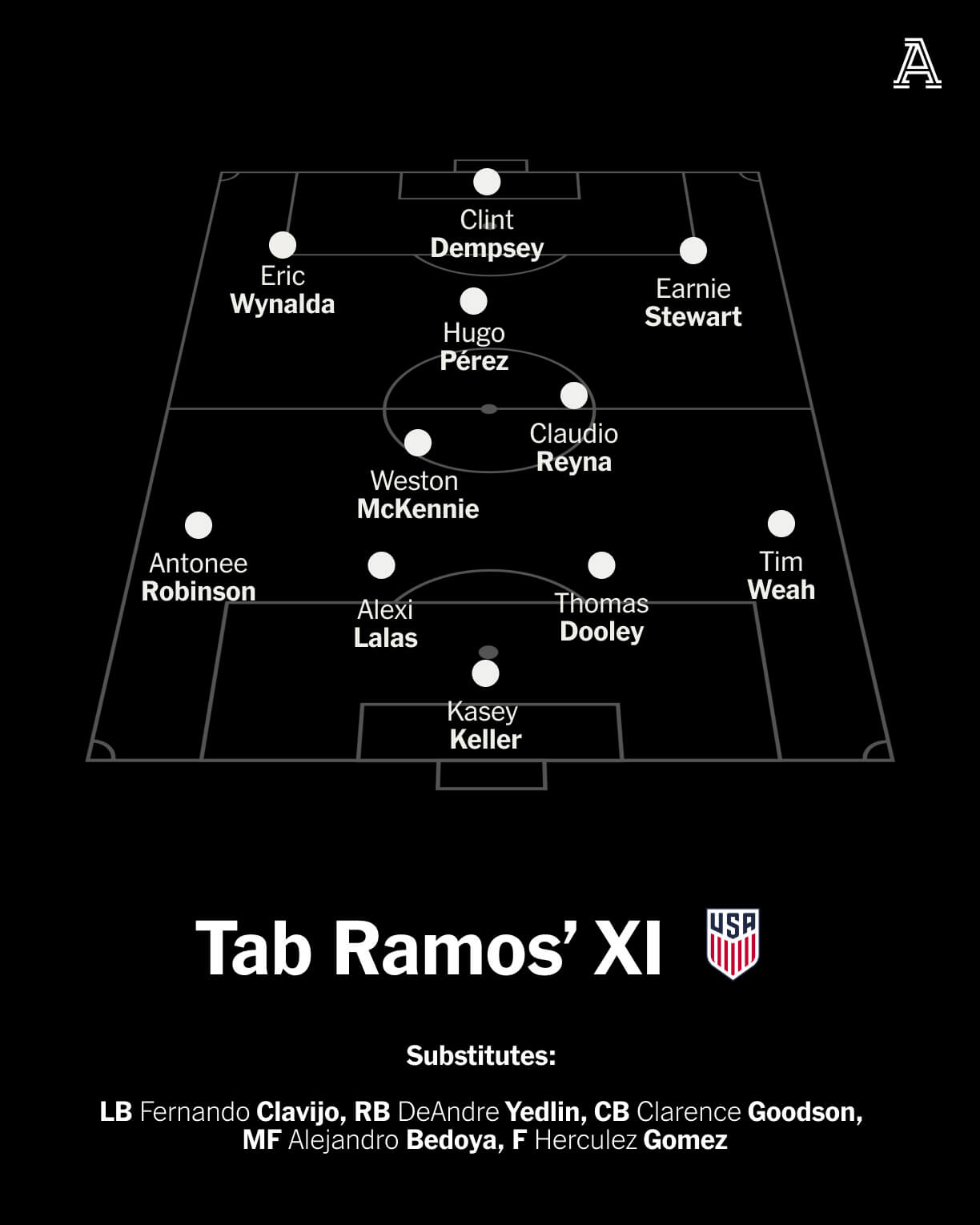
It’s a 4-3-3 with two solid defenders in the middle. Dooley was an excellent distributor but also could add himself into the center of midfield in the run of play. Lalas was as hard as they come defending and could win just about every ball in the air defending and on set pieces in attack.
McKennie playing as a holding midfielder is a bit of a crime, because he can do so much more, but with the creation and distribution of Reyna and Pérez’s ability to get around opponents and make deadly passes in between lines, McKennie can just watch the show and win the ball back. Also, sometimes, we could leave Reyna back, have Dooley step into midfield and have him make a timely run into the box.
My outside backs are both built to attack with speed, with both Weah and especially Robinson have great timing to surprise and make plays in the opposing box. With Stewart on the right and Wynalda on the left coming inside it leaves that channel wide open to attack. Wynalda, Stewart and Dempsey all are excellent in front of goal and all three can interchange positions in the run of play.
The front five have great feet and wouldn’t lose the ball. They all have the ability to create and finish plays, and with the addition of Robinson and Weah providing width and speed from behind, this team could truly be hard to stop.
As for my subs, the late Clavijo and Yedlin could play either outside back position, and both could attack. Additionally, Clavijo was a great 1-v-1 defender in case of playing against a dangerous winger on either side.
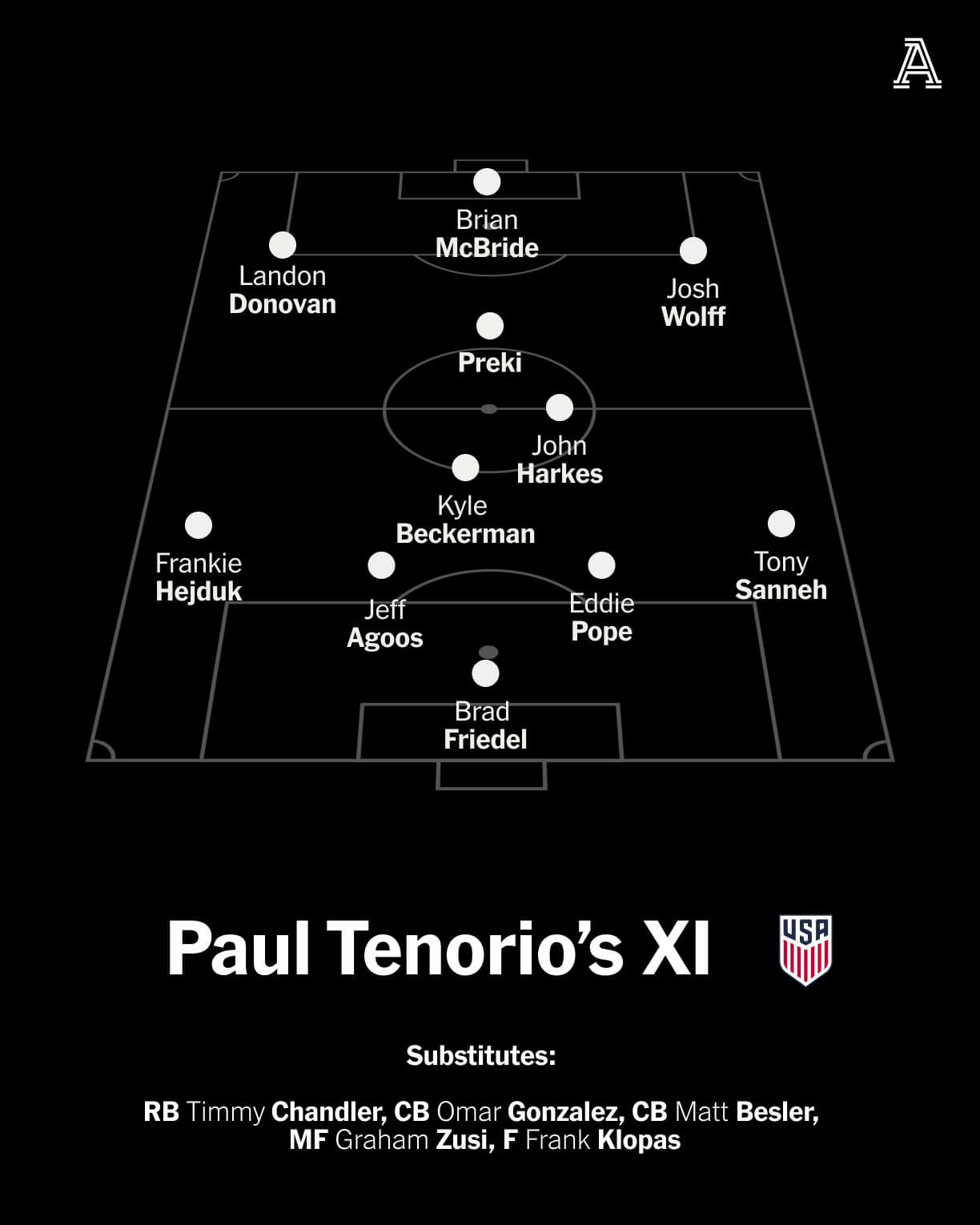
After doing a similar draft (with a smaller pool) in the past and realizing the value of the No. 9, I went with McBride on my second pick over Claudio Reyna. I didn’t really think through how expanding to 1990 helped the No. 9 depth chart, and my midfield never recovered. I went defense on my next two picks with a plan to get Stu Holden as an attacking midfielder and wingers late in the draft — but took Hejduk in Round 7 then saw Cobi Jones and Earnie Stewart plucked off the board and I was scrambling.
Also, when Charlie picked Eddie Johnson in the fifth round I thought he said Eddie Lewis, so he was mistakenly off my draft board. That hurt. I snagged Preki in Round 11 thinking I’d grab Benny Feilhaber or Holden to help out the squad and then Charlie took them back-to-back! Still, I feel decent about the squad overall. Don’t sleep on peak Preki, and don’t underrate Agoos, peak Omar Gonzalez or even what Graham Zusi and Frank Klopas can bring off the bench. And Timmy Chandler is versatile!
If I have any regret, it’s not finding a winger to push Wolff out of the lineup. Fabian Johnson was taken right before I took Beckerman, and he could’ve been an option. If I had known Eddie Lewis was there I might’ve snagged him instead of Agoos in Round 9 and moved Landon to the right side.
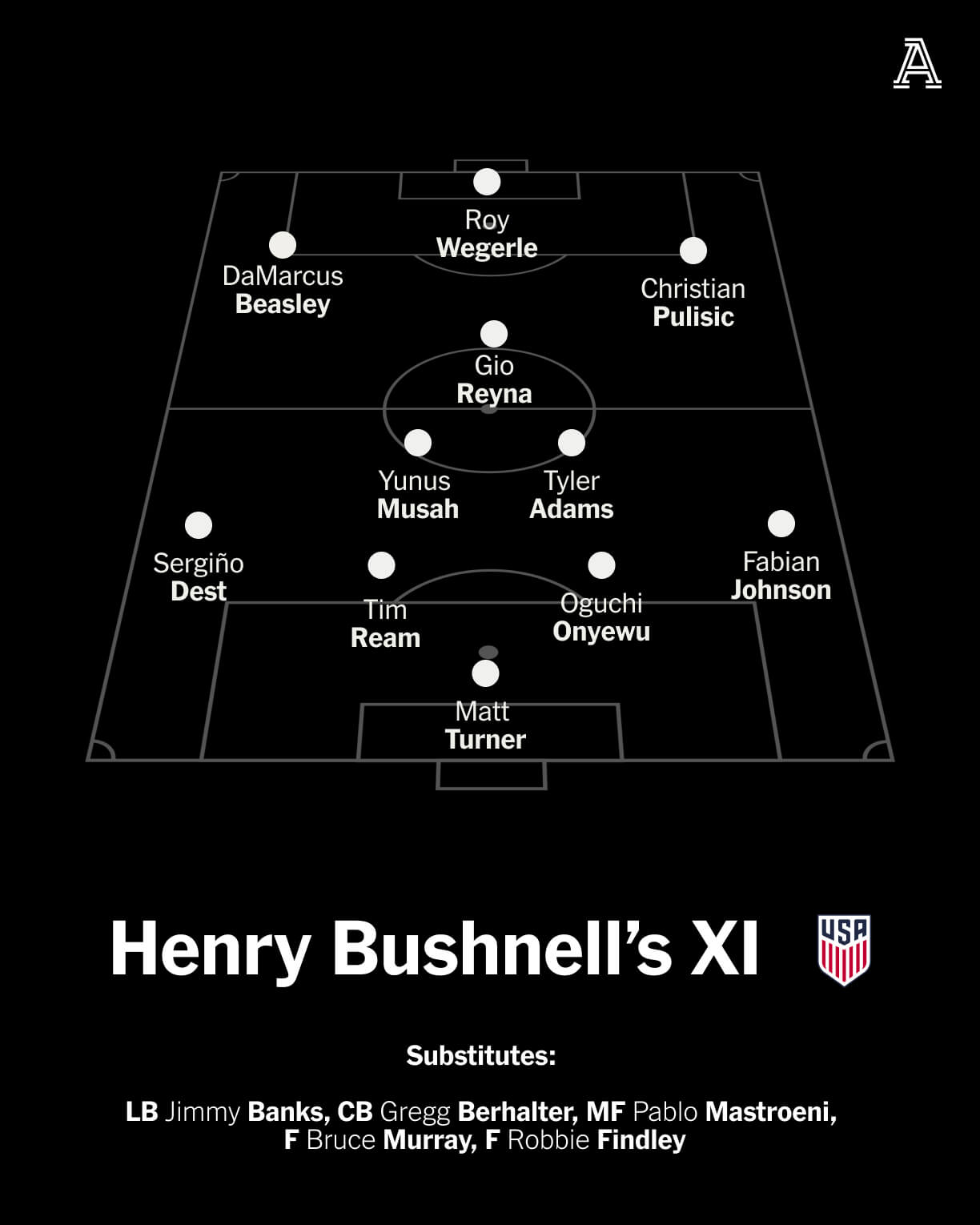
Two pretty simple principles guided my draft strategy: 1. Draft the best players, worry about fit and positions later. 2. With all due respect to Tab and the OGs, modern soccer players are better than 1990s soccer players. That’s an unavoidable truth. Even if the current USMNT hasn’t accomplished anything that previous generations did, of the top 12-15 players from the 2020s. I got six or seven of them, and I got a well-balanced team. Sure, there’s a bit of a hole at striker, but we’ll attack via the wings (Pulisic, Beasley, Dest, Johnson) with Adams covering for the fullbacks and Gio pulling the strings centrally.
As for my goalkeeper strategy: all along the plan was to wait, wait, wait. We were told we could each only draft one. I was comfortable with any of the top five — Howard, Friedel, Brad Guzan, Meola and Keller. Then, I was told I couldn’t pick Guzan because he didn’t actually start at a World Cup. Preposterous. (I’ll still ride with 2022 Matt Turner though.)
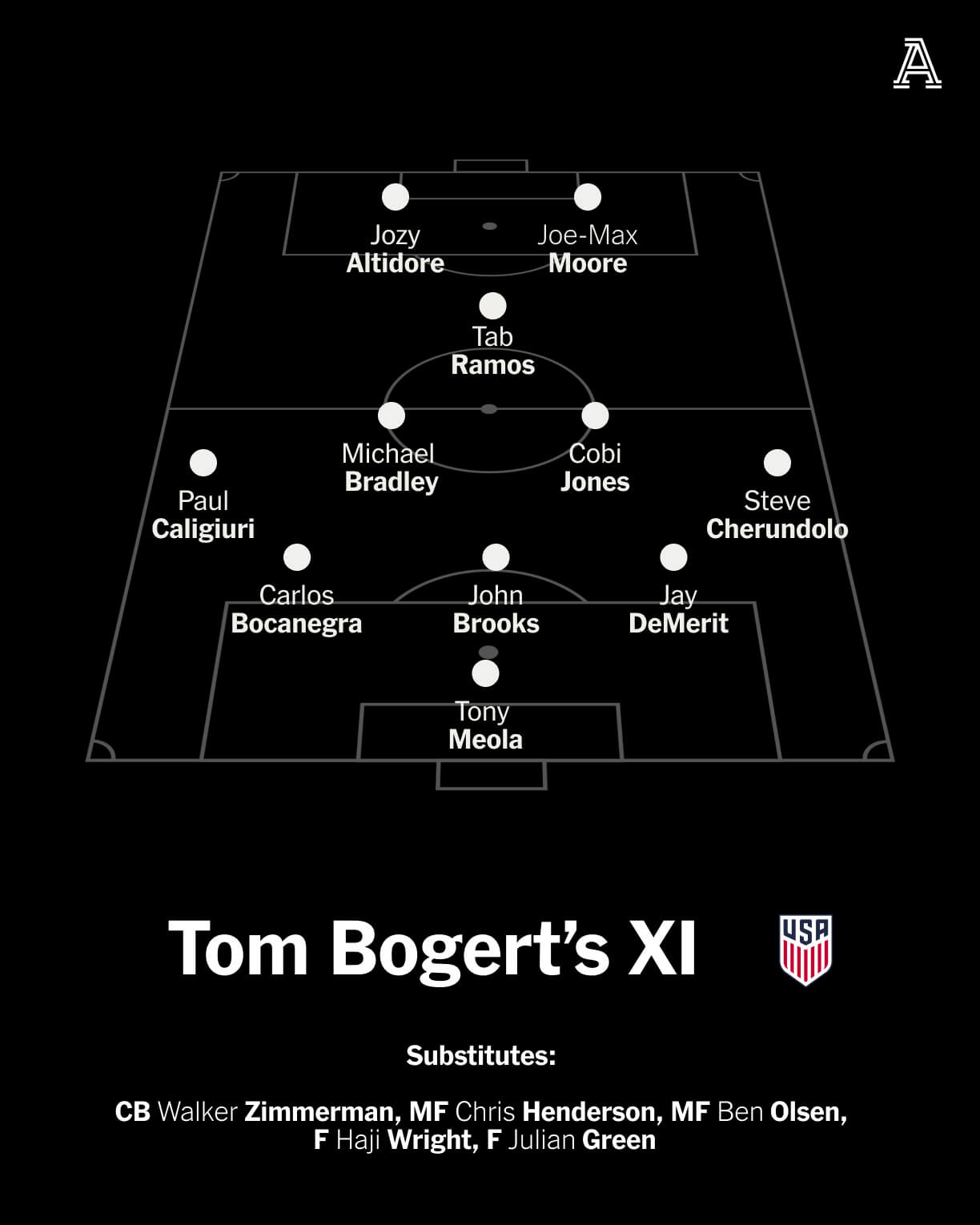
Starting with a midfield duo of Ramos and Bradley means I’m dominating the center of the pitch. Getting Jones, the all-time USMNT caps leader, in the seventh round was a steal to fortify the best positional group in this draft. That’s my engine room. That’s where we’ll win games. Tab is the special player in attack that makes all others around him better.
Peak Altidore (third all-time leading scorer) is one of the best players in USMNT history. He will be the central figure with Moore (seventh all-time leading scorer), his strike partner. Cherundolo is one of the most underrated and consistent players in program history, while my center back trio will be a problem on set pieces. Plus, I’ve got Meola in goal. I feel great about this group. Bonus for team chemistry to get so many New Jersey guys.
Elsewhere: People sleep on Brooks. It’s too bad his peak didn’t last long with the USMNT. And in the Strange But True Dept.: Wright and Green each has more career World Cup knockout-round goals (1) than Cristiano Ronaldo (0). There was a time when the teenage version of me was convinced Green was going to lead the USMNT for a dozen years (alongside Juan Agudelo, Brek Shea and Mix Diskerud, of course).
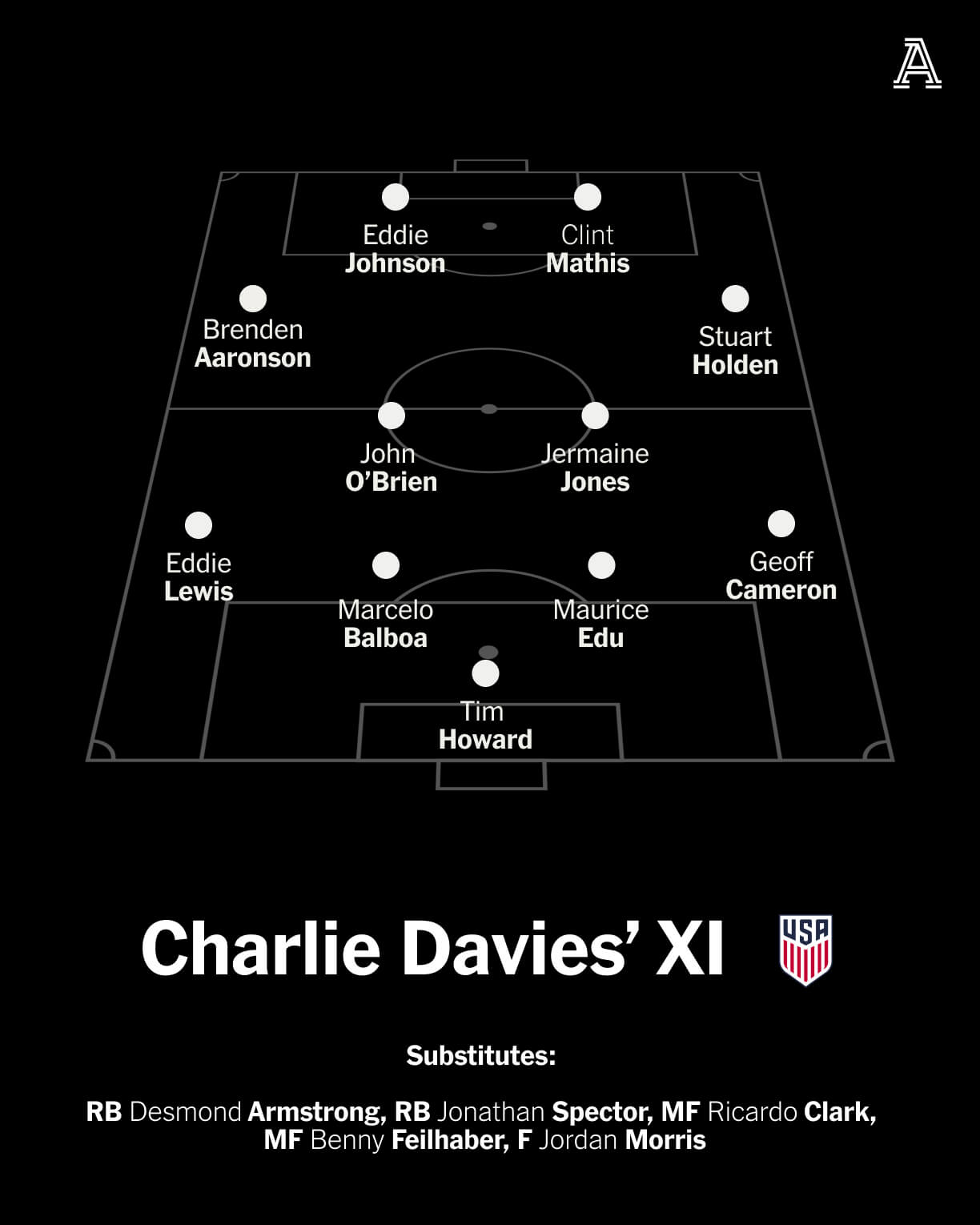
After Clint, Landon and Pulisic went right off the board, one thing I felt I needed to do was build a team that could dominate the middle while still having enough personality and attacking flair to win games. That’s why my first priority was securing the spine of the team with Jones and O’Brien. At their peaks, they were the perfect blend of intelligence, skill and competitiveness.
Tactically, this is a 4-4-2 that can seamlessly become a 3-5-2. Aaronson can drift centrally, Lewis becomes a wingback in possession, and Holden has the engine to own an entire flank. Defensively, Balboa and Edu anchor the back line.
Edu’s position may surprise some people, but I firmly believe he was best as a center back. He captained our U.S. Olympic team, and I’ve always felt center back was his best position. His athleticism, anticipation, and composure made him a natural fit there. His comfort on the ball as a CB set him apart for the rest. He read the game exceptionally well, was dominant physically and had all the tools to thrive there.
Given that Pope, Onyewu, Dooley, and Bocanegra were already off the board, pairing Mo with Balboa gave me a back line capable of defending and building attacks.
Ultimately, I built a team that blends technical quality, toughness, versatility and personality. This group can control games, adapt tactically and can still produce moments of brilliance when it matters most.